Short Answer
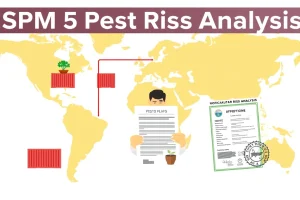
International trade in plants and plant products moves billions of kilograms of material across borders each year. To keep that commerce flowing without spreading harmful organisms, the International Plant Protection Convention (IPPC) created a family of International Standards for Phytosanitary Measures (ISPM). ISPM 2 is the cornerstone document that tells governments, exporters, and importers how to carry out a scientifically sound Pest Risk Analysis (PRA). This article breaks down ISPM 2 in plain English, shows why it matters to your business, and provides a step‑by‑step checklist you can use the next time you ship a commodity.
Overview
ISPM 2, titled Guidelines for the Development of a Pest Risk Analysis, was adopted by the IPPC in 1996 and remains the authoritative reference for PRA methodology. The standard defines three sequential stages:
- Risk Assessment – Identify the pest, evaluate its likelihood of entry, establishment, and spread, and estimate potential economic or environmental impacts.
- Risk Management – Propose phytosanitary measures (e.g., treatments, inspections, bans) that reduce the identified risk to an acceptable level.
- Risk Communication – Document the analysis and share findings with relevant National Plant Protection Organizations (NPPOs) and trade partners.
The standard applies to all regulated pests, whether they are insects, fungi, bacteria, or nematodes, and it is used by more than 180 contracting parties to the IPPC.
Why It Matters (Real Stakes for Exporters/Importers)
Failure to follow ISPM 2 can lead to costly delays, rejected shipments, and even trade bans. Below are the most common business impacts:
- Financial loss: Re‑inspection, re‑treatment, or disposal of non‑compliant cargo can add 5‑30 % to landed cost.
- Market access: Importing countries may refuse entry of a commodity if the PRA does not meet their NPPO’s expectations, jeopardizing long‑term contracts.
- Reputational risk: Repeated phytosanitary violations can damage an exporter’s credibility and trigger stricter inspections on future shipments.
- Legal liability: In some jurisdictions, providing false or incomplete risk information can result in fines under national plant‑health legislation.
By aligning your PRA with ISPM 2, you demonstrate due diligence, reduce the probability of rejection, and maintain smoother trade flows.
How It Works – The PRA Process Under ISPM 2
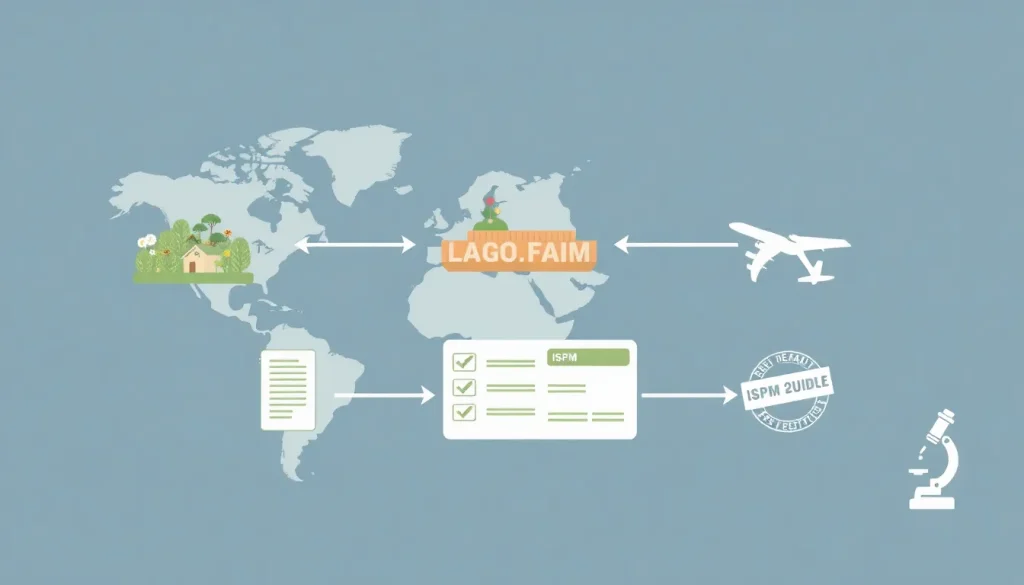
ISPM 2 prescribes a transparent, evidence‑based workflow. The table below summarizes the key activities, the responsible party, and the typical documentation produced at each stage.
| Stage | Primary Activities | Responsible Party | Output Document |
|---|---|---|---|
| Risk Assessment | Identify pest, gather host‑range data, model entry pathways, quantify impact. | Exporter’s technical team or contracted pest‑risk consultant. | Risk Assessment Report (RAR). |
| Risk Management | Select phytosanitary measures, evaluate efficacy, estimate cost. | Exporter in consultation with NPPO or accredited lab. | Risk Management Options (RMO) matrix. |
| Risk Communication | Prepare a concise PRA summary, submit to importing NPPO, retain for audit. | Exporter’s compliance officer. | Phytosanitary Certificate attachment, PRA dossier. |
Each stage must be supported by peer‑reviewed literature, quarantine surveillance data, or validated modelling tools. ISPM 2 also requires that the PRA be reviewed periodically, especially when new scientific information emerges.
Requirements & Standards (Citing Primary Sources)
The core regulatory references are:
- IPPC Standard ISPM 2 (2020 revision) – Provides the methodological framework for PRAs. Available at ippc.int.
- National Plant Protection Organization (NPPO) guidelines – Many countries incorporate ISPM 2 verbatim into their domestic legislation (e.g., USDA-APHIS Plant Protection Act, EU Plant Health Regulation (EU) 2016/2031).
- World Trade Organization (WTO) SPS Agreement – Recognises ISPM 2 as a benchmark for scientific risk assessment in trade disputes.
“Member countries shall base phytosanitary measures on risk assessments that are consistent with ISPM 2, ensuring that measures are not more restrictive than necessary.” – WTO SPS Agreement, Article 5.2
Compliance therefore means that your PRA must:
- Identify the pest using the scientific name accepted by the International Code of Nomenclature.
- Demonstrate a systematic search of literature and databases (e.g., CABI, EPPO Global Database).
- Provide quantitative or qualitative justification for each risk pathway.
- Reference the specific phytosanitary measures that will be applied (e.g., cold treatment, fumigation, field inspection).
Step‑by‑Step Checklist (How to Trigger a compliant PRA)
- Define the commodity and origin. Record cultivar, production system, and harvest date.
- Identify the target pest(s). Use NPPO pest lists and the EPPO Global Database to confirm regulated status.
- Collect host‑range and biology data. Summarize life cycle, climate limits, and known hosts.
- Map potential pathways. Include export‑packaging, transport mode, and any post‑harvest handling.
- Assess likelihood of entry, establishment, and spread. Apply qualitative scales (low/medium/high) or quantitative models such as CLIMEX.
- Estimate impact. Consider yield loss, control costs, and environmental consequences.
- Develop risk‑management options. List all feasible phytosanitary measures, rank by efficacy and cost.
- Document the analysis. Compile the Risk Assessment Report, RMO matrix, and a concise PRA summary.
- Submit to the importing NPPO. Attach the PRA dossier to the export Phytosanitary Certificate request.
- Maintain records. Store all supporting data for at least five years for audit purposes.
Following this checklist ensures that you meet ISPM 2 expectations and speeds up the certification process.
Common Mistakes & Rejection Reasons
Even experienced exporters slip up. The most frequent pitfalls are:
- Missing scientific name or using a synonym. NPPOs reject any PRA that does not cite the accepted taxonomic name.
- Inadequate literature review. Citing only grey‑literature without peer‑reviewed sources raises questions about reliability.
- Overlooking secondary pathways. For example, ignoring contamination of packaging material can lead to an under‑estimated risk.
- Failure to update the PRA. New pest reports or climate data must trigger a revision; static documents are deemed non‑compliant.
- Insufficient justification for chosen measures. Simply stating “we will treat” without efficacy data is a common cause for certificate denial.
When a shipment is rejected, the importing authority typically issues a written notice citing the specific ISPM 2 clause that was not satisfied. Addressing these issues promptly prevents repeat rejections.
Real‑World Example: Exporting Fresh Apples from New Zealand to the European Union
New Zealand apple growers must comply with EU Regulation (EU) 2016/2031, which incorporates ISPM 2. The EU NPPO requires a PRA for the codling moth (Cydia pomonella), a regulated pest not present in the EU but present in some New Zealand orchards.
- The exporter commissioned a PRA that documented codling moth biology, identified fruit‑fly‑free zones, and modeled entry probability via air cargo.
- Risk‑management options included a 24‑hour cold treatment at 1 °C and a post‑harvest pesticide dip certified by an accredited lab.
- The PRA report, along with treatment certificates, was submitted to the New Zealand Ministry for Primary Industries (MPI) and then attached to the EU Phytosanitary Certificate.
- The EU NPPO accepted the PRA, and the shipment cleared without delay. Six months later, a new codling‑moth strain was detected in a neighboring region; the exporter updated the PRA, added a supplementary pheromone trap monitoring protocol, and retained market access.
This case illustrates how a well‑structured ISPM 2‑based PRA can both satisfy regulatory demands and provide a proactive risk‑management framework.
Conclusion
ISPM 2 is more than a technical manual; it is the global language that translates scientific risk into practical trade measures. By understanding its structure, adhering to its documentation requirements, and avoiding common errors, exporters, importers, customs brokers, and freight forwarders can keep shipments moving while protecting plant health worldwide.
FAQ
Do I need to submit a full PRA for every shipment?
Only for commodities that may carry regulated pests not already covered by a generic import regime. If the pest is listed as a high‑risk pathway, the NPPO usually requires a specific PRA.
Can a PRA be reused for multiple destinations?
Yes, if the importing countries accept the same risk assessment and management measures. However, each NPPO may request additional information or country‑specific adaptations.
What happens if my PRA is rejected after shipment departure?
The consignment will be held at the border, and the importer may be required to re‑treat or destroy the goods. The exporter must revise the PRA, address the cited deficiencies, and resubmit for a new phytosanitary certificate.




Leave a Reply