Short Answer
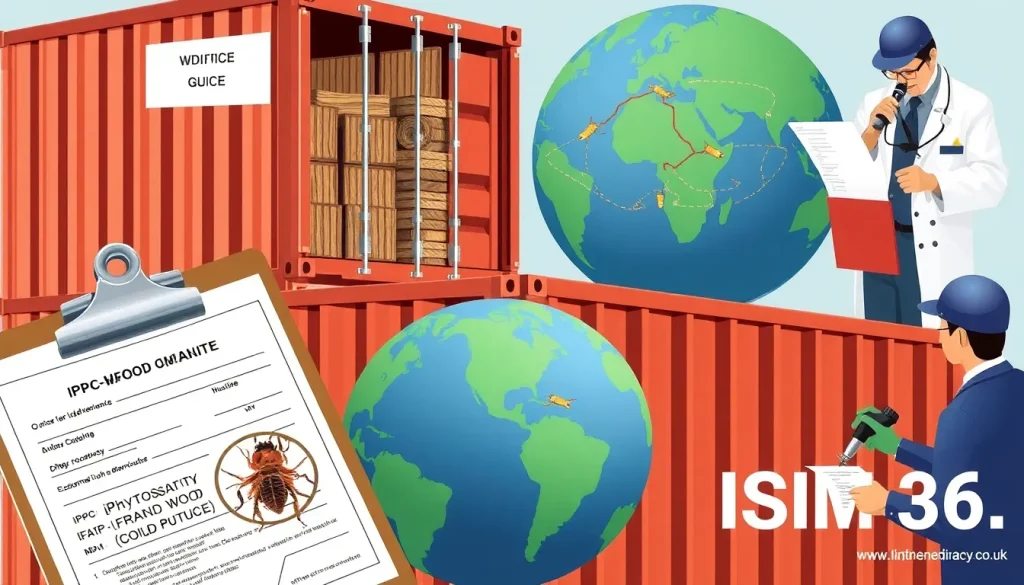
International trade in plants and plant products relies on trust that shipments are free of harmful pests. The International Standards for Phytosanitary Measures (ISPM) 36 provides the globally accepted methodology for conducting a Pest Risk Analysis (PRA). Exporters, importers, customs brokers, freight forwarders, and agriculture students must understand how ISPM 36 influences every step of the export process—from the initial risk assessment to the final issuance of a phytosanitary certificate.
Overview
ISPM 36 establishes a uniform framework for assessing the likelihood that a pest will be introduced, become established, and cause economic or environmental damage in a new area. The standard is applied by National Plant Protection Organizations (NPPOs) worldwide and is referenced in WTO‑Sanitary and Phytosanitary (SPS) Agreements.
| Element | Description |
|---|---|
| Scope | All regulated pests and commodities moving across international borders. |
| Core Steps | Hazard identification, risk evaluation, risk management, and risk communication. |
| Outcome | Specific phytosanitary requirements (e.g., treatment, inspection, certification). |
Why It Matters
Failing to align with ISPM 36 can lead to shipment delays, costly re‑exports, or outright bans. For exporters, a PRA‑derived requirement becomes a contractual condition; for importers, it determines market access. The real stakes include:
- Financial loss from rejected consignments.
- Reputational damage when a pest outbreak is traced to a shipment.
- Regulatory penalties imposed by the importing country’s NPPO.
How It Works
The PRA process follows a logical sequence:
- Define the commodity and trade pathway.
- Identify regulated pests associated with the commodity.
- Assess the probability of pest entry, establishment, and spread.
- Evaluate potential economic or environmental impacts.
- Recommend risk‑management measures (treatments, inspections, certifications).
- Document the analysis in a PRA report submitted to the NPPO.
The resulting decision—often a set of conditions attached to a phytosanitary certificate—must be met before the goods can cross the border.
Import/Export Procedure
Both exporting and importing parties follow a coordinated workflow:
- Exporter: Requests a PRA from the exporting NPPO, implements any prescribed treatments, and applies for a phytosanitary certificate.
- Importer: Submits the certificate to the importing NPPO, may request additional inspections on arrival, and records the consignment in the national plant health database.
- Customs broker/freight forwarder: Ensures that all documents travel with the shipment and that handling complies with any treatment‑verification requirements.
Required Documents
The following paperwork is typically mandatory under ISPM 36:
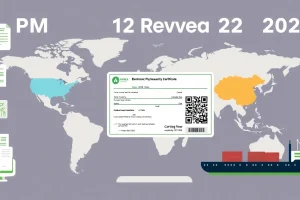
- Signed Phytosanitary Certificate (IPPC Form A) issued by the exporting NPPO.
- Detailed PRA Report or risk‑assessment summary (often an annex to the certificate).
- Treatment certificates (e.g., fumigation, heat treatment) with accredited laboratory results.
- Commercial invoice and packing list matching the commodity description used in the PRA.
- Import permit (if required by the destination country).
Control/Treatment Options
Based on the PRA, NPPOs may require one or more of the following control measures:
- Cold treatment: Exposure to ≤2 °C for a prescribed period (commonly used for fruit).
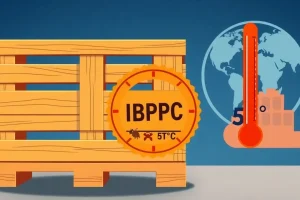
- Heat treatment: Raising the commodity temperature to ≥55 °C for a set duration (standard for wood packaging).
- Fumigation: Use of methyl bromide or phosphine, documented with a certified dosage log.
- Quarantine: Physical isolation of the consignment for observation, typically 30 days.
- Post‑harvest inspection: Visual or laboratory checks for pest presence before export.
All treatments must be performed by an accredited provider and recorded in the certificate.
Common Mistakes & Rejection Reasons
Even experienced exporters encounter pitfalls. The most frequent reasons for border rejection include:
- Missing or mismatched commodity description between the invoice and the PRA.
- Failure to attach the required treatment certificate.
- Using an outdated phytosanitary certificate (certificates are typically valid for 30 days).
- Non‑compliance with the exact treatment parameters specified in the PRA.
- Incorrect declaration of pest‑free areas when the exporting NPPO has changed its status.
Step‑by‑Step Checklist (How‑to Trigger a PRA)
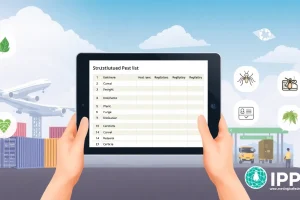
- Identify the target market and confirm the importing NPPO’s pest list.
- Gather commodity data (species, cultivar, packing method, origin).
- Submit a formal request for a PRA to the exporting NPPO.
- Receive the PRA report and implement any prescribed treatments.
- Arrange for an accredited inspection and obtain the phytosanitary certificate.
- Prepare accompanying documents (invoice, packing list, treatment logs).
- Provide all paperwork to the freight forwarder for inclusion in the export manifest.
- Track the shipment and retain copies of the certificate for post‑arrival verification.
Real‑World Example: Exporting Fresh Mangoes to the EU
A mango exporter in Brazil intended to ship 20 tons of ‘Tommy Atkins’ mangoes to the Netherlands. The EU’s NPPO lists Thaumatotibia pyriformis (the mango fruitfly) as a regulated pest. The exporter requested a PRA under ISPM 36. The analysis concluded a moderate risk of fruitfly entry via untreated fruit. The NPPO required:
- Cold treatment at 2 °C for 14 days.
- A post‑treatment visual inspection by an EU‑accredited laboratory.
- Issuance of a phytosanitary certificate stating “Treated for T. pyriformis, pest‑free.”
After complying, the shipment cleared EU customs without delay. A subsequent consignment that omitted the cold‑treatment log was rejected, incurring a US$12,000 re‑export cost—illustrating the financial impact of non‑compliance.
Conclusion
ISPM 36 is the linchpin that transforms scientific pest risk assessment into enforceable trade requirements. By understanding each component—risk analysis, documentation, treatment, and verification—exporters can avoid costly rejections, maintain market access, and contribute to global plant‑health security.
| Quick Fact | Detail |
|---|---|
| Primary Standard | IPPC ISPM 36 (2023 edition) |
| Typical Certificate Validity | 30 days from issuance |
| Key Stakeholders | Exporters, NPPOs, customs brokers, freight forwarders |
| Most Common Treatment | Cold treatment for fresh fruit |
| Average PRA Completion Time | 7‑14 days, depending on commodity complexity |
FAQ
What triggers a pest risk analysis under ISPM 36?
A PRA is required when a commodity is destined for a market that regulates pests listed for that commodity, or when the exporter seeks a phytosanitary certificate for a new trade route.
Can the same PRA be used for multiple shipments?
Yes, if the commodity, origin, treatment, and destination remain unchanged. However, many NPPOs require a refreshed PRA for each batch when the certificate validity period expires.
Who verifies that the prescribed treatment was correctly applied?
An accredited laboratory or inspection agency issues a treatment certificate, which is reviewed by the exporting NPPO before the phytosanitary certificate is released.






Leave a Reply