Short Answer
Overview
The International Standards for Phytosanitary Measures No. 15 (ISPM 15) governs the treatment and marking of wood packaging material (WPM) used in international trade. In January 2024 the International Plant Protection Convention (IPPC) adopted a series of amendments that take effect on 1 July 2024. The key changes include:
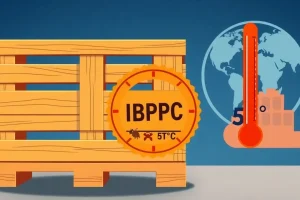
- Higher minimum heat‑treatment temperature (≥ 56 °C for 30 minutes) for certain high‑risk commodities.
- Introduction of a new Mark‑to‑Mark verification code to combat counterfeit stamps.
- Expanded list of regulated wood‑boring pests, adding Arhopalus rusticus and Hylurgus ligniperda to Annex II.
- Mandatory electronic phytosanitary certificate (e‑Phyt) for all WPM shipments to WTO‑member countries.
These amendments aim to close gaps identified in the 2022 audit of ISPM 15 implementation and to align the standard with advances in treatment technology.
Why it matters (real stakes for exporters/importers)
Non‑compliance can result in costly delays, cargo re‑inspection, or outright rejection at the border. For exporters, a rejected shipment can mean lost sales, penalties, and damage to reputation. Importers may face quarantine measures that disrupt supply chains and increase inventory holding costs. The 2024 amendments increase enforcement rigor, making accurate documentation and proper treatment more critical than ever.
How it works
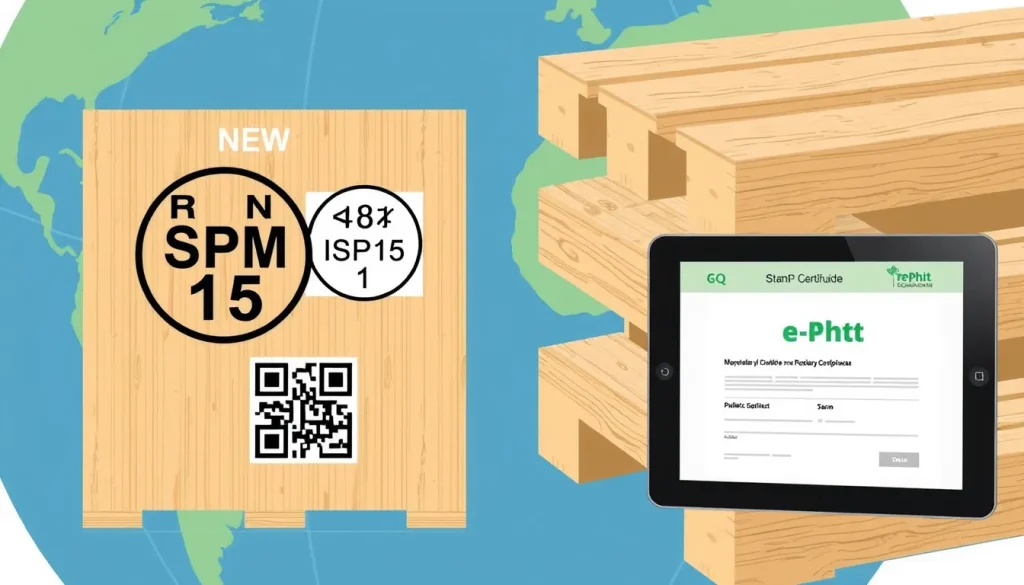
ISPM 15 requires that all solid wood, wood chips, bark, and other wood‑based packaging be either heat‑treated (HT) or fumigated with methyl bromide (MB) to eliminate quarantine pests. The amended standard adds a third optional method—microwave‑treatment (MW)—provided the treatment achieves the same efficacy as HT. After treatment, each item must bear a standardized stamp that now includes:
- The IPPC‑approved symbol.
- Country code of the treatment provider.
- Unique serial number linked to an online verification database.
- New Mark‑to‑Mark QR code for rapid scanner verification.
Customs authorities use the QR code to confirm that the WPM matches the electronic phytosanitary certificate submitted by the exporter.
Requirements & standards
The 2024 amendments are codified in IPPC’s ISPM 15 Revision 2024 (Document No. 015‑2024) and reflected in the national plant protection organization (NPPO) guidelines of WTO members. The table below summarizes the most important changes.
| Aspect | Previous Standard (2022) | Amended Standard (2024) |
|---|---|---|
| Heat‑treatment temperature | ≥ 55 °C for 30 min | ≥ 56 °C for 30 min for high‑risk commodities |
| Fumigation dosage | 1 kg m⁻³ methyl bromide for 24 h | Unchanged, but now requires electronic record of dosage |
| Marking | IPPC symbol, country code, serial number | Added QR‑code (Mark‑to‑Mark) and digital verification link |
| Documentation | Paper phytosanitary certificate | Mandatory e‑Phyt certificate uploaded to the IPPC Trade Portal |
All treatment providers must be accredited by the NPPO of the country of origin and listed in the IPPC’s online registry.
Import/export procedure
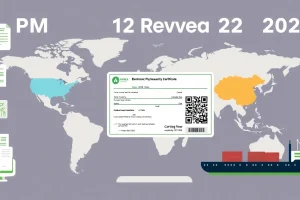
The following flowchart outlines the steps from packaging to clearance:
- Choose an IPPC‑accredited treatment provider.
- Apply the selected treatment (HT, MB, or MW) and obtain a treatment record.
- Generate the e‑Phyt certificate through the national NPPO portal, linking the treatment record and QR code.
- Affix the revised ISPM 15 stamp (including QR code) to each WPM unit.
- Submit the e‑Phyt data to the IPPC Trade Portal at least 24 hours before departure.
- Load the cargo onto the vessel or aircraft.
- At the destination, customs scans the QR code; the system cross‑checks the electronic certificate.
- If the data match, the WPM is released; otherwise, the shipment is held for manual inspection.
Required documents
Exporters must provide the following electronic documents to the importing NPPO:
- e‑Phyt certificate (IPPC Form 003) generated by the NPPO.
- Treatment certificate issued by the accredited provider, including temperature logs or fumigation dosage records.
- Copy of the Mark‑to‑Mark QR‑code verification report (PDF).
- Bill of Lading or Air Waybill that references the WPM batch number.
All documents must be uploaded in PDF or XML format to the IPPC Trade Portal and be accessible via the QR code link.
Step‑by‑step checklist (How‑to trigger compliance)
- Verify NPPO accreditation – Confirm that the treatment facility appears in the IPPC registry.
- Determine the appropriate treatment – Use HT ≥ 56 °C for high‑risk goods; consider MW if HT capacity is limited.
- Record treatment parameters – Capture temperature, duration, or fumigation dosage in the provider’s log.
- Generate e‑Phyt – Log into your national NPPO portal, upload treatment data, and receive the digital certificate.
- Apply the new ISPM 15 stamp – Include the QR code printed or laser‑etched on each WPM piece.
- Upload documentation – Submit the e‑Phyt, treatment record, and QR‑code verification to the IPPC Trade Portal.
- Inform the freight forwarder – Provide the batch number and QR code details for scanning at departure.
- Confirm receipt – Request a confirmation receipt from the destination customs authority.
Common mistakes & rejection reasons
Even seasoned exporters make avoidable errors. The most frequent reasons for WPM rejection under the 2024 amendments are:
- Missing or unreadable QR code – damaged stamps or low‑resolution prints prevent electronic verification.
- Temperature below 56 °C – treatment logs show a shortfall, triggering pest risk alerts.
- Unregistered treatment provider – the provider is not listed in the IPPC registry.
- Late e‑Phyt submission – data uploaded less than 24 hours before departure are automatically rejected.
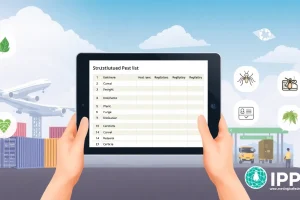
- Incorrect pest list – failure to declare the presence of newly regulated pests such as Arhopalus rusticus.
Mitigation: perform a pre‑shipment audit using the IPPC’s free “Mark‑to‑Mark” validation tool.
Real‑world example / scenario
ABC Timber Exporters (Canada) shipped 12 000 kg of pallets to a processor in Germany in March 2024. The pallets were heat‑treated at 55 °C, the pre‑2024 standard. After the July 2024 amendment took effect, German customs scanned the QR codes and flagged the temperature discrepancy. The shipment was held for four days, incurring a €7,800 storage fee and a penalty of €2,500 for non‑compliance. ABC revised its SOPs to partner with an accredited HT provider offering ≥ 56 °C treatment and now includes a final QR‑code verification step before loading.
Conclusion
The 2024 ISPM 15 amendments tighten the global safety net against wood‑boring pests by raising treatment thresholds, adding a secure QR‑code marking system, and mandating electronic certification. Exporters, importers, customs brokers, and freight forwarders must adapt quickly to avoid costly rejections. By following the step‑by‑step checklist, keeping treatment records accurate, and using only IPPC‑registered providers, businesses can ensure smooth cross‑border movement of wood packaging material.
FAQ
Do I need a QR‑code on every piece of wood packaging?
Yes. The 2024 amendment requires a QR‑code (Mark‑to‑Mark) on each WPM unit to enable electronic verification at the border.
Can I still use paper phytosanitary certificates for WPM?
No. Starting 1 July 2024, an electronic phytosanitary certificate (e‑Phyt) is mandatory for all wood packaging material shipments to WTO members.
Is microwave treatment accepted as an alternative to heat‑treatment?
Microwave treatment is allowed only if the provider can demonstrate that it achieves the same pest‑elimination efficacy as the standard heat‑treatment. The provider must be accredited and listed in the IPPC registry.





Leave a Reply