Short Answer
Quick definition
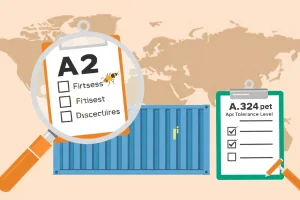
A1 pests are quarantine pests that are not yet present in a region — they are absent and exotic, and importers must keep them out entirely. A2 pests are quarantine pests that are present somewhere in a region but not widely distributed, and the goal is to contain them or prevent them from spreading further. Both sit on regional pest lists (like the EPPO A1 and A2 lists for Europe, or APPPC lists for Asia-Pacific), and each importing country’s NPPO uses these lists as the basis for its own phytosanitary regulations. A quarantine pest, by definition, is one of potential economic importance that is either absent from an area or present but not widely distributed and officially controlled — in contrast to pests that are already widespread and widespread, which are regulated differently or not at all.
Overview
Every country maintains a list of pests it considers dangerous enough to regulate. The rationale is simple: if a pest is widespread in a region and already established in multiple countries, trying to keep it out everywhere is unrealistic and economically unjustifiable. But pests that are absent or localized? Those are worth defending against, because catching a new introduction early is far cheaper than managing an established population.
The lists exist in layers:
- International framework — the IPPC (International Plant Protection Convention) defines what counts as a quarantine pest and provides the standards for identifying, analyzing, and managing them (ISPM 5, ISPM 8, ISPM 11).
- Regional lists — Regional Plant Protection Organizations (RPPOs) like the EPPO (Europe/Mediterranean) or APPPC (Asia-Pacific) maintain recommended A1 and A2 lists for their member regions, based on pest risk analyses and actual pest distribution data.
- National regulations — each country’s NPPO then incorporates these regional recommendations into its own phytosanitary regulations, often adjusting based on local conditions or specific bilateral agreements.
The system is dynamic: pests move, new races emerge, and eradication programmes succeed or fail, so lists change. A pest can move from A1 (absent) to A2 (present but not widespread) when first detected in a region, or can be removed from a list entirely if it has become widespread or if the threat assessment changes.
Why it matters
For an exporter, understanding quarantine pest lists is the difference between clearing customs or being held up, treated, or rejected outright. If you’re shipping coffee from Indonesia to Europe, you need to know: Does this shipment require inspection for the pests on the EPPO A1 list? The A2 list? Are there additional requirements specific to the destination country that go beyond the regional list?
For an importer or customs broker, the lists inform what questions to ask before goods arrive: What origin certificates are needed? What inspection regime applies? Is treatment required?
For an NPPO, the lists drive resource allocation: Where should surveillance focus? Which pests warrant emergency response funding if detected?
The real-world consequence of ignoring these lists is shipment rejection. <cite index=”102-1″>The oriental fruit fly (Bactrocera dorsalis) is a destructive pest that attacks more than 400 types of fruits and vegetables, including apricots, cherries, figs, and tomatoes, and poses a serious threat to U.S. agriculture due to its wide host range and ability to spread rapidly.</cite> If a shipment of mango or papaya from Southeast Asia carries evidence of oriental fruit fly infestation and the destination country has it on its A1 list (absent, must stay out), the shipment will be rejected or the entire consignment destroyed at the port of entry. That’s not a minor inconvenience — it’s a complete loss.
How quarantine pest lists work: A1 vs. A2
A1 pests (absent from the region)
<cite index=”79-1″>A1 pests are not present in the EPPO region.</cite> They are exotic to the region and the goal is exclusion — keep them out entirely through border inspections, phytosanitary certificates, and restrictions on trade pathways known to carry them.
Examples of EPPO A1 pests include:
- Bactrocera invadens (invading fruit fly) — widespread in Africa and parts of Asia but absent from Europe
- Fusarium oxysporum f.sp. cubense tropical race 4 (Fusarium TR4) — the banana wilt pathogen established in multiple Asian countries but absent from Europe, recently added to the A1 list in 2024
- Ceratothripoides brunneus (brown wheat thrips) — native to Asia, absent from Europe
For an NPPO, the regulatory response to A1 pests is straightforward: the pest must not be imported, and any detection triggers emergency eradication response.
A2 pests (present but not widely distributed)
<cite index=”79-1,85-1″>A2 pests are present in the EPPO region but not widely distributed — they are absent from or not widely distributed in endangered areas in certain countries.</cite> The goal shifts from exclusion to containment or suppression: the pest is already somewhere in the region, but preventing its spread to unaffected areas is still valuable.
Examples of EPPO A2 pests include:
- <cite index=”81-1″>Trogoderma granarium (khapra beetle), a highly polyphagous pest of stored products that can infest over 100 commodities including grain seeds, legumes, nuts, and dried plant products, is designated as an A2 quarantine pest by EPPO.</cite>
- Drosophila suzukii (spotted wing drosophila) — present in parts of Southern Europe but limited to certain regions
- Bactrocera tryoni (Queensland fruit fly) — established in parts of Mediterranean but absent from northern Europe
For an NPPO, an A2 pest triggers more nuanced regulations: importers from regions where the pest is absent can certify as pest-free, while imports from affected areas face heightened scrutiny, treatment requirements, or restrictions.
From lists to regulation: quarantine vs. regulated non-quarantine pests
The term “quarantine pest” is the foundation, but not all regulated pests fit that category. There’s another class: regulated non-quarantine pests (RNQPs).
<cite index=”87-1″>Pests that are not quarantine pests may be subject to phytosanitary measures because their presence in plants for planting results in economically unacceptable impacts. They are defined in the IPPC as regulated non-quarantine pests (RNQPs).</cite>
Key differences:
| Aspect | Quarantine pest | Regulated non-quarantine pest (RNQP) |
|---|---|---|
| Presence | Absent or not widely distributed in the area | Already established in the area |
| Regulatory goal | Exclusion, eradication, or containment | Suppression to economically tolerable levels |
| Risk assessment | Must evaluate probability of establishment AND long-term economic impact | Must evaluate economic impact via plants for planting pathway only |
| Measure intensity | Can be strict (full restrictions) | Proportionate to the risk; typically less restrictive |
| Example | Mediterranean fruit fly in northern Europe | Certain mite species already present but controlled on seed potatoes |
<cite index=”87-1″>The distinction between RNQPs and quarantine pests, both of which are regulated pests, is described in terms of the pest status, pathway, commodity, economic impacts and type of official control.</cite>
For exporters, this matters because an RNQP-regulated commodity might require inspection or certification but won’t face a complete ban. A quarantine pest, by contrast, can result in rejection or destruction if found.
Where to find pest lists: regional and national frameworks
Regional lists
<cite index=”79-1″>The EPPO A1 and A2 Lists include the pests which EPPO recommends to be regulated as quarantine pests, in the national phytosanitary regulations of EPPO Member Countries. These recommendations are based on appropriate documentation, and since the 2000s on Pest Risk Analyses (PRAs).</cite> The EPPO lists are updated annually and published on the EPPO website with links to full pest datasheets, PRAs, and diagnostic protocols.
<cite index=”96-1″>The Asia and Pacific Plant Protection Commission (APPPC) has established phytosanitary harmonization strategies and regional standards, including guidelines on pest risk analyses and import protocol development.</cite> APPPC member countries in the Asia-Pacific region (including Indonesia, which operates within this regional framework) coordinate pest listings and import requirements.
<cite index=”94-1″>Countries such as Indonesia, Malaysia, Philippines, Thailand, and Singapore of the ASEAN region have come to an official level understanding and have formulated a common set of quarantine regulations to protect the region against alien pests/pathogens.</cite> While a unified ASEAN-wide A1/A2 list is not formally published in the same way as EPPO’s, these countries coordinate through APPPC and bilateral agreements.
National regulations
Each country’s NPPO publishes its own phytosanitary regulations, often incorporating regional recommendations but adjusted for local agriculture and trade priorities. For Indonesia, Badan Karantina Indonesia (Barantin) publishes its quarantine regulations and the list of regulated pests under the framework of Law No. 21/2019 and Presidential Regulation No. 45/2023.
Step-by-step: how to check if your commodity is on a quarantine pest list
- Identify your commodity and destination. What are you shipping (fresh fruit, seeds, cut flowers, timber) and to which country or region?
- Check the destination country’s import requirements. Visit the importing country’s NPPO website (APHIS for the U.S., DEFRA/UK for the UK, Barantin for shipments to Indonesia, etc.) or search the international trade facilitation database. The importing country sets the rules.
- Search for your commodity and commodity code. Most NPPOs organize requirements by HS code, commodity category, or origin country. Some provide searchable databases (like the USDA’s Phytosanitary Export Database).
- Cross-reference regional pest lists. If you’re exporting to a country in EPPO, check the current EPPO A1 and A2 lists. For Asia-Pacific, review APPPC member requirements and bilateral arrangements.
- Confirm pest-specific documentation. If regulated pests apply to your commodity, check whether:
- A phytosanitary certificate is required?
- Inspection is needed in the country of origin?
- Treatment (fumigation, heat, cold, irradiation) is necessary?
- A pest-free area certificate is an option?
- Apply for inspection/certification well in advance. Build in lead time — getting a consignment inspected, treated, and certified takes time, especially if the NPPO must confirm compliance with a specific pest list requirement.
Real-world examples: pest list changes and implications
Oriental fruit fly (Bactrocera dorsalis) — A1 in Europe, established in Asia
<cite index=”108-1″>Bactrocera dorsalis is a tropical species that is widespread through much of the mainland of Southern Asia, neighboring islands, and in Africa.</cite> <cite index=”102-1″>It attacks more than 400 types of fruits and vegetables, including apricots, cherries, citrus, figs, peaches, pears, plums and tomatoes, and poses a serious threat to U.S. agriculture.</cite>
For exporters in Indonesia shipping tropical fruit to Europe, oriental fruit fly is an A1 pest in EPPO — it’s not established in Europe and must not be introduced. Any shipment found to carry the pest is rejected. Consequently, Indonesian exporters of mango, papaya, or guava must ensure their production areas are free of this fly or use approved treatments before export.
However, for trade within Southeast Asia, oriental fruit fly’s status is different: it’s already established in Indonesia, Thailand, Philippines, and other regional countries, so intra-regional trade doesn’t face the same absolute prohibition. This illustrates how the same pest can be A1 for one region and endemic (not regulated as a quarantine pest) for another.
Fusarium TR4 (tropical race 4) — recently added to EPPO A1 list (2024)
<cite index=”78-1″>In September 2024, the EPPO Council approved Fusarium oxysporum f.sp. cubense Tropical race 4 as a new addition to the EPPO A1 List of pests absent from the EPPO region.</cite> This reflects the recent emergence of TR4 as a distinct phytosanitary threat — the pathogen is established in parts of Asia but absent from Europe, and the risk assessment justified its elevation to the A1 list.
For banana and plantain exporters in affected countries, this means:
- Importing countries in EPPO now require documentation that banana planting material is free of TR4
- New diagnostic protocols are being developed to detect the pathogen reliably
- NPPOs are strengthening surveillance and quarantine procedures
This is an example of a list entry driven by an active, evolving threat — TR4 spread, rather than remaining static.
Sources
- EPPO, A1 and A2 Lists of pests recommended for regulation as quarantine pests (https://www.eppo.int/ACTIVITIES/plant_quarantine/A1_list, https://www.eppo.int/ACTIVITIES/plant_quarantine/A2_list) — reviewed annually, updated through Council approval
- EPPO Reporting Service (September 2024) — New additions to EPPO A1 and A2 Lists, including Fusarium oxysporum f.sp. cubense Tropical race 4
- EPPO Standard PM 1/002 (2021) — EPPO A1 and A2 Lists of pests recommended for regulation as quarantine pests: background, development and use
- IPPC, ISPM 5 — Glossary of phytosanitary terms (2020)
- IPPC, ISPM 8 — Determination of pest status in an area (adopted CPM-15, 2021)
- IPPC, ISPM 11 — Pest risk analysis for quarantine pests (adopted CPM-13, 2013)
- IPPC, ISPM 16 — Regulated non-quarantine pests: concept and application (2002)
- IPPC, ISPM 21 — Pest risk analysis for regulated non-quarantine pests (2004)
- APPPC (Asia and Pacific Plant Protection Commission) — phytosanitary coordination and regional standards
- USDA APHIS — Bactrocera dorsalis (Oriental Fruit Fly) host list and quarantine status (updated 2016; screening date July 2025)
- FAO/IPPC Global Coordination Programme — Fusarium oxysporum f. sp. cubense Tropical Race 4 (CPM-17, 2023)
- Badan Karantina Indonesia (Barantin) — Plant, animal, and fish quarantine regulations under Law No. 21/2019 and Presidential Regulation No. 45/2023
Last verified: 31 July 2026. Quarantine pest lists and regional coordinations change regularly — recheck EPPO, APPPC, and national NPPO sources before republishing to ensure current status of A1/A2 listings and pest-specific requirements.
FAQ
How often are the A1 and A2 pest lists updated?
Both the EU and USDA review and publish updates to their quarantine pest lists at least once a year, typically in the first quarter.
Can a shipment be cleared without a phytosanitary certificate if a treatment was applied?
No. Even with an approved treatment, a valid phytosanitary certificate is required to attest that the treatment met regulatory standards.
What is the difference between an A1 and an A2 pest?
A1 pests are high‑risk quarantine pests that trigger strict import bans or mandatory treatments; A2 pests are moderate‑risk and may allow conditional entry with additional safeguards.





Leave a Reply