Short Answer
Quick definition
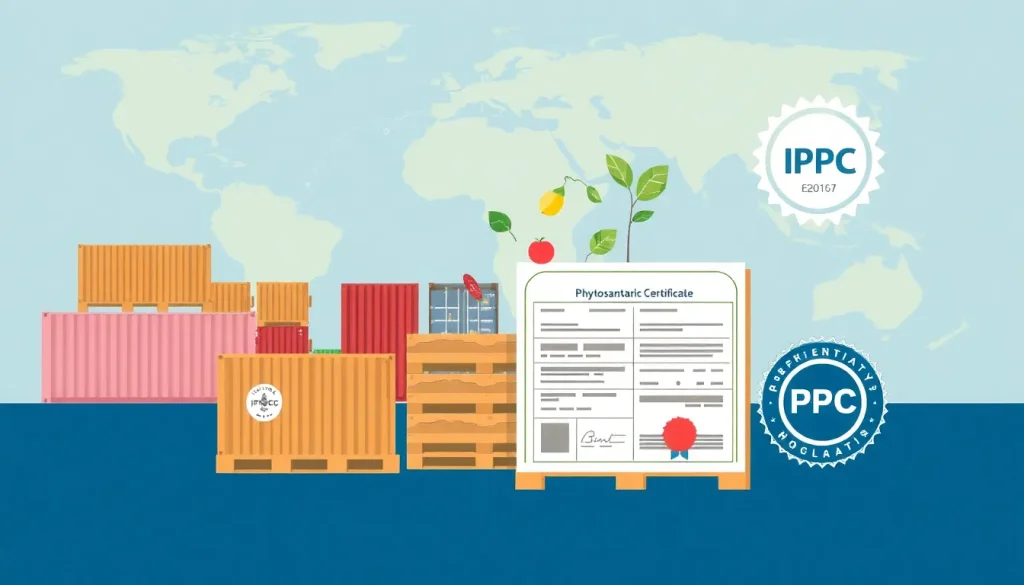
A phytosanitary certificate (PC) is an official document issued by a country’s National Plant Protection Organization (NPPO) certifying that a shipment of plants, plant products, or other regulated articles has been inspected and meets the plant-health import requirements of the destination country. It’s built on a standard international template set out in ISPM 12 (Phytosanitary certificates), one of the International Standards for Phytosanitary Measures maintained by the International Plant Protection Convention (IPPC). Without a valid one, most countries will refuse entry to regulated plant material at the border — full stop.
Overview
Every country that grows or imports food, timber, cut flowers, seeds, or ornamental plants has an interest in keeping foreign pests and diseases out. The phytosanitary certificate is the mechanism that lets that happen without stopping trade entirely: instead of inspecting every shipment blind, the importing country outsources part of the check to the exporting country’s own plant health authority, and the certificate is the paper (or now, increasingly, digital) proof that this check happened and the goods passed.
The system runs on a shared international rulebook rather than each country inventing its own paperwork from scratch. The IPPC, whose secretariat sits inside the UN’s Food and Agriculture Organization, maintains that rulebook. The certificate’s structure, its required fields, and the rules for how it can be issued, corrected, or rejected all come from two companion standards:
- ISPM 7 — sets out what a country needs in place before it can issue phytosanitary certificates at all: legal authority, a functioning NPPO, trained inspectors, and a system for reviewing how well the certification program is working.
- ISPM 12 — governs the certificate itself: what has to appear on it, how it’s completed, how re-export certificates work, and what counts as valid grounds for the importing country to reject it.
Both standards have been revised multiple times as trade has digitalized; ISPM 12 most recently went through a focused revision adopted in 2022, and IPPC members are still refining the re-export provisions as of this writing.
Why it matters
For an exporter, the certificate isn’t a formality — it’s the thing standing between a shipment clearing customs and a shipment being refused, fumigated at the importer’s expense, or destroyed at the port. A missing, expired, or incorrectly completed certificate can mean:
- The consignment is held at the border while the exporter scrambles to get a corrected document couriered or re-issued — often impossible once the goods have already left the country of origin.
- Perishable goods (fresh fruit, cut flowers, seed potatoes) simply rot in a container while the paperwork is sorted out.
- The importer eats demurrage and storage fees, or the exporter eats a contract penalty for late or failed delivery.
- Repeated non-compliance from the same exporter or origin country can trigger heightened scrutiny or import restrictions that outlast the single shipment.
This is why the certificate deserves to be planned as part of the shipping timeline, not treated as paperwork to sort out after the goods are already on a truck to the port.
The compliance landscape is also actively digitalizing. As of the IPPC’s own October 2025 program update, 96 countries were in some stage of digitalizing their phytosanitary certification through the ePhyto Solution — the global system for producing and exchanging electronic phytosanitary certificates. Indonesia is among the countries participating in this electronic exchange, which matters directly for exporters of coffee, cocoa, spices, and tropical fruit moving through Badan Karantina Indonesia (Barantin), the country’s plant, animal, and fish quarantine authority.
How the certification process actually works
Stripped of country-specific detail, every phytosanitary certification process follows the same underlying logic:
- The importing country sets the requirement. It decides, commodity by commodity, whether a phytosanitary certificate is required at all, and whether it needs any additional declarations beyond the standard template (for example, a statement that the consignment was fumigated, or that it originates from an area free of a specific pest).
- The exporter applies to their own country’s NPPO — not the importing country’s authority — for inspection and certification.
- An authorized official inspects the consignment. This might be a visual inspection, sampling, laboratory testing, or verification that the goods came from a registered pest-free production site or underwent a required treatment.
- If the consignment passes, the certificate is issued by that authorized official, on behalf of the exporting country’s NPPO, either on the official paper form or as an ePhyto message.
- The certificate travels with the shipment (physically or electronically) to the port of entry, where the importing country’s own quarantine or customs authority checks it against the consignment and its own requirements before releasing the goods.
The document itself is deliberately standardized around a model text set out in ISPM 12, so that an inspector in the destination country can recognize and process a certificate issued anywhere in the world without needing to interpret unfamiliar formats. It typically records: the exporter’s and consignee’s names and addresses; a description of the consignment (botanical name, quantity, distinguishing marks); the declared point of entry and means of transport; any treatment applied (a dedicated section for disinfestation or disinfection details); any additional declaration specifically required by the importing country; and the official stamp, seal, or signature of the authorized officer.
Types of phytosanitary certificates
By function:
- Phytosanitary certificate for export (PC) — issued by the NPPO of the country where the commodity was actually grown or processed.
- Phytosanitary certificate for re-export (PC/R) — issued by the NPPO of an intermediary country, when a consignment passes through without being grown or processed there, was not exposed to infestation risk during transit or storage, and still complies with the final destination’s import requirements. A PC/R is always issued alongside (or with reference to) the original PC from the country of origin — it doesn’t replace it.
By format:
- Paper certificate — the traditional signed and stamped document, still the norm in many trade lanes.
- Electronic phytosanitary certificate (ePhyto) — the same content, structured to a harmonized electronic format and exchanged directly between NPPO systems (or through the IPPC’s shared hub for countries without their own national system). ePhyto reduces fraud risk and processing delays but requires both the exporting and importing country to be connected to the exchange.
Country-specific examples (United States): the U.S. issues several distinct forms depending on the situation rather than a single universal certificate — a standard export certificate for unprocessed or unmanufactured domestic plant products, a separate certificate for processed plant products carrying lower pest risk, and a distinct re-export certificate for foreign goods that entered the U.S. and are now moving onward. Most other countries follow the same functional split (export vs. re-export) even where the exact form numbering differs.
Requirements and standards behind the certificate
A few principles from ISPM 12 are worth understanding because they explain why certificates get rejected, not just what the rules technically say:
- Additional declarations should be minimal. Importing countries are only supposed to require extra statements on the certificate when there’s a specific, technically justified reason — not a blanket list of boilerplate. As an exporter, this cuts both ways: you need the exact wording the destination country requires, no more and no less, and substituting your own phrasing for a required declaration is a common rejection trigger.
- The requirements themselves should be transparent, non-discriminatory, and technically justified — importing countries aren’t supposed to invent arbitrary certificate requirements, and NPPOs are expected to consult bilaterally when there’s a dispute over whether a requirement is actually justified.
- Validity is set by the exporting or importing country, not by convenience. ISPM 12 explicitly allows NPPOs to restrict how long a certificate remains valid between inspection and shipment, because the phytosanitary condition of the goods can change after inspection (through re-contamination, changes in storage conditions, and so on). In practice, this is why validity windows are often short — commonly cited ranges across national programs run from about a week for perishable goods up to roughly 30 days for non-perishable goods, though the exact number is set independently by each importing (or re-exporting) country and by commodity, so it must be confirmed for the specific shipment rather than assumed from a general rule of thumb.
- One certificate covers one consignment. Splitting a shipment after certification, or trying to apply a single certificate across multiple containers, is treated as misuse rather than a shortcut.
Regional and national frameworks then sit on top of this international baseline — for example, the EU’s plant health regime (Regulation (EU) 2016/2031), the U.S. export certification regulations (7 CFR Part 353), and Indonesia’s karantina law (Law No. 21/2019, implemented through Barantin under Presidential Regulation No. 45/2023) all reference the same ISPM 12 template while adding their own procedural detail.
Step-by-step: getting a phytosanitary certificate
- Confirm whether you need one at all, and what’s specifically required. Check the destination country’s published import requirements for your exact commodity and HS classification — many countries publish these, and some exporting-country NPPOs maintain a lookup database of foreign import requirements as a service to their own exporters.
- Apply to your own NPPO early, not the destination country’s authority. Build in lead time — inspection scheduling, any required treatment, and processing time all take longer than exporters expect, especially for a first-time commodity or destination.
- Keep the consignment available and unaltered for inspection. Don’t seal it into a container or commingle it with other goods before the inspector has examined it; repackaging after inspection but before shipment is a common way certificates become invalid.
- Complete any required treatment — fumigation, heat treatment, cold treatment, or another accepted method — and make sure it’s documented in the treatment section of the certificate, not just mentioned in a separate letter.
- Pay the applicable inspection/certification fee. Fees vary by issuing authority and are generally treated as a service charge for the inspection, not a tax.
- Receive the certificate — paper or ePhyto — and match every field against your shipping documents (botanical name, quantity, consignee details, port of entry) before the goods depart.
- Ship within the certificate’s validity window. If there’s any risk of delay, check whether the certificate is tied to the inspection date or the issue date — they’re not always the same thing, and missing this distinction is one of the most common ways a technically “valid” certificate expires while the shipment is still in port.
- Keep a copy and any tracking reference from your NPPO’s certification system in case the destination authority queries the shipment on arrival.
Common mistakes and rejection reasons
Reasons an importing country can legitimately reject a phytosanitary certificate are actually fairly well defined internationally, which makes them worth knowing in advance rather than discovering at the border:
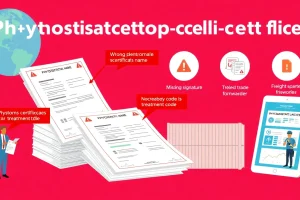
- Illegible or incomplete — missing fields, unclear handwriting on paper certificates, or a scan quality poor enough that key details can’t be read.
- Validity expired, or the certificate wasn’t issued within the timeframe the importing (or re-exporting) country specifies.
- Unauthorized alterations or erasures. A certificate can’t simply be corrected with a pen; a replacement has to be issued through the proper channel, or the correction itself becomes grounds for rejection.
- Conflicting or inconsistent information — for example, a quantity or botanical name on the certificate that doesn’t match the actual shipping documents or the physical consignment.
- Non-standard wording on additional declarations — substituting your own phrasing for language the importing country requires verbatim.
- Certification of a product that’s actually prohibited for import regardless of phytosanitary status.
- Uncertified copies presented in place of an original or a properly certified copy.
Most of these are avoidable with the same discipline: apply early, don’t touch the consignment after inspection, match every field exactly, and treat the certificate as tied to a single, unaltered shipment.
A worked example
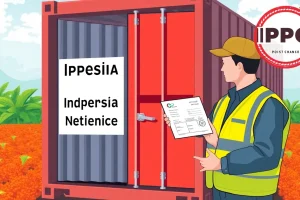
Consider an Indonesian exporter shipping a container of roasted and green coffee to a buyer in the EU. Before booking the shipment, the exporter (or their freight forwarder) checks the EU’s plant health import conditions under Regulation (EU) 2016/2031 for the relevant coffee tariff lines, then applies to Barantin for inspection well ahead of the vessel’s departure. A Barantin inspector examines the consignment, confirms it meets the required conditions, and — because Indonesia participates in the IPPC’s electronic exchange — issues the certificate as an ePhyto message rather than a paper document. That certificate is transmitted through the ePhyto hub to the EU’s border control post, where it’s checked electronically against the arriving shipment. Because everything matches — quantity, description, any required declaration — the consignment clears without a physical hold-up. The same shipment, had the certificate been issued with the wrong HS description or outside its validity window, could have sat at the EU port awaiting a corrected document that, by that point, is difficult to obtain from origin.
Sources
- IPPC, ISPM 12 — Phytosanitary certificates (adopted CPM-16, 2022; language versions reviewed through 2023; further focused revision on re-export provisions in progress)
- IPPC, ISPM 7 — Phytosanitary certification system
- IPPC ePhyto Solution — programme updates, October 2025
- USDA APHIS — Plant Protection and Quarantine export certification program; 7 CFR Part 353
- Regulation (EU) 2016/2031 on protective measures against plant pests
- Badan Karantina Indonesia (Barantin) — established under Presidential Regulation No. 45/2023, implementing Law No. 21/2019
Last verified: 31 July 2026. Regulatory detail changes — recheck primary sources on your standard review cadence before republishing.
FAQ
What information must be included on a phytosanitary certificate?
The certificate must list the exporter, importer, commodity description, origin, treatment details (if any), NPPO signature, certificate number, and the date of issuance.
Can a phytosanitary certificate be issued electronically?
Yes. Many NPPOs now provide e‑certificates that are accepted by customs, provided the importing country has approved electronic formats.
How long is a phytosanitary certificate valid after issuance?
Validity periods vary by commodity and destination, but most certificates are valid for 30 days; some high‑risk items may require issuance within 7 days of shipment.





Leave a Reply