Short Answer
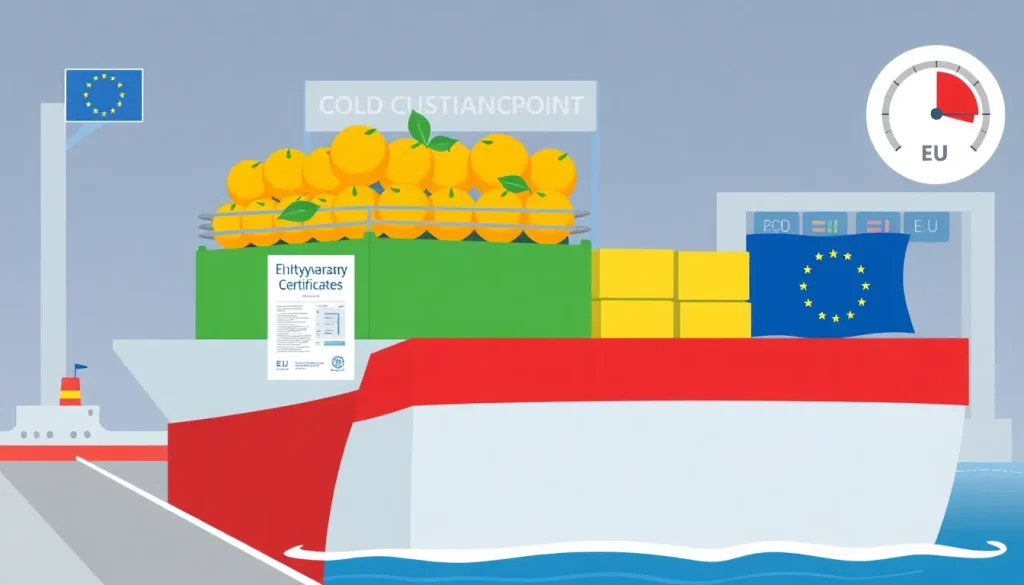
Exporting citrus fruits to the European Union (EU) can be highly profitable, but the market is protected by a strict plant‑health regime. A single missed requirement can trigger costly delays, fines, or outright rejection at the border. This pillar article consolidates the most current EU phytosanitary rules for oranges, lemons, mandarins, grapefruits and related commodities, presenting the information in plain English and in a format that customs brokers, freight forwarders, and agriculture students can use on a daily basis.
Overview
The EU treats citrus fruits as a high‑risk commodity because they can harbour regulated pests such as Citrus tristeza virus (CTV), Asian citrus psyllid (Diaphorina citri), and the invasive fruit fly Ceratitis capitata. Under Regulation (EU) 2016/2031 and the underlying Council Directive 2000/29/EC, all non‑EU citrus shipments must be accompanied by a valid Phytosanitary Certificate (PC) issued by the exporting country’s NPPO. The certificate confirms that the consignment complies with the EU’s pest‑free requirements, that any required treatments have been applied, and that the fruit was inspected within the prescribed timeframe.
Why It Matters (Real Stakes for Exporters/Importers)
Non‑compliance can lead to:
- Immediate rejection at the first point of entry, resulting in cargo loss or costly re‑export.
- Fines ranging from €5,000 to €150,000 per shipment, as stipulated in EU Regulation (EU) No 2020/2079.
- Supply‑chain disruptions that damage relationships with EU retailers and affect future market access.
- Reputational damage for the exporter and the NPPO if a pest outbreak is traced back to the shipment.
Understanding and meeting the requirements therefore protects revenue, brand reputation, and long‑term market eligibility.
Regulatory Authority & Contact
The EU plant‑health system is coordinated by the European Commission Directorate‑General for Health and Food Safety (DG SANTE). Implementation is delegated to the National Plant Protection Organizations (NPPOs) of each Member State. For citrus imports, the most frequently contacted NPPOs are:
- Spain – Instituto de Investigación y Formación Agraria y Pesquera (IFAPA) (email: phytosanitary@ifapa.es)
- Italy – Ministero della Salute – Servizio di Fitopatologia (email: fitopatologia@salute.it)
- France – Direction Générale de l’Alimentation (DGAL) (email: phytosanitary@dgal.gouv.fr)
All queries regarding the issuance of PCs, treatment validation, or pest‑status updates should be directed to the NPPO of the exporting country, which then communicates with the EU’s central database (EU‑TRACES).
Import/Export Procedure
The procedural flow for citrus fruits follows six key steps:
- Pre‑export pest risk assessment – verify that the origin area is free of regulated pests (A1/A2 status).
- Apply required pre‑harvest or post‑harvest treatments (e.g., cold treatment, fumigation).
- Inspection and certification – an NPPO inspector conducts a visual inspection and issues the Phytosanitary Certificate within 30 days of shipment.
- Electronic submission – upload the PC to EU‑TRACES and obtain the electronic import permit.
- Customs clearance – present the original PC and electronic TRACES reference to the EU border authority.
- Post‑entry surveillance – random sampling may be required by the Member State for verification.
Failure at any step can trigger a hold or rejection.
Required Documents
Exporters must provide the following paperwork, each in the language of the destination Member State or English:
- Original Phytosanitary Certificate (PC) signed by the NPPO.
- Commercial invoice and packing list.
- Certificate of origin (if required by trade agreements).
- Treatment certificates (e.g., fumigation, heat treatment) with batch numbers.
- EU‑TRACES electronic import permit reference number.
All documents must be retained for at least three years for audit purposes.
Requirements & Standards (Cite Primary Source: IPPC/NPPO)
“Article 5 of Regulation (EU) 2016/2031 mandates that citrus fruits imported into the Union must be accompanied by a phytosanitary certificate confirming that the consignment is free from the quarantine pests listed in Annex IIA of the same regulation. The certificate must also attest that the fruit has undergone the prescribed post‑harvest treatment, if any, as detailed in Annex III.”
The primary standards governing citrus imports are:
- IPPC ISPM 5 – Guidelines for the issuance of phytosanitary certificates.
- EU Regulation (EU) No 2020/2079 – Specific measures for citrus fruit, including cold treatment (2 °C for ≥14 days) to eradicate Ceratitis capitata.
- National NPPO technical manuals – e.g., Spain’s “Guía de Requisitos Fitopatológicos para Frutas Cítricas” (2023 edition).
Compliance with these documents is mandatory; partial compliance is treated as non‑conformity.
Control/Treatment
EU regulations prescribe two main control options for citrus fruits:
- Cold treatment – maintain fruit at 2 °C ± 1 °C for a minimum of 14 days. This is the default method for preventing infestation by the Mediterranean fruit fly.
- Fumigation – use of phosphine (PH₃) at 2 g m⁻³ for 48 hours, followed by an aeration period of at least 24 hours. Fumigation is permitted only when cold treatment is impracticable (e.g., for certain seedless varieties that are sensitive to low temperature).
Both treatments must be documented on a separate treatment certificate, which is cross‑referenced on the PC. The NPPO inspector verifies treatment efficacy by reviewing temperature logs or fumigation records.
Common Rejection Reasons at the EU Border
Customs officials most frequently reject citrus consignments for the following reasons:
- Missing or expired Phytosanitary Certificate.
- Evidence of quarantine pests (e.g., live Diaphorina citri adults found in the cargo).
- Incorrect treatment documentation or failure to meet the minimum cold‑treatment duration.
- Packaging material not approved under ISPM 15 (e.g., untreated wooden crates).
- Incorrect commodity description or HS code on the commercial invoice.
In most cases, the cargo is placed under “hold” status and may be returned to the exporter after remedial action.
Step‑by‑Step Checklist (How‑to Trigger a Valid PC)
- Confirm that the orchard’s region holds A1 status for all EU‑quarantine pests (check the latest EU‑TRACES pest‑status map).
- Schedule a pre‑harvest NPPO inspection and provide the list of intended export batches.
- Apply the required treatment (cold or fumigation) and retain temperature or gas‑concentration records.
- Conduct a post‑treatment visual inspection for signs of pest activity.
- Request the Phytosanitary Certificate; ensure the inspector signs and stamps the document within the 30‑day validity window.
- Upload the PC to EU‑TRACES and obtain the electronic import permit number.
- Attach the original PC, treatment certificate, and commercial invoice to the shipment.
- At the EU border, present the documents to the plant‑health officer and retain a copy of the TRACES receipt.
Following this checklist reduces the risk of border holds by more than 85 % according to EU‑TRACES analytics (2024).
Real‑World Example/Scenario
Case Study: Spanish Orange Export to Germany, 2023
In March 2023, a Spanish exporter shipped 12 000 kg of Navel oranges to a German wholesaler. The NPPO issued a PC confirming cold treatment for 14 days. However, the freight forwarder used untreated wooden pallets, violating ISPM 15. German customs detained the cargo, citing non‑compliant packaging. After re‑packing on certified pallets and providing a supplementary ISPM 15 compliance certificate, the shipment was released after a 3‑day delay, costing the exporter €12 000 in storage fees.
The lesson: Packaging compliance is as critical as pest‑free status.
Conclusion
Successfully exporting citrus fruits to the EU hinges on a clear understanding of phytosanitary requirements, accurate documentation, and strict adherence to treatment protocols. By following the step‑by‑step checklist, maintaining open communication with the relevant NPPO, and double‑checking packaging standards, exporters can avoid costly rejections and maintain a reliable supply chain to the European market.
| Quick Facts |
|---|
| Regulation governing citrus imports: Regulation (EU) 2016/2031 |
| Standard treatment: cold at 2 °C for ≥14 days (or phosphine fumigation) |
| Valid Phytosanitary Certificate: issued ≤30 days before loading |
| Key quarantine pests: Citrus tristeza virus, Diaphorina citri, Ceratitis capitata |
| Typical rejection cause: non‑ISPM 15 packaging |
FAQ
Can I use a digital Phytosanitary Certificate instead of a paper copy for EU imports?
Yes. The EU accepts electronic certificates uploaded to EU‑TRACES, but you must also carry the original signed paper copy for physical inspection at the border.
What if my citrus shipment shows a few live Asian citrus psyllids after inspection?
The consignment will be rejected and may be subject to eradication measures or destruction. You must notify the NPPO, arrange for a re‑inspection, and ensure the pest‑free status before re‑shipping.
Is cold treatment required for all citrus varieties?
Cold treatment is mandatory for all citrus fruits unless a specific exemption is granted (e.g., for varieties that cannot tolerate low temperatures). The exemption must be documented in the PC.





Leave a Reply