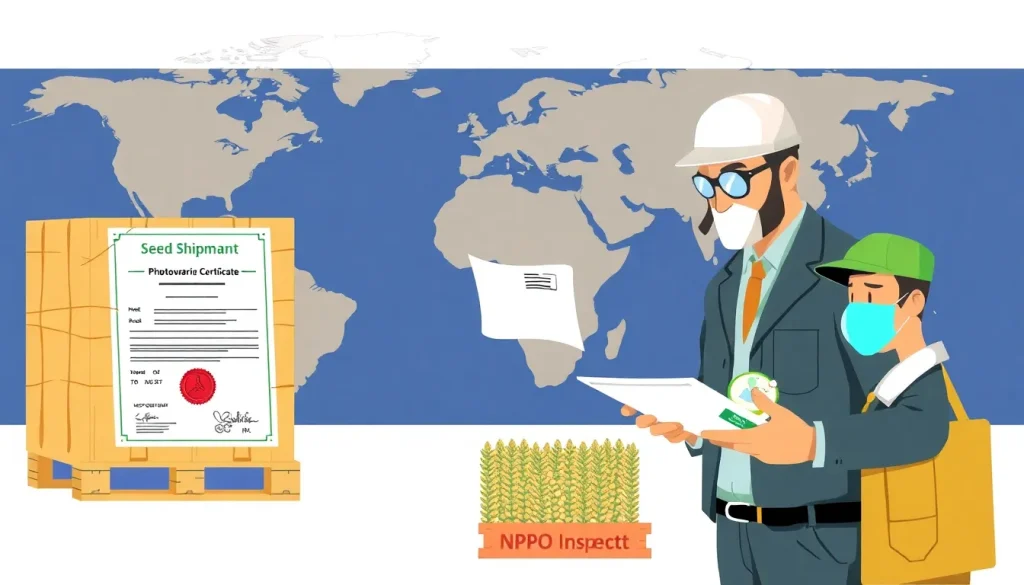
Short Answer
Exporting seed is a high‑value activity, but without a valid phytosanitary certificate (PC) the shipment can be delayed, re‑routed, or destroyed. This step‑by‑step guide breaks down the entire application process, explains why the certificate matters, lists every document you must submit, and highlights the most common reasons customs officials reject a PC. Whether you are a seasoned exporter, a customs broker, or an agriculture student, the information below gives you fast, accurate answers in plain English.
Overview
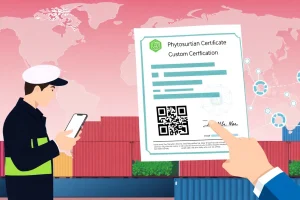
A phytosanitary certificate is an official document issued by the National Plant Protection Organization (NPPO) of the exporting country. It certifies that the consignment complies with the plant‑health requirements of the importing country and is free from regulated pests and diseases. For seed exports, the PC must reference the specific seed lot, its scientific name, treatment status, and any required testing results.
Why it matters (real stakes for exporters/importers)
Failing to obtain an accurate PC can have severe financial and reputational impacts:
- Shipment delays: Customs will hold the cargo until a valid PC is produced, increasing freight costs.
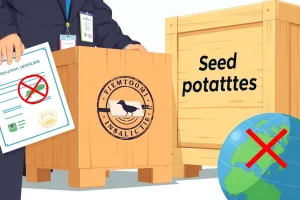
- Rejection or destruction: Non‑compliant seed may be returned to the exporter or destroyed, resulting in total loss of product.
- Market access loss: Repeated violations may lead to a ban on future shipments to the affected country.
- Legal penalties: Some jurisdictions impose fines for false declarations.
In short, a well‑prepared PC protects the supply chain, preserves market relationships, and ensures compliance with the International Plant Protection Convention (IPPC) and World Trade Organization (WTO) SPS Agreement.
Regulatory authority & contact
The authority that issues the PC is the NPPO of the exporting country. Below is a quick reference for the most common contacts:
| Country | NPPO Agency | Contact Email | Phone |
|---|---|---|---|
| United States | USDA‑APHIS Plant Protection and Quarantine | phytosanitary@aphis.usda.gov | +1‑202‑720‑2791 |
| Canada | Canadian Food Inspection Agency (CFIA) | phytosanitary@inspection.gc.ca | +1‑613‑773‑5310 |
| European Union | EU Delegated Authority (via Member State NPPO) | phytosanitary@ec.europa.eu | +32‑2‑299‑11‑11 |
Always verify the latest contact details on the official NPPO website before submitting an application.
Required documents
When you lodge a PC application for seed, the following documents are typically required. Missing any item will trigger a rejection.
- Completed PC application form (PDF or electronic portal as prescribed by the NPPO).
- Seed analysis report confirming germination rate and absence of regulated pests (e.g., Fusarium spp., Quarantine insects).
- Phytosanitary treatment certificate, if the seed has undergone heat, chemical, or irradiation treatment.
- Commercial invoice and packing list showing the exact seed lot number, weight, and destination.
- Export permit or phytosanitary export license, where required by the exporting country.
- Import permit from the destination country (some jurisdictions demand a pre‑issued permit before the PC can be issued).
All documents must be in the language(s) accepted by the NPPO, often English and the official language of the destination country.
Step‑by‑step checklist (How‑to trigger)
Follow this chronological checklist to avoid missing any critical step.
- Confirm import requirements: Review the destination country’s seed import regulations (ISPM 15, national NPPO guidelines).
- Obtain a pre‑export inspection: Schedule an NPPO‑approved inspector to examine the seed lot.
- Gather supporting documents: Collect analysis reports, treatment certificates, and permits.
- Complete the PC application: Fill in seed lot identification, origin, destination, and any pest‑free statements.
- Submit the application: Use the NPPO’s electronic portal or physical submission office.
- Pay fees: Most NPPOs charge a processing fee; retain receipt for customs.
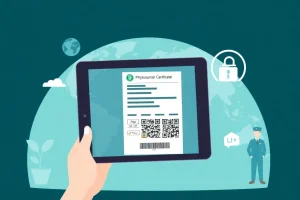
- Receive the PC: The NPPO will issue a printable or electronic certificate, usually within 3‑5 business days if complete.
- Attach PC to shipment: Include the original PC in the cargo documentation set; some destinations require a digital copy uploaded to their customs portal.
Any deviation from this order—especially skipping the pre‑export inspection—will almost certainly cause a delay.
Common mistakes & rejection reasons
Even experienced exporters fall into traps. Below are the most frequent errors and how to avoid them.
- Incorrect scientific name: Use the accepted binomial name (e.g., Glycine max for soybean seed). Misspellings trigger an automatic rejection.
- Missing treatment details: If the seed was heat‑treated, specify temperature, duration, and certification number.
- Out‑of‑date analysis report: Most NPPOs require a pest analysis dated within 30 days of shipment.
- Inconsistent lot numbers: The lot number on the PC must match the one on the invoice and packing list exactly.
- Failure to attach import permit: Some countries (e.g., Japan, Australia) will not accept a PC without a valid import permit on file.
Address each point before submission to reduce the chance of a “rejection at border” notice.
Requirements & standards (citing primary sources)
The global framework for phytosanitary certification is set out in the IPPC’s International Standards for Phytosanitary Measures (ISPM). For seed, the most relevant standards are:
“ISPM 31 – Seed – Requirements for Phytosanitary Certification and for the Regulation of Seed Movement” (FAO, 2023).
National NPPOs may add stricter criteria. For example, the United States follows the USDA‑APHIS Seed Certification Manual (2022), which requires a minimum germination rate of 85 % and a zero‑tolerance test for Phytophthora infestans on potato seed.
| Standard | Key Requirement for Seed | Reference |
|---|---|---|
| ISPM 31 | Evidence of freedom from regulated pests; treatment verification if required. | FAO, 2023 |
| USDA‑APHIS Manual | ≥85 % germination; no detectable Fusarium spp.; treatment record if heat‑treated. | USDA, 2022 |
| EU Seed Regulation (EU) 2018/2019 | Seed must meet EU seed marketing standards; optional phytosanitary inspection. | European Commission, 2019 |
Compliance with these standards is mandatory for the PC to be accepted by any importing authority.
Import/export procedure
The movement of seed across borders follows a defined workflow:
- Pre‑shipment planning: Verify import requirements and obtain any necessary permits.
- Inspection & sampling: NPPO inspector collects seed samples for laboratory analysis.
- Laboratory testing: Accredited lab conducts pest, disease, and germination tests.
- Certificate issuance: NPPO reviews results, signs the PC, and assigns a unique certificate number.
- Customs clearance: Importing country’s plant quarantine authority cross‑checks the PC against the import permit.
- Post‑arrival monitoring: Some countries require a post‑entry quarantine period or field inspection.
Each step must be documented; missing documentation at any stage can lead to a “re‑inspection” order, adding days to the transit time.
Real‑world example/scenario
Case study: A Canadian soybean seed exporter prepared a shipment to Brazil in March 2024. The exporter omitted the phytosanitary treatment certificate for a heat‑treatment performed in a third‑party facility. Brazil’s Ministry of Agriculture rejected the PC, citing non‑compliance with ISPM 31. The shipment was held for 7 days, incurring $12,000 in demurrage fees. After providing the missing treatment record, a revised PC was issued, and the cargo cleared.
Key lessons:
- Always include treatment certificates when a seed lot has undergone any phytosanitary measure.
- Maintain a clear paper trail linking the treatment facility, the lab report, and the PC.
- Verify the destination country’s tolerance for missing documents before dispatch.
Conclusion
Preparing a phytosanitary certificate for seed exports is a meticulous but manageable process. By understanding the regulatory framework, gathering the correct documents, and following the step‑by‑step checklist, exporters can avoid costly delays and keep their markets open. Use the quick facts table below as a final reference before you submit your application.
FAQ
Can I submit a phytosanitary certificate electronically?
Yes. Most NPPOs now accept electronic applications through secure portals. Verify that the importing country also accepts digital PCs.
What if my seed lot fails the pest analysis?
The lot must be treated or re‑tested until it meets the pest‑free criteria of the destination country. A failed test will result in PC rejection and shipment hold.
Do I need a separate import permit for each destination country?
Typically, yes. Each importing country issues its own permit outlining specific requirements. The PC must reference the valid import permit number.




Leave a Reply