Short Answer
The Oriental fruit fly, Bactrocera dorsalis, is one of the world’s most damaging quarantine pests for fruit and vegetable exports. Its rapid spread, broad host range, and ability to develop resistance make it a top priority for phytosanitary officials and trade partners. This pillar article gives exporters, importers, customs brokers, freight forwarders, and agriculture students a clear, encyclopedia‑style reference on how to manage the threat through integrated pest management (IPM) and compliant certification processes.
Overview
Bactrocera dorsalis (Diptera: Tephritidae) is a highly polyphagous fruit fly native to South‑East Asia that has invaded Africa, the Pacific, and parts of the Americas. Adult flies lay eggs beneath the skin of ripening fruit; larvae feed on pulp, rendering the produce unmarketable and often leading to outright bans at the border.
Effective management hinges on a combination of pre‑harvest sanitation, post‑harvest treatments, rigorous monitoring, and strict adherence to international phytosanitary standards such as ISPM 15 and the IPPC’s International Standards for Phytosanitary Measures No. 11 (Pest Risk Analysis).
Why it matters (real stakes for exporters/importers)

Failure to control B. dorsalis can result in:
- Trade rejections – shipments may be refused, causing loss of market access.
- Economic loss – up to 30 % of export value can be lost in affected commodities.
- Re‑inspection fees and delays – additional handling costs and longer transit times.
- Regulatory penalties – fines or suspension of export permits.
For example, the 2022 ban on mango exports from Kenya to the EU after a single detection of B. dorsalis resulted in an estimated US$ 12 million loss for Kenyan growers.
Host range
The Oriental fruit fly attacks over 300 plant species in 60 families. The most common export hosts include:
| Crop | Typical Harvest Stage Affected | Key Export Markets |
|---|---|---|
| Mango (Mangifera indica) | Ripening (green to yellow) | EU, Middle East, US |
| Citrus (Citrus spp.) | Early fruit development | EU, Japan, GCC |
| Guava (Psidium guajava) | Mid‑ripe | EU, Canada |
| Papaya (Carica papaya) | Green to yellow | EU, US |
| Avocado (Persea americana) | Early maturation | EU, Australia |
Understanding the host range helps target monitoring and treatment to the most vulnerable commodities.
Distribution & regulatory status (A1/A2 by region)
According to the IPPC pest list (2023), B. dorsalis is classified as:
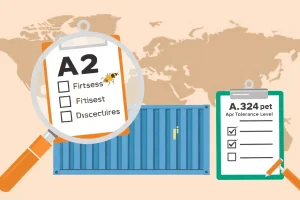
- A2 – Regulated non‑quarantine pest (RNQP) in the EU, USA, Canada, Japan, and Australia.
- A1 – Quarantine pest in the EU, USA, Canada, Japan, Australia, New Zealand, and most Asian import regimes.
Current geographical distribution includes:
- South‑East Asia (native range)
- East Africa (Kenya, Tanzania, Ethiopia)
- Pacific Islands (Fiji, Samoa)
- Caribbean and Central America (Mexico, Dominican Republic)
Regular updates are published in the IPPC Global Pest Database.
Symptoms/Identification (ID)
Early detection is critical. Key field symptoms:
- Small (<2 mm) pinpoint puncture marks on fruit skin where eggs were laid.
- Darkened, watery lesions that enlarge as larvae feed.
- ‘Maggot trails’ – thin, whitish tunnels visible when fruit is cut open.
Laboratory confirmation uses:
- Morphological keys (e.g., white‑tipped wing pattern).
- Molecular diagnostics – PCR targeting the COI gene (FAO/WOAH 2021 protocol).
Training staff to recognise these signs reduces false‑negative inspections.
Control/Treatment
Integrated Pest Management combines cultural, biological, and chemical tactics:
Cultural methods
- Sanitation – removal of fallen fruit and pruning of host trees.
- Harvest timing – collect fruit before it reaches the optimal size for oviposition (usually “green‑yellow” stage).
Biological control
- Release of parasitoid wasps (e.g., Fopius arisanus).
- Sterile Insect Technique (SIT) – mass‑release of irradiated males to suppress populations.
Chemical & post‑harvest treatments
- Hot water dip – 52 °C for 5 min (effective for mango, papaya).
- Cold treatment – 1 °C for 14 days for high‑risk shipments.
- Fumigation – methyl bromide (phased out in many regions) or phosphine where permitted.
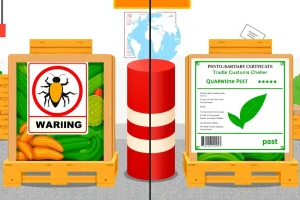
All treatments must be validated and recorded in a phytosanitary certificate.
Requirements & standards (cite primary source: IPPC/NPPO)
The International Plant Protection Convention (IPPC) and national Plant Protection Organizations (NPPOs) set the baseline for compliance:
“Export consignments of Bactrocera‑host commodities must be accompanied by a Phytosanitary Certificate stating that the shipment complies with ISPM 15 (wood packaging), ISPM 11 (pest risk analysis), and the importing country’s specific fruit‑fly mitigation measures.” – IPPC, International Standards for Phytosanitary Measures No. 11, 2022.
Key standards include:
- ISPM 15 – Treatment of all wood packaging material (WPM) with heat or methyl bromide.
- ISPM 22 – Guidelines for surveillance and monitoring of fruit flies.
- National NPPO protocols – e.g., USDA APHIS Fruit Fly Program (USA), DG SANTÉ (France), and Kenya Plant Health Inspectorate Service (KEPHIS).
Failure to meet any of these standards results in automatic rejection.
Step‑by‑step checklist (How‑to trigger compliance)
- Pre‑harvest planning
- Map host orchards and identify high‑risk zones.
- Implement sanitation schedules (weekly fruit pick‑up).
- Monitoring
- Deploy methyl‑eugenol traps at a density of 1 trap per hectare.
- Record trap catches weekly; report any captures of B. dorsalis to the NPPO.
- Harvest & post‑harvest handling
- Harvest fruit at the earliest suitable stage.
- Immediately cool to ≤10 °C to slow egg development.
- Treatment verification
- Conduct hot‑water dip (52 °C, 5 min) for mango; retain temperature logs.
- Perform a random sample inspection (minimum 0.5 % of lot) for larvae.
- Documentation
- Obtain a phytosanitary certificate from the authorized NPPO.
- Attach treatment records, trap data, and WPM certification (IPPC #).
- Customs & freight forwarding
- Provide electronic copies of certificates to the importer’s customs broker.
- Ensure the shipment is sealed with tamper‑evident stickers indicating treatment compliance.
Following this checklist reduces the likelihood of rejection and speeds clearance.
Common mistakes & rejection reasons
Even experienced exporters make avoidable errors:
- Missing or outdated WPM certification – leads to ISPM 15 non‑compliance.
- Insufficient treatment documentation – temperature logs not signed or missing calibration certificates.
- Improper sampling – using less than the mandated 0.5 % lot size, resulting in undetected larvae.
- Incorrect commodity description – vague terms like “fruit” instead of “mango (Mangifera indica), ripe, 5 kg cartons”.
- Failure to declare previous detections – non‑disclosure is a serious breach under WTO SPS Agreement.
Border officials often cite these issues in rejection notices, which can be appealed only with full corrective evidence.
Real‑world example/scenario
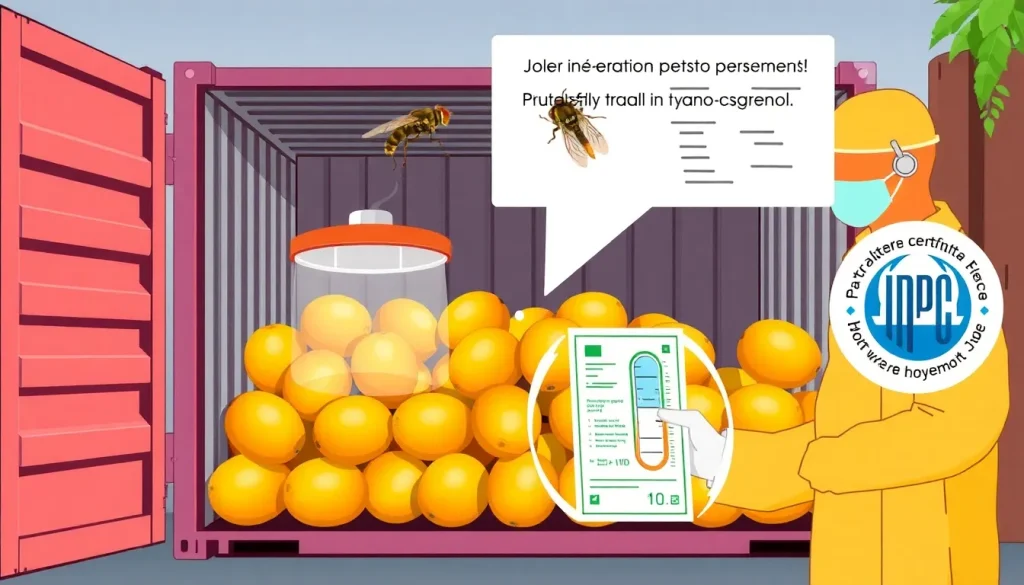
Scenario: A Kenyan mango exporter prepares a 20‑ton shipment to the EU in August 2024.
- Pre‑harvest sanitation removes fallen mangoes; traps capture 2 ♂ B. dorsalis in the previous month.
- Harvest is performed at 75 % maturity; fruit is cooled to 8 °C within 2 hours.
- Each crate undergoes a hot‑water dip (52 °C, 5 min); temperature data loggers are placed in the first and last crate of each pallet.
- NPPO issues a phytosanitary certificate stating compliance with EU Regulation (EU) 2020/2077 and attaches the treatment log.
- Freight forwarder uploads the certificate to the EU’s TRACES system and seals the containers with tamper‑evident seals.
- At the EU port, customs inspect the seal and randomly sample 0.5 % of the cargo – no larvae are found. The shipment clears without delay.
This example illustrates how coordinated IPM, rigorous documentation, and electronic data exchange prevent costly rejections.
Conclusion
Managing Bactrocera dorsalis in export trade demands a blend of scientific vigilance, strict adherence to IPPC standards, and transparent documentation. By implementing the integrated pest management steps outlined above, exporters can safeguard market access, reduce economic loss, and contribute to global phytosanitary security.
| Quick Facts | Details |
|---|---|
| Scientific name | Bactrocera dorsalis (Hendel) |
| Common name | Oriental fruit fly |
| Host range | 300+ species, key crops: mango, citrus, papaya, avocado, guava |
| Regulatory status | A1 quarantine pest in EU, USA, Canada, Japan, Australia |
| Primary control | Hot‑water dip (52 °C, 5 min), SIT, parasitoid releases |
| Key standard | IPPC ISPM 15, ISPM 22, national NPPO protocols |
| Typical rejection cause | Missing WPM certification or inadequate treatment records |
FAQ
What treatment is required for mango shipments to the EU to meet Bactrocera dorsalis requirements?
A hot‑water dip at 52 °C for 5 minutes is the most widely accepted treatment. Temperature logs must be retained and submitted with the phytosanitary certificate.
Can I use methyl bromide for wood packaging material (WPM) treatment?
Methyl bromide is permitted only where national regulations allow it. Most importing countries now require heat treatment (HT) or approved alternatives under ISPM 15.
How often should I inspect traps for Bactrocera dorsalis?
Traps should be checked at least weekly during the fruit‑fly season. Any capture must be reported to the NPPO within 48 hours.





Leave a Reply