Short Answer
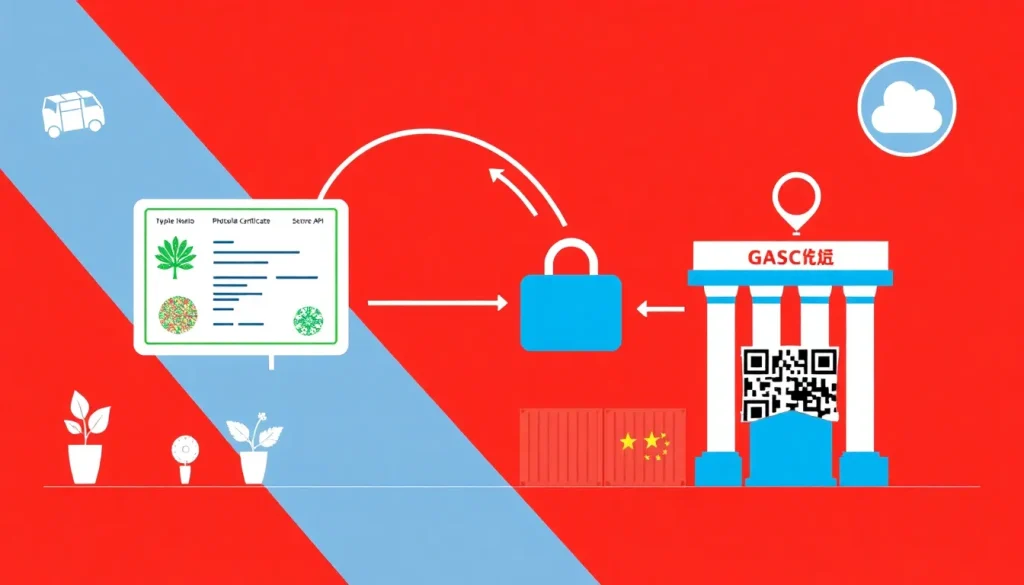
Digital phytosanitary certification is reshaping global plant‑health trade. The ePhyto platform, a joint initiative of the International Plant Protection Convention (IPPC) and national NPPOs, now interfaces directly with China’s General Administration of Customs (GACC) system. This article provides a plain‑English, end‑to‑end overview for exporters, importers, customs brokers, freight forwarders and students who need fast, reliable answers.
Overview
ePhyto is an electronic system that creates, transmits and stores phytosanitary certificates (e‑certificates) in a secure, interoperable format. China’s GACC has built an API gateway that accepts ePhyto certificates, validates them against national regulations, and automatically updates the customs clearance workflow. The integration eliminates paper handling, reduces processing time from days to hours, and improves traceability of plant‑health documents.
Why it matters (real stakes for exporters/importers)
Failure to comply with the ePhyto‑GACC link can result in:
- Shipment delays – customs may hold goods for manual verification.
- Additional fees – storage, demurrage, and re‑inspection costs.
- Market penalties – loss of buyer confidence and potential contract breach.
- Regulatory sanctions – fines up to CNY 200,000 for repeated non‑compliance (GACC Notice 2022/45).

For high‑value commodities such as fresh fruit, cut flowers or seeds, a single day of delay can translate into thousands of dollars of lost revenue.
How it works
The technical flow consists of four core steps:
- Certificate creation – The exporter’s NPPO (or authorized issuing agency) generates an ePhyto certificate in the ePhyto XML format.
- Electronic transmission – The certificate is sent via the ePhyto portal to the China GACC API endpoint, using a digital signature certified by the NPPO.
- Validation – GACC’s customs system checks the certificate against the IPPC standards, the Chinese Plant Quarantine Law, and the specific import commodity list.
- Clearance trigger – Upon successful validation, GACC automatically creates a Phytosanitary Clearance Record and links it to the shipment’s customs declaration.
If validation fails, GACC returns an error code and a reason description, enabling the exporter to correct the issue before the cargo arrives.
Regulatory authority & contact
The Chinese authority responsible for plant‑health import control is the General Administration of Customs (GACC), operating under the Ministry of Agriculture and Rural Affairs (MARA). The NPPO for China is the China Plant Protection Center (CPPC).
| Agency | Role | Contact (as of 2024) |
|---|---|---|
| GACC | Customs clearance, electronic validation | Hotline: +86‑10‑12345‑6789; e‑mail: gacc@customs.gov.cn |
| CPPC | Issuance of ePhyto certificates, pest risk analysis | Hotline: +86‑10‑8765‑4321; e‑mail: nppo@cppt.org.cn |
Import/export procedure
The end‑to‑end process for a typical shipment of fresh apples from New Zealand to China is summarized below:
- Exporter applies for an ePhyto certificate via New Zealand’s NPPO portal.
- NPPO issues the certificate, signs it digitally, and automatically pushes it to the GACC API.
- Exporter files the cargo’s customs entry (CN 10) on the Chinese Single Window.
- GACC pulls the ePhyto data, validates it, and attaches a clearance status (e.g., “Approved – No Pest Detected”).
- Freight forwarder presents the clearance status to the terminal; the cargo is released without physical inspection.
- All records are archived for 5 years in both the ePhyto repository and GACC’s customs database.
Required documents
Even though the certificate is electronic, customs may request supporting files for audit purposes. The minimum dossier includes:
- ePhyto XML file (digitally signed by the NPPO).
- Export permit issued by the exporting country’s NPPO.
- Commercial invoice and packing list.
- Phytosanitary treatment certificate (if applicable, e.g., heat treatment under ISPM 15).
- Certificate of origin (if required by the trade agreement).
All documents must be uploaded in PDF/A‑1b format to the Chinese Single Window before the vessel’s estimated time of arrival (ETA).
Requirements & standards
“All phytosanitary certificates imported into the People’s Republic of China shall comply with the International Plant Protection Convention (IPPC) standards, the Plant Quarantine Law of the People’s Republic of China (2021 amendment), and the specific GACC Implementation Rules (GACC‑2023‑01).” – GACC Regulation Annex, 2023
The primary standards governing ePhyto integration are:
- IPPC ISPM 12 – Guidelines for the issuance of phytosanitary certificates.
- IPPC ISPM 15 – Standards for wood packaging material, often referenced in ePhyto certificates.
- China Plant Quarantine Law (2021) – National legal framework.
- GACC Notice 2023/12 – Technical specifications for the ePhyto API (JSON schema, authentication).
Compliance with these documents is verified automatically by the GACC system; any deviation triggers an error code.
Step‑by‑step checklist (How‑to trigger)
- Verify commodity eligibility – Check the latest GACC import list (available on the China Single Window).
- Confirm NPPO participation – Ensure your country’s NPPO is an ePhyto member (list at https://www.ippc.int/ephyto).
- Prepare pre‑export treatment – Conduct any required pest‑free period, fumigation, or heat treatment and obtain the treatment certificate.
- Generate ePhyto certificate – Log into your NPPO portal, fill the required fields, and digitally sign.
- Transmit to GACC – Click “Send to GACC” – the system returns a Transmission ID and a preliminary validation status.
- Upload supporting documents – Attach PDF/A‑1b files to the Chinese customs entry (CN 10).
- Monitor status – Use the GACC portal to track validation; resolve any error codes within 24 hours.
- Obtain clearance record – Once approved, print the QR‑code receipt for the freight forwarder.
- Archive records – Store the ePhyto XML and clearance receipt for a minimum of five years.
Common mistakes & rejection reasons
Even experienced exporters encounter avoidable errors. The most frequent causes of rejection are:
| Issue | Typical error code | Resolution |
|---|---|---|
| Incorrect commodity code (HS) | GACC‑E01 | Match the HS code to GACC’s approved list. |
| Missing digital signature | GACC‑E02 | Ensure the NPPO’s PKI certificate is current. |
| Untreated pest‑risk material | GACC‑E05 | Provide a valid treatment certificate (e.g., ISPM 15). |
| Inconsistent country of origin | GACC‑E07 | Align the origin field with the commercial invoice. |
| PDF not in PDF/A‑1b | GACC‑E09 | Regenerate documents using PDF/A conversion tools. |
Key preventive actions:
- Run a pre‑submission validation using the ePhyto sandbox (provided by IPPC).
- Cross‑check HS codes against the latest GACC tariff schedule.
- Maintain a calendar of NPPO certificate expiry dates.
Real‑world example / scenario
Case study: New Zealand kiwifruit to Shanghai (October 2024)
- The exporter applied for an ePhyto certificate on 1 Oct 2024. The NPPO issued the certificate and automatically transmitted it to GACC.
- During validation, GACC returned error GACC‑E05 because the wood pallets were not ISPM 15‑treated.
- The exporter quickly arranged for certified heat‑treated pallets, uploaded the new treatment certificate, and re‑submitted.
- Within 12 hours, GACC approved the certificate, generated a QR‑code clearance, and the cargo was released at Shanghai Port without physical inspection.
- Result: the shipment arrived 2 days ahead of schedule, saving US$ 15,000 in demurrage fees.
This example illustrates the speed advantage of digital integration, as well as the importance of accurate treatment documentation.
Conclusion
Integrating ePhyto certificates with the China GACC system transforms a traditionally paper‑heavy, time‑consuming process into a near‑real‑time electronic workflow. By understanding the regulatory landscape, preparing the correct documents, and following the step‑by‑step checklist, exporters and importers can avoid costly delays and maintain market competitiveness. Continuous monitoring of GACC updates and regular use of the ePhyto sandbox are the best ways to stay compliant.
| Quick Facts | Details |
|---|---|
| ePhyto format | XML (IPPC‑standard schema) with digital signature |
| Average clearance time | 2–6 hours after ETA, compared with 2–5 days for paper certificates |
| Mandatory treatment docs | ISPM 15 wood‑packaging, heat‑treatment, or fumigation certificates as required |
| Retention period | 5 years in both NPPO and GACC databases |
| Key contact | GACC Hotline +86‑10‑12345‑6789; CPPC NPPO Hotline +86‑10‑8765‑4321 |
FAQ
Can I use a paper phytosanitary certificate with the GACC system?
Yes, but paper certificates must be manually scanned and entered into the GACC system, which adds processing time and increases the risk of data entry errors. The preferred method is the electronic ePhyto certificate.
What happens if the ePhyto certificate is rejected by GACC?
GACC returns an error code with a brief description. The exporter must correct the issue (e.g., add a missing treatment document) and resubmit the certificate. The system allows re‑submission within 24 hours without additional fees.
Do all countries participating in ePhyto automatically integrate with China’s GACC?
No. Integration requires a bilateral technical agreement. As of 2024, over 35 NPPOs, including New Zealand, Australia, the EU, the USA and Canada, have active API connections with GACC.





Leave a Reply