Short Answer
International trade in wood‑packaged commodities is governed by the International Standards for Phytosanitary Measures No. 15 (ISPM 15). While the standard itself is global, each importing region applies its own enforcement regime, documentation requirements and penalty structures. This pillar article breaks down the practical realities of ISPM 15 compliance for the United States, the European Union, China and other major markets, giving exporters, importers, customs brokers and freight forwarders the fast, accurate answers they need to move goods without costly delays.
Overview
ISPM 15 mandates that all solid wood packaging material (SWPM) – pallets, crates, dunnage, etc. – be either heat‑treated (HT) to a core temperature of 56 °C for at least 30 minutes or fumigated with methyl bromide (MB) to a minimum of 30 g·m⁻³ for 24 hours (HT/MB). The treatment must be accompanied by a International Phytosanitary Certificate (IPPC) mark that includes the country code, treatment code, and a unique serial number. The goal is to prevent the spread of quarantine pests such as Monochamus spp. (pine sawyer beetles) and the fungus Bursaphelenchus xylophilus (pinewood nematode).
Why It Matters (Real Stakes for Exporters/Importers)
Non‑compliance can trigger:
- Detention or outright rejection of shipments at the border, leading to storage fees and missed delivery windows.
- Fines ranging from $500 to $10,000 per container, depending on the jurisdiction.
- Loss of market access if a trading partner imposes a temporary ban on the exporter’s products.
- Reputational damage that can affect future contracts and credit terms.
For example, a 2023 USDA inspection of a U.S. import resulted in a $7,200 penalty after the carrier presented HT‑treated pallets lacking the IPPC mark.
How It Works
The enforcement workflow is essentially the same worldwide, but the points of verification differ:
- Pre‑shipment: Supplier applies HT/MB treatment, stamps the IPPC mark, and records the serial number in the shipment manifest.
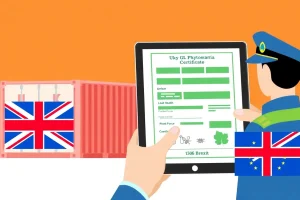
- Export documentation: The exporter includes the Phytosanitary Certificate for Wood Packaging Material (if required) and the commercial invoice indicating compliance.
- Border inspection: Customs officers verify the IPPC mark, cross‑check the serial number against the NPPO database, and may request a sample for laboratory confirmation.
- Post‑clearance: Importers retain records for a minimum of five years in case of an audit.
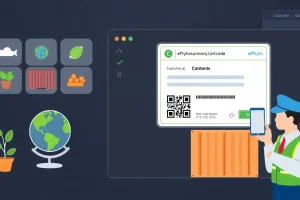
Automation is increasing; the EU’s TRACES‑NT system and the U.S. APHIS Automated System both allow electronic verification of IPPC marks.
Regulatory Authority & Contact
| Region | Authority | Key Contact / Website |
|---|---|---|
| United States | USDA-APHIS Plant Protection and Quarantine (PPQ) | aphis.usda.gov |
| European Union | European Commission – Directorate‑General for Health and Food Safety (DG SANTE) | ec.europa.eu/food/plant |
| China | China Entry–Exit Inspection and Quarantine (CIQ) – Plant Quarantine Division | english.customs.gov.cn |
| Other major markets (e.g., Canada, Australia, Japan) | National Plant Protection Organizations (NPPOs) – see IPPC website | ippc.int |
Import/Export Procedure
Below is a concise flowchart that applies to most destinations, with region‑specific notes highlighted in bold.
- Confirm that all SWPM is HT or MB‑treated and bears a legible IPPC mark.
- Obtain the treatment certificate from the manufacturer or treatment provider.
- Enter the IPPC serial number into the export declaration (e.g., EEA‑2‑HT‑2023‑00123).
- Attach the Phytosanitary Certificate for Wood Packaging Material if the importing country explicitly requires it (EU and China do).
- File the commercial invoice and packing list, clearly stating “ISPM 15‑compliant” next to each pallet description.
- During loading, ensure the IPPC mark remains visible; covering it with shrink‑wrap is prohibited.
- At the destination, customs may scan the mark via handheld barcode readers; be prepared to present the treatment certificate.
Required Documents
- International Phytosanitary Certificate (IPPC) Mark on each pallet – includes country code (e.g., US, CN, EU), treatment code (HT, MB) and serial number.
- Treatment Certificate issued by an accredited heat‑treatment or fumigation facility.
- Phytosanitary Certificate for Wood Packaging Material (EU Annex I/II, China Form A) – optional for the U.S. but recommended.
- Commercial invoice stating compliance.
- Packing list referencing the IPPC serial numbers.
Common Rejection Reasons at That Border
Customs officers most frequently cite the following deficiencies:
- Missing or illegible IPPC mark.
- Serial number not found in the NPPO’s online database.
- Evidence of re‑use of previously treated pallets without a new treatment certificate.
- Use of non‑standard wood (e.g., bamboo) that is not covered by ISPM 15.
- Improper placement of the mark (e.g., covered by tape or paint).
In the EU, non‑compliance can also trigger a refusal of entry under Regulation (EU) No 2016/2031, leading to mandatory re‑treatment at the importer’s expense.
Requirements & Standards (Primary Sources)
“All solid wood packaging material must be treated in accordance with ISPM 15 (IPPC, 2023) and bear the International Standards for Phytosanitary Measures mark. Importing parties shall verify the mark against the NPPO database before release of the cargo.” – IPPC Standard ISPM 15, 2023 Revision
Key regional standards:
- USA: 7 CFR 319.56‑319.58 (APHIS) – mandatory HT/MB and IPPC marking.
- EU: Regulation (EU) No 2016/2031, Annex I – requires electronic verification via TRACES‑NT.
- China: CIQ Circular 2022‑13 – mandates the Phytosanitary Certificate for Wood Packaging Material and electronic submission through the China Customs system.
Step‑by‑Step Checklist (How‑to Trigger Compliance)
- Verify Supplier Capability – confirm that the pallet supplier is ISO‑9001 certified for heat treatment.
- Obtain Treatment Records – request a PDF of the HT/MB certificate with the unique serial number.
- Mark Pallets – ensure the IPPC mark is printed or stamped on a visible surface, not covered by tape.
- Enter Data into Export Declaration – copy the serial number into the
ISPM15_IDfield of your freight forwarder’s system. - Generate Required Certificates – use the NPPO’s online portal (e.g., APHIS e‑phytosanitary) to request a Phytosanitary Certificate if needed.
- Attach Documents to Shipment – include the treatment certificate, Phytosanitary Certificate, commercial invoice and packing list in the cargo folder.
- Pre‑load Inspection – have a qualified QA officer verify each pallet’s mark before loading.
- Post‑arrival Confirmation – after customs clearance, archive all documents for at least five years.
Common Mistakes & Rejection Reasons
Even experienced exporters slip up. The following pitfalls are the most costly:
- Re‑using pallets that were previously treated but lack a new certification – most borders treat this as a violation.
- Incorrect country code on the IPPC mark (e.g., using “CN” for a pallet manufactured in Vietnam).
- Failure to update the serial number after repacking – the database will show a mismatch.
- Using non‑conforming wood species such as bamboo, palm or reclaimed wood without prior treatment.
- Covering the mark with adhesive labels, shrink‑wrap or paint, rendering it unreadable.
Mitigation: implement a “mark‑verification” checkpoint in your warehouse SOP and maintain a digital log of every pallet’s serial number.
Real‑World Example/Scenario
Scenario: A Canadian furniture exporter ships a container of sofas to the United States. The pallets were heat‑treated in Mexico but the IPPC marks were printed in a low‑resolution font, making the serial numbers hard to read.
Outcome: At the U.S. port of entry, an APHIS officer flagged the pallets. Because the serial numbers could not be matched to the USDA database, the entire shipment was held for 48 hours while the exporter supplied clear copies of the treatment certificates. The delay cost the exporter $3,200 in demurrage and resulted in a $1,500 penalty for incomplete documentation.
Lesson Learned: Ensure high‑contrast, legible IPPC marks and keep electronic copies of treatment certificates ready for rapid upload to the customs portal.
Conclusion
ISPM 15 is a single global standard, but enforcement varies considerably across the United States, the European Union, China and other major markets. By understanding each region’s procedural nuances, maintaining impeccable documentation, and avoiding the common pitfalls listed above, exporters can safeguard their supply chains, reduce costly delays, and preserve market access worldwide.
FAQ
Do I need a phytosanitary certificate for pallets when shipping to the United States?
No, the U.S. does not require a separate Phytosanitary Certificate for wood packaging, but the pallets must bear a legible IPPC mark and be HT or MB treated. Documentation of the treatment must be retained in case of a customs audit.
Can I reuse the same pallet after it has been heat‑treated once?
Yes, but only if the pallet has not been exposed to soil, plant material or other contaminants that could introduce pests. Any reuse must be accompanied by a new treatment certificate and a new IPPC serial number.
What is the difference between A1 and A2 status under ISPM 15?
A1 indicates full compliance – all solid wood packaging must be treated and marked. A2 allows limited exemptions (e.g., for certain wood species or treatments) but most major markets, including the USA, EU, and China, operate under A1.




Leave a Reply