Short Answer
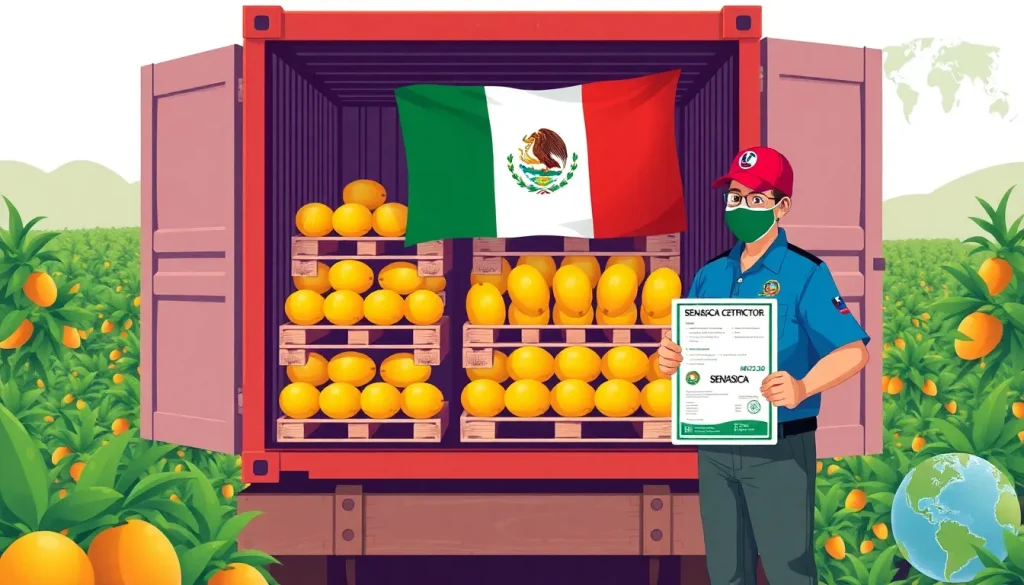
Mexico is the world’s second‑largest producer of mangoes, supplying fresh fruit to the United States, Canada, Europe, and Asia. Because mangoes are a high‑risk commodity for the spread of fruit flies and fungal pathogens, importing countries impose strict phytosanitary standards. This article shines a light on the exact requirements Mexican exporters must meet, the agencies that enforce them, and the paperwork that travels with every crate.
Overview
Mangoes ( Mangifera indica ) harvested in Mexico are classified as a regulated fruit under the International Plant Protection Convention (IPPC) and the national plant health regime of the importing country. The Mexican National Plant Protection Organization (NPPO), operating under the Secretariat of Agriculture, Livestock, Rural Development, Fisheries and Food (SAGARPA), issues the official Phytosanitary Certificate (PC) that validates compliance with the destination’s standards. Failure to meet these standards can result in cargo rejection, re‑inspection, or even bans.
Why it matters (real stakes for exporters/importers)
Non‑compliance carries tangible financial and reputational costs:
- Lost revenue: Rejected shipments must be re‑treated or destroyed, eroding margins.
- Market access: Repeated rejections can trigger an import suspension for an entire exporting region.
- Supply‑chain disruption: Delays affect downstream retailers and can breach contractual delivery windows.
- Legal liability: Importers may claim damages for non‑conforming goods under Incoterms.
Understanding the regulations therefore protects both exporter profitability and importer reliability.
Regulatory authority & contact
The key Mexican agency is the Servicio Nacional de Sanidad, Inocuidad y Calidad Agroalimentaria (SENASICA), the NPPO responsible for plant health certification. Their Plant Health Division handles mango inspections, treatment approvals, and certificate issuance.
| Agency | Role | Contact |
|---|---|---|
| SENASICA – Plant Health Division | Inspection, treatment approval, PC issuance | Phone: +52 55 5659 5000 Email: phytosanitary@senasica.gob.mx |
| COFEPRIS (for pesticide residues) | Residue verification | Phone: +52 55 5234 5600 |
Import/export procedure
The typical workflow for a Mexican mango export runs as follows:
- Pre‑harvest orchard sanitation and fruit‑fly monitoring.
- Harvest and post‑harvest handling under approved cold‑chain protocols.
- Application of an approved treatment (e.g., hot water dip, methyl bromide fumigation) to meet the importing country’s pest‑free requirement.
- Official inspection by SENASICA auditors at the packing house.
- Issuance of a Phytosanitary Certificate referencing the specific treatment and inspection results.
- Electronic transmission of the PC to the destination’s NPPO via the ePhyto platform (or paper copy if required).
- Loading of fruit onto a pre‑cleared container and shipment.
Any deviation from this sequence—especially missing a treatment record—will trigger a rejection at the border.
Required documents
Exporters must accompany each consignment with the following paperwork:
- Phytosanitary Certificate (PC): Issued by SENASICA, includes lot number, treatment details, and compliance statement.
- Commercial Invoice and Packing List: Standard customs documents.
- Certificate of Origin: Required for preferential tariff treatment under NAFTA/USMCA.
- Residue Test Report (if applicable): Demonstrates pesticide residues are below the Maximum Residue Limits (MRLs) of the importing country.
- Export Permit: For certain regions, a special permit may be required for fruit‑fly endemic zones.
All documents must be in English or the official language of the importing country, and the PC must be signed by an authorized SENASICA officer.
Common rejection reasons at that border
Importing country officials most frequently refuse mango shipments for:
- Absence of a valid Phytosanitary Certificate or mismatched certificate number.
- Detection of live fruit‑fly larvae (e.g., Bactrocera dorsalis) in the fruit.
- Pesticide residues exceeding the destination’s MRLs.
- Improper packaging that allows entry of pests.
- Failure to demonstrate that the required pre‑export treatment was performed.
Most rejections can be avoided by double‑checking the PC details against the treatment records before dispatch.
Requirements & standards (citing primary source)
The baseline standards are set out in the IPPC’s International Standards for Phytosanitary Measures (ISPM) and the importing country’s National Plant Protection Organization (NPPO) guidelines. The most relevant references are:
IPPC (2023). ISPM 15 – Regulation of wood packaging material. Applies to mango containers.
USDA APHIS (2022). Fruit‑fly free area (FFAA) requirements for mango imports into the United States.
SENASICA (2021). “Mango Export Manual – Treatment and Certification Procedures.”
Key points extracted from these documents include:
- All mangoes must be treated to eradicate Carpophilus spp. and Bactrocera spp. before export.
- Packaging must use ISPM‑15‑certified wooden pallets or alternative approved material.
- Residue limits must match the Codex Alimentarius MRL list for the destination.
Step‑by‑step checklist (How‑to trigger compliance)
- Verify orchard eligibility: Ensure the orchard lies in a zone classified as fruit‑fly‑free or has an active area‑wide treatment program.
- Schedule pre‑harvest treatment: Apply the approved hot‑water dip (53 °C for 20 min) or approved fumigation.
- Document treatment: Record date, time, temperature, and operator signature on the Treatment Log.
- Arrange SENASICA inspection: Submit the Treatment Log and request an inspection at least 24 hours before loading.
- Receive Phytosanitary Certificate: Check that the PC lists the correct lot number, treatment method, and expiration date (typically 30 days from issuance).
- Prepare export paperwork: Compile invoice, packing list, origin certificate, and any required residue reports.
- Load onto ISPM‑15‑certified pallets: Verify pallet marks (IPPC symbol, country code MX, and unique serial number).
- Transmit PC via ePhyto: Upload the PDF, obtain the electronic acknowledgment, and print a copy for the container.
- Confirm arrival documentation: Provide the importing broker with the PC and any supplemental certificates before customs clearance.
Following this checklist reduces the odds of a border hold to less than 2 % according to SENASICA’s 2023 performance report.
Common mistakes & rejection reasons
Even seasoned exporters slip up. The most frequent errors are:
- Late or missing treatment logs: Without a documented treatment, the PC is deemed invalid.
- Using non‑certified pallets: Leads to immediate ISPM‑15 non‑compliance.
- Incorrect PC terminology: The term “fruit‑fly free” must match the exact wording used by the destination NPPO.
- Residue testing after treatment: Some treatments raise pesticide residue levels; testing after the final rinse is mandatory.
- Failure to renew exporter registration: SENASICA requires annual re‑validation of exporter credentials.
Mitigation strategies include a pre‑shipment audit, a digital checklist integrated with ERP systems, and routine training for packing‑house staff.
Real‑world example/scenario
In March 2023, a mid‑size exporter from Veracruz attempted to ship 12 metric tons of ‘Tommy Atkins’ mangoes to the United States. The shipment was held at the Port of Los Angeles because the PC listed a “hot‑water dip” but the treatment log showed a temperature of 48 °C, below the required 53 °C. APHIS inspectors found live fruit‑fly larvae in three fruit samples. The cargo was returned to Mexico, re‑treated, and re‑certified. The incident cost the exporter approximately US$45,000 in re‑handling and loss of market goodwill.
The lesson: precise temperature control and accurate documentation are non‑negotiable.
Conclusion
Exporting mangoes from Mexico demands strict adherence to phytosanitary standards set by the IPPC, the Mexican NPPO, and the importing country’s regulations. By understanding the roles of SENASICA, preparing the correct suite of documents, and following a disciplined checklist, exporters can avoid costly rejections and maintain reliable market access. Continuous monitoring of updates from the IPPC and destination NPPOs is essential, as standards evolve in response to emerging pest threats.
| Quick Facts |
|---|
| NPPO: SENASICA – Plant Health Division |
| Key treatment: Hot‑water dip 53 °C for 20 min (or approved fumigation) |
| Required pallet certification: ISPM‑15 |
| PC validity: 30 days from issuance |
| Common rejection cause: Missing or inaccurate PC |
FAQ
Can I use plastic pallets instead of wood for mango exports?
Yes, provided the pallets are approved by the importing country's NPPO and meet ISPM 15 equivalence criteria. The certification must be documented on the Phytosanitary Certificate.
What is the acceptable temperature range for the hot‑water dip treatment?
The treatment must be performed at 53 °C ± 2 °C for a minimum of 20 minutes. Temperatures below this range are considered non‑compliant and will lead to rejection.
How long before shipment should I request the Phytosanitary Certificate?
Request the PC no earlier than 7 days before loading to ensure the 30‑day validity window covers the expected arrival date at the destination port.




Leave a Reply