Short Answer
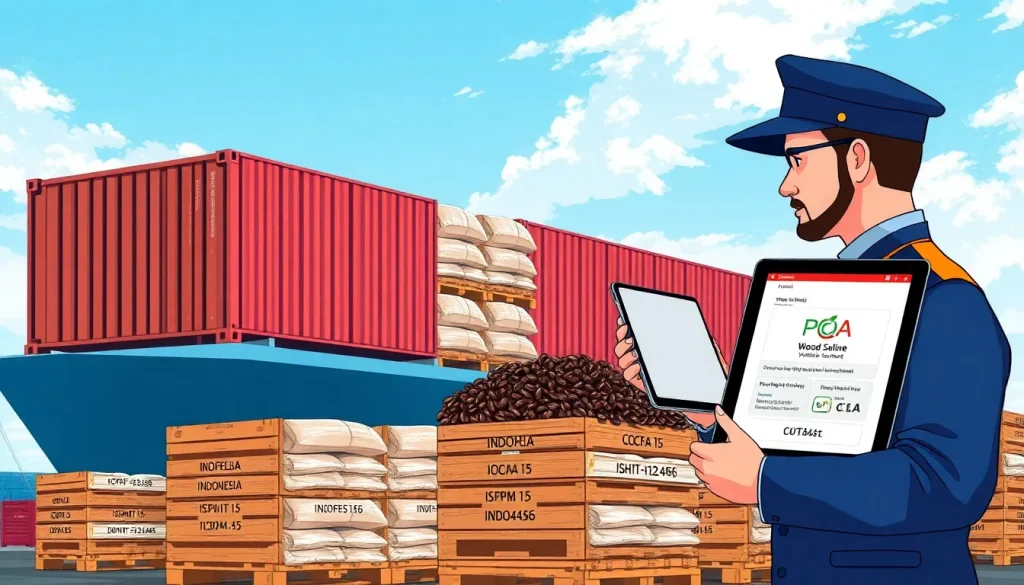
Indonesia is the world’s second‑largest producer of coffee and a major cocoa exporter. While the beans themselves are subject to phytosanitary scrutiny, the wooden pallets, crates, and dunnage that transport them are governed by the International Standard for Phytosanitary Measures No. 15 (ISPM 15). Failure to meet these standards can halt shipments, incur costly re‑exports, or damage a company’s reputation. This pillar article offers a fast‑track, encyclopedia‑style reference for exporters, importers, customs brokers, freight forwarders, and students needing clear answers on Indonesia’s ISPM 15 wood‑packaging compliance checklist for coffee and cocoa.
Overview
ISPM 15 mandates that all wood packaging material (WPM) used in international trade be treated and marked to prevent the spread of wood‑boring pests such as the Asian longhorned beetle (Anoplophora glabripennis) and pine wood nematode (Bursaphelenchus xylophilus). Indonesia, as a signatory to the International Plant Protection Convention (IPPC), enforces these rules through its National Plant Protection Organization (NPPO), the Plant Quarantine Agency (PQA).
- Scope: All WPM attached to coffee (Coffea arabica, C. canephora) and cocoa (Theobroma cacao) shipments destined for export from Indonesia.
- Effective date: 1 January 2020 (current revision of ISPM 15 incorporated).
- Key requirement: Heat treatment (HT) ≥ 56 °C for at least 30 minutes or methyl bromide fumigation (MB) followed by the ISPM 15 stamp.
Why it matters (real stakes for exporters/importers)
Non‑compliance can lead to:
- Shipment detention: Indonesian customs may hold the cargo at the port of loading.
- Re‑export costs: Additional freight, treatment, and documentation fees can add 5‑15 % to the landed cost.
- Market bans: Importing countries (e.g., EU, USA, Japan) may refuse entry, resulting in lost sales.
- Reputational damage: Repeated violations can trigger audits by the NPPO and affect future export licenses.
For coffee and cocoa, where margins are already tight, these risks translate directly into lost profit and damaged brand trust.
How it works
ISPM 15 follows a three‑step process:
- Treatment: WPM must be heat‑treated (HT) or fumigated (MB) according to IPPC guidelines.
- Marking: After successful treatment, the material receives an ISPM 15 stamp containing:
- Country code (ID for Indonesia)
- Unique certification number
- Treatment code (HT or MB)
- Provider’s ISO‑9001 or equivalent accreditation
- Verification: Customs officers scan the stamp and cross‑check it against the NPPO’s online database (https://pqa.go.id/ispm15).
If any step is missing or the stamp is illegible, the shipment is subject to inspection and possible rejection.
Regulatory authority & contact
The Indonesian NPPO, operating under the Ministry of Agriculture, implements ISPM 15. Key contacts:
| Agency | Contact | Phone | |
|---|---|---|---|
| Plant Quarantine Agency (PQA) | International Trade Division | +62‑21‑384‑5555 | intltrade@pqa.go.id |
| Customs & Excise | Port of Jakarta – Import/Export Desk | +62‑21‑381‑1234 | portjakarta@customs.go.id |
All inquiries about WPM treatment providers must be directed to the PQA’s accredited list, available on their website.
Required documents
When exporting coffee or cocoa, the following paperwork must accompany the cargo:
- Phytosanitary Certificate (PC): Issued by the PQA, confirming that the consignment and its WPM meet ISPM 15.
- ISPM 15 Treatment Certificate: Separate certificate from the accredited treatment provider, containing:
- Treatment method and parameters (temperature, duration, or fumigant dosage)
- Batch number and date of treatment
- Provider’s accreditation number
- Commercial Invoice & Packing List: Must reference the ISPM 15 stamp number for each pallet or crate.
- Export Permit (if applicable): Required for shipments to countries with additional phytosanitary restrictions.
Requirements & standards
The core legal basis for Indonesia’s ISPM 15 enforcement is:
“All wood packaging material used in international trade shall be treated in accordance with the International Standard for Phytosanitary Measures No. 15 (ISPM 15) and bear the official mark as stipulated by the National Plant Protection Organization of the exporting country. – Plant Quarantine Agency Regulation No. 12/2019, Annex A.”
Key standards to reference:
- IPPC ISPM 15 (2019 revision): Provides treatment specifications, marking format, and verification procedures.
- Indonesia NPPO Regulation No. 12/2019: Local implementation, including the list of accredited treatment providers.
- World Trade Organization (WTO) SPS Agreement: Recognises ISPM 15 as a legitimate sanitary measure for trade.
Step‑by‑step checklist (How‑to trigger compliance)
- Identify WPM needs: Determine the number and type of pallets, crates, or dunnage required for your coffee or cocoa shipment.
- Select an accredited provider: Verify the provider’s accreditation on the PQA website.
- Schedule treatment: Arrange heat‑treatment (HT) or methyl bromide fumigation (MB) at least 48 hours before loading.
- Obtain treatment certificate: Ensure the certificate includes the unique ISPM 15 stamp number.
- Mark each piece of WPM: Affix the ISPM 15 stamp in a visible location; do not cover or alter the mark.
- Apply for Phytosanitary Certificate: Submit treatment certificate, commercial invoice, and packing list to the PQA.
- Verify stamp via online database: Confirm that the stamp number appears in the PQA’s verification portal.
- Load cargo: Ensure pallets remain intact; avoid re‑packing that could obscure the stamp.
- Present documents at export customs: Hand over PC, treatment certificate, and invoice for inspection.
- Maintain records: Keep copies for at least three years in case of post‑clearance audits.
Common mistakes & rejection reasons
Even seasoned exporters slip up. The most frequent issues are:
- Unmarked or illegible stamps: Faded ink, misplaced marks, or missing country code.
- Using non‑accredited providers: Treatment certificates from unregistered firms are automatically rejected.
- Incorrect treatment parameters: Heat‑treatment below 56 °C or fumigation without proper dosage.
- Mixing treated and untreated WPM: A single untreated pallet contaminates the entire consignment.
- Late document submission: PCs issued less than 48 hours before departure may be deemed invalid.
Customs officers typically issue a “Notice of Non‑Compliance” and may order re‑treatment at the exporter’s expense.
Real‑world example/scenario
Scenario: A medium‑size Indonesian cocoa exporter, “CocoaIndo Ltd.,” prepares a 20‑ton shipment to the Netherlands. The logistics team orders 40 standard pallets from a local timber supplier, assuming the pallets are already ISPM 15‑compliant.
What went wrong:
- The timber supplier provided pallets stamped with an outdated “ID‑HT‑001” code that was not in the PQA database.
- The exporter failed to verify the provider’s accreditation.
- During loading, customs flagged the pallets; the shipment was held for 72 hours.
- CocoaIndo had to arrange emergency heat‑treatment at a certified facility, incurring US$8,500 in re‑treatment fees and a US$3,200 penalty.
Lesson learned: Always cross‑check the ISPM 15 stamp number against the PQA online verification system before loading, and keep the treatment certificate on hand for customs inspection.
Conclusion
Indonesia’s ISPM 15 wood‑packaging requirements are a non‑negotiable part of coffee and cocoa export compliance. By following the checklist above, maintaining accurate documentation, and working only with accredited treatment providers, exporters can avoid costly delays and protect their market access. Regularly review the PQA’s updated provider list and stay informed of any regional amendments to ensure seamless trade.
FAQ
Can I use bamboo pallets for coffee shipments from Indonesia?
Bamboo is considered a non‑wood material under ISPM 15 and does not require heat treatment or marking, provided it is not derived from woody tissue. However, the buyer’s country may have its own restrictions, so always verify the importer’s requirements.
What if my pallets lose the ISPM 15 stamp during transit?
If a stamp becomes illegible, the shipment must be re‑inspected at the point of entry. The exporter is responsible for providing replacement pallets that are properly treated and marked, or for re‑treating the affected pallets before re‑export.
Is methyl bromide still allowed for ISPM 15 treatment in Indonesia?
Yes, methyl bromide (MB) is permitted under ISPM 15, but it must be applied by an accredited provider and documented on the treatment certificate. Exporters should be aware of any additional restrictions imposed by the destination country, as some have phased out MB due to environmental concerns.





Leave a Reply