Short Answer
Overview
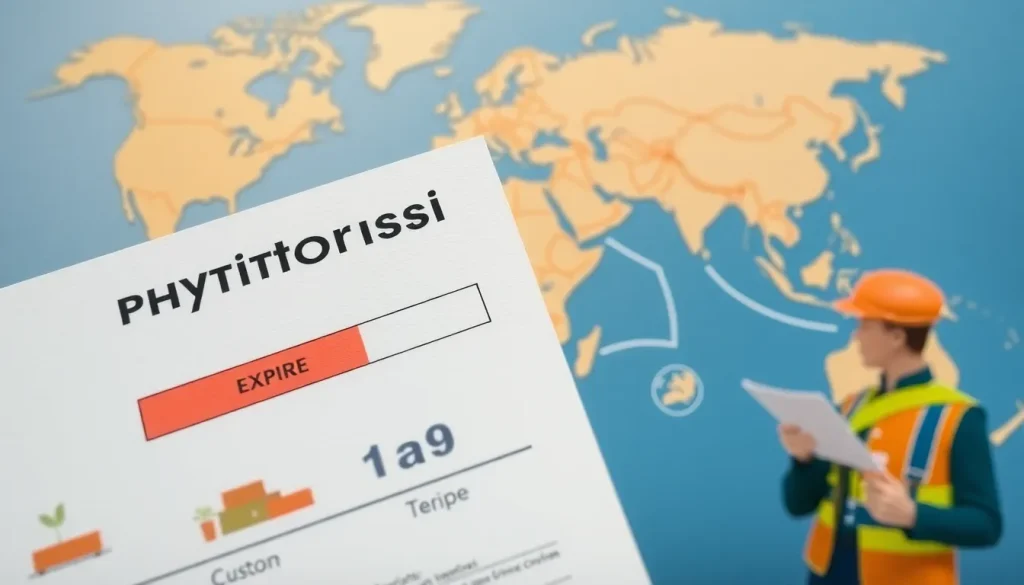
A phytosanitary certificate (PC) is an official document issued by the National Plant Protection Organization (NPPO) of the exporting country confirming that a consignment meets the plant‑health requirements of the importing country. The certificate is not indefinite; each importing nation sets a validity period – the window between issuance and the latest date the certificate can be presented at the border.
Validity periods differ because they reflect the biological life‑cycle of pests, the time needed for post‑harvest treatments, and the risk tolerance of the importing authority. In practice, most PCs are valid for 30, 60, or 90 days, but some commodities (e.g., seed, cut flowers) or high‑risk pathways may have shorter windows.
Why It Matters
For exporters, a mis‑aligned validity period can trigger:
- Shipment delays while waiting for a new certificate, incurring demurrage charges.
- Re‑inspection or additional treatment, increasing costs.
- Full rejection of the consignment, leading to loss of product and market credibility.
Importers and customs brokers face penalties for accepting expired certificates, and freight forwarders risk cargo being held at the port of entry. Agriculture students studying international trade must understand validity periods to appreciate how scientific risk assessments translate into commercial timelines.
How It Works
When a shipment is ready, the exporter requests a PC from the NPPO. The NPPO inspects the consignment, verifies that any required treatments have been applied, and then issues the certificate. The certificate includes:
- Exporting and importing country names.
- Commodity description and scientific name.
- Relevant pest‑free or treatment statements.
- Issue date and expiration date (the validity period).
The expiration date is calculated based on the importing country’s regulations, which are usually published in that country’s plant‑health import manual or in the International Standards for Phytosanitary Measures (ISPM) adopted by the IPPC.
Regulatory Authority & Contact
Each country designates an NPPO responsible for issuing PCs. Below are the typical points of contact for the most common trading partners:
| Country | NPPO / Agency | Website | Contact Email |
|---|---|---|---|
| United States | USDA‑APHIS Plant Protection and Quarantine | https://www.aphis.usda.gov | ppq@aphis.usda.gov |
| European Union | EU Directorate‑General for Health and Food Safety (DG SANTE) | https://ec.europa.eu/food/plant | planthealth@ec.europa.eu |
| Canada | CFIA – Plant Health | https://www.inspection.gc.ca | planthealth@inspection.gc.ca |
| Australia | DAFF – Biosecurity | https://www.agriculture.gov.au/biosecurity | biosecurity@agriculture.gov.au |
| Japan | Plant Protection Station, Ministry of Agriculture, Forestry & Fisheries | https://www.maff.go.jp | ppp@maff.go.jp |
Import/Export Procedure
The typical workflow for a PC with a defined validity period includes:
- Confirm the importing country’s specific validity requirement (e.g., 30 days for fresh fruit).
- Arrange any mandated pre‑export treatment (fumigation, heat, cold).
- Schedule an NPPO inspection no earlier than the latest allowed date before the validity window closes.
- Receive the PC, checking the issue and expiry dates.
- Load the cargo and ensure the PC travels with the shipment (paper copy or electronic).
- Present the PC to the importing country’s quarantine authority at arrival.
Required Documents
In addition to the phytosanitary certificate, most import dossiers require:
- Commercial invoice and packing list.
- Bill of lading or airway bill.
- Origin certificate (if requested).
- Treatment certificates (e.g., fumigation, irradiation).
- Laboratory test reports for regulated pests (when applicable).
Requirements & Standards
The validity periods are anchored in two global references:
“ISPM No. 31 – Phytosanitary Certificates, Annex 1, Item 12, specifies that the certificate shall state the date of issue and, where required by the importing country, the date of expiration.”
International Plant Protection Convention (IPPC), 2022.
Importing countries publish their own standards, often incorporated into the WTO SPS Agreement. For example:
- EU Regulation 2019/2072 – sets a 30‑day validity for most fresh produce.
- US Code of Federal Regulations (7 CFR Part 319) – allows up to 90 days for processed commodities, but 30 days for live plants.
- Australia Biosecurity Import Conditions (BICON) – generally requires a 30‑day window for all plant products.
Exporters must reference the specific import manual of the destination country to determine the exact period.
Step‑by‑Step Checklist (How to Trigger a Valid PC)
- Identify the destination’s validity rule. Check the latest import manual or the NPPO website.
- Schedule treatment within the allowed time frame. Ensure that any post‑treatment quarantine period does not push the PC beyond its expiry.
- Request inspection. Submit a formal request to the exporting NPPO at least 5–7 working days before the intended shipment date.
- Verify certificate details. Confirm commodity name, scientific name, treatment codes, issue date, and expiration date.
- If the expiry is earlier than the expected arrival date, request a re‑inspection.
- Attach the PC to shipping documents. Include a copy in the export declaration and the physical cargo manifest.
- Communicate with the importer. Share the PC number and expiry date so the importer can plan customs clearance.
- Monitor transit time. Use real‑time tracking to ensure the cargo arrives before the PC expires.
Common Mistakes & Rejection Reasons
Even experienced exporters fall into predictable traps:
- Issuing the certificate too early. Some NPPOs allow a maximum of 30 days before shipment; exceeding this leads to automatic rejection.
- Missing treatment codes. Failure to list required phytosanitary treatments invalidates the PC.
- Incorrect scientific name. A typo in the Latin name is a frequent cause of border refusal.
- Using an outdated import manual. Regulations change; always reference the most recent version.
- Not accounting for transit delays. If the cargo is delayed in transit, the PC may expire before arrival.
Real‑World Example
Scenario: An exporter in Chile ships fresh blueberries to the United Kingdom.
- The UK’s import manual (2023) requires a 30‑day validity for fresh berries.
- The exporter arranges a cold‑treatment on 1 May and requests a PC on 2 May.
- The NPPO issues the PC on 3 May with an expiry of 2 June.
- Due to a vessel delay, the cargo is expected to arrive on 5 June.
- The UK border officer rejects the shipment because the PC expired on 2 June, demanding a new inspection and re‑issuance, which adds US$12,000 in demurrage and re‑treatment costs.
The lesson: always align the PC expiry with the latest possible arrival date, adding a safety buffer of at least 3 days for unforeseen delays.
Quick Summary Table
| Region / Country | Typical Validity | Key Reference |
|---|---|---|
| European Union | 30 days (fresh produce), 60 days (processed) | EU Reg. 2019/2072 |
| United States | 30 days (live plants), 90 days (processed) | 7 CFR §319.56‑2 |
| Canada | 30 days (all commodities) | CFIA Plant Health Manual |
| Australia | 30 days (standard) | BICON |
| Japan | 30 days (most imports) | Plant Protection Station Guidelines |
Conclusion
Validity periods for phytosanitary certificates are a cornerstone of plant‑health trade compliance. By understanding the scientific rationale, consulting the correct NPPO sources, and following a disciplined checklist, exporters can avoid costly re‑exports and maintain market access. Remember: the certificate’s expiry date is not merely a formality—it is the deadline that determines whether a shipment clears customs or returns to the origin.
FAQ
Can I extend the validity period of a phytosanitary certificate after it has been issued?
No. Once issued, the expiry date is fixed. If the shipment will arrive after that date, you must request a new inspection and a fresh certificate.
Do electronic phytosanitary certificates have the same validity rules as paper ones?
Yes. The validity period is defined by the same importing‑country regulations; the format (paper or electronic) does not change the expiry calculation.
What should I do if my cargo is delayed and the PC expires while in transit?
Contact the importing country's quarantine authority immediately. In many cases you will need to arrange a re‑inspection at the origin and obtain a new PC, which may involve additional treatment and cost.







Leave a Reply