Short Answer
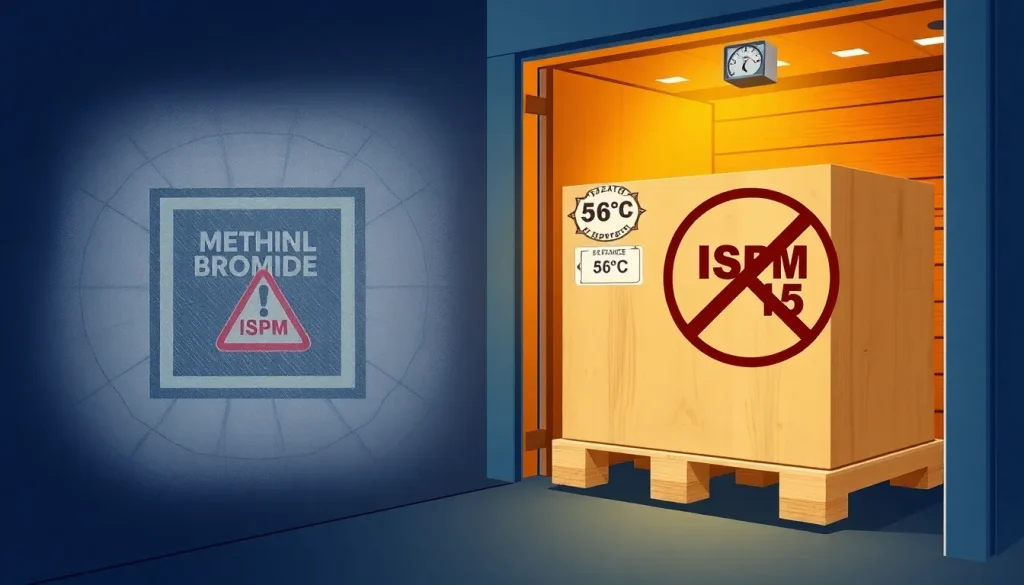
International trade relies heavily on wood packaging material (WPM) such as pallets, crates, and dunnage. For decades, methyl bromide fumigation was the go‑to phytosanitary measure to meet ISPM 15 requirements. However, mounting environmental concerns, stricter ozone‑depleting substance regulations, and rising treatment costs have forced the industry to look for alternatives. Heat treatment (HT) is now the preferred, globally recognized method. This pillar article explains the switch from methyl bromide to heat treatment, covering costs, benefits, regulatory requirements, and practical implementation for exporters, importers, customs brokers, freight forwarders, and agriculture students.
Overview
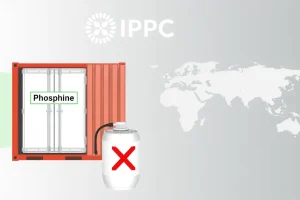
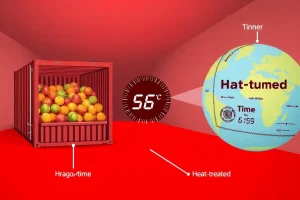
Heat treatment for wood packaging involves raising the core temperature of the wood to 56 °C (132.8 °F) for at least 30 minutes, a standard defined by the International Plant Protection Convention (IPPC) in ISPM 15. The process eliminates quarantine pests without leaving chemical residues, making it compatible with the World Trade Organization’s SPS Agreement. By contrast, methyl bromide (CH₃Br) is a broad‑spectrum fumigant that has been phased out under the Montreal Protocol because of its ozone‑depleting potential.
Why It Matters (Real Stakes for Exporters/Importers)
- Regulatory compliance: Many importing countries now reject methyl bromide‑treated WPM outright.
- Market access: Non‑compliant shipments are delayed, re‑routed, or destroyed, leading to lost revenue.
- Cost efficiency: Heat treatment equipment can be amortized over thousands of pallets, reducing per‑unit expense.
- Environmental stewardship: Switching eliminates a known ozone‑depleting substance, aligning with corporate sustainability goals.
- Brand reputation: Demonstrating compliance with eco‑friendly standards can be a market differentiator.
How Heat Treatment Works
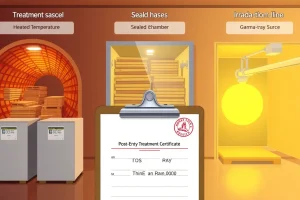
Heat treatment is a physical, non‑chemical process that follows three basic steps:
- Loading: Wood packaging is placed in a calibrated kiln or tunnel with temperature sensors positioned at the core.
- Heating phase: The wood temperature is raised uniformly to 56 °C (or higher, up to 60 °C where allowed) and held for a minimum of 30 minutes. Sensors must record continuous temperature compliance.
- Cooling & marking: After the hold period, pallets are cooled, inspected, and stamped with the ISPM 15 heat‑treatment symbol (a stylized thermometer).
Modern HT systems are automated, providing electronic logs that can be uploaded directly to customs portals, reducing paperwork and the risk of human error.
Regulatory Authority & Contact
The primary authority governing WPM treatment is the International Plant Protection Convention (IPPC), administered through national Plant Protection Organizations (NPPOs). Key contacts include:
| Authority | Role | Contact (example) |
|---|---|---|
| IPPC | Sets global standards (ISPM 15) | secretariat@ippc.int |
| U.S. Animal and Plant Health Inspection Service (APHIS) | Issues import permits for U.S. shipments | aphis.help@usda.gov |
| European Union Plant Health Directorate | Enforces ISPM 15 across EU member states | phytosanitary@ec.europa.eu |
Exporters should verify the NPPO of the destination country for any additional requirements beyond ISPM 15.
Import/Export Procedure
When using heat treatment, the procedural flow mirrors that of methyl bromide, with a few key differences:
- Pre‑shipment verification: Confirm that the supplier’s kiln is certified by the relevant NPPO.
- Documentation upload: Attach the electronic HT certificate (e‑certificate) to the export declaration.
- Customs entry: At the port of entry, customs brokers present the HT e‑certificate and the ISPM 15 heat‑treatment mark.
- Inspection: Border phytosanitary inspectors may sample pallets to verify temperature logs.
- Release: If the logs and marks are satisfactory, the cargo is released; otherwise, it may be re‑treated or held.
Because HT leaves no residue, many countries have streamlined the inspection process, resulting in faster clearance times.
Requirements & Standards
“Heat treatment of wood packaging material shall be performed at a minimum core temperature of 56 °C for a minimum duration of 30 minutes, and the treatment shall be recorded in a permanent, tamper‑proof certificate.” – ISPM 15, 2019 Revision
The following standards apply:
- IPPC ISPM 15 (2019): Defines temperature, duration, and marking requirements.
- National NPPO guidelines: Some countries (e.g., Australia, Canada) require a third‑party audit of the HT facility.
- WTO SPS Agreement: Recognizes HT as an acceptable phytosanitary measure when it achieves the same level of pest reduction as methyl bromide.
Failure to meet any of these criteria results in non‑conformity and possible rejection.
Step‑by‑Step Checklist (How‑to Trigger Heat Treatment)
- Identify the destination country’s NPPO requirements (visit their website or contact the listed authority).
- Verify that your supplier’s kiln is accredited and has a current audit report.
- Schedule heat treatment at least 48 hours before loading to allow for cooling and marking.
- Ensure temperature sensors are calibrated according to ISO 9001 standards.
- Obtain the electronic HT certificate (PDF or XML) with sensor data logs.
- Attach the HT certificate to the commercial invoice and the export declaration.
- Affix the ISPM 15 heat‑treatment symbol on each pallet, making it legible and permanent.
- Inform the freight forwarder and customs broker of the HT method so they can prepare the appropriate entry documentation.
- Retain a copy of the certificate for at least three years for audit purposes.
Common Mistakes & Rejection Reasons
Even experienced exporters can stumble. The most frequent issues are:
- Incorrect temperature logging: Sensors not reaching core temperature or data gaps lead to automatic rejection.
- Missing or illegible ISPM 15 heat‑treatment mark: Marks must be at least 10 mm high and placed on a visible surface.
- Using un‑certified kilns: Some ports require a third‑party certification number on the e‑certificate.
- Late submission of the HT certificate: Customs portals often have a 24‑hour upload window before vessel departure.
- Confusing heat‑treatment with methyl bromide documentation: Mixing the two can trigger a “treatment mismatch” penalty.
Address these proactively by instituting a quality‑control checklist at the point of packaging.
Real‑World Example: Exporting Greenhouse Tomatoes from Mexico to the EU
In 2023, a Mexican grower switched 2,000 pallets from methyl bromide to heat treatment to meet the EU’s tightened residue limits. The transition cost $0.12 per pallet for kiln rental, compared with $0.25 per pallet for methyl bromide fumigation (including disposal fees). Clearance time at Rotterdam decreased from an average of 48 hours (with methyl bromide sampling) to 12 hours after the switch. The grower also reported a 15 % reduction in overall logistics costs due to fewer hold‑ups.
This case illustrates how the modest upfront investment in HT equipment or service contracts can yield tangible financial and operational gains while complying with EU phytosanitary standards.
Conclusion
Switching from methyl bromide to heat treatment for wood packaging is no longer a niche sustainability project—it is a mainstream, cost‑effective, and regulatory‑compliant strategy. By adhering to IPPC’s ISPM 15 temperature standards, securing proper documentation, and avoiding common pitfalls, exporters and importers can safeguard market access, reduce environmental impact, and improve supply‑chain efficiency.
| Quick Facts |
|---|
| Core temperature required: 56 °C (132.8 °F) |
| Minimum hold time: 30 minutes |
| Typical cost saving: 30‑45 % vs. methyl bromide |
| Environmental benefit: Eliminates ozone‑depleting fumigant |
| Global acceptance: Recognised by IPPC, WTO SPS, EU, USA, Canada, Australia |
FAQ
Can I use heat treatment on already methyl bromide‑treated pallets?
Yes, but you must re‑mark the pallets with the HT symbol and provide a new electronic HT certificate; the previous methyl bromide record is not considered valid for ISPM 15 compliance.
What if my kiln fails to maintain 56 °C for the full 30 minutes?
The batch is deemed non‑compliant and must be re‑treated. Most customs authorities will reject the shipment and may impose a re‑treatment fee.
Are there any wood species that cannot be heat‑treated?
Heat treatment is effective on all common commercial wood species. However, some highly moisture‑sensitive woods may warp; in such cases, manufacturers may opt for alternative packaging materials.





Leave a Reply