Short Answer
International trade in fresh horticultural commodities relies heavily on effective phytosanitary measures to prevent the spread of quarantine pests. Among the most significant barriers to trade are fruit flies (Tephritidae), which can devastate local agriculture if introduced to new regions. To mitigate this risk, National Plant Protection Organizations (NPPOs) mandate specific post-harvest treatments. The two most prevalent methods are heat treatment and cold treatment. This article provides a detailed comparison of these methodologies, outlining their mechanisms, regulatory frameworks, and operational requirements to assist exporters, importers, and compliance officers in navigating complex phytosanitary regulations.
Overview
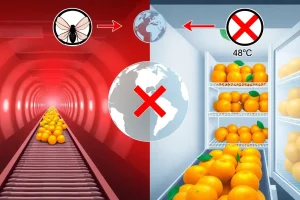
Heat treatment and cold treatment are non-chemical phytosanitary measures designed to eliminate viable stages of fruit flies within host commodities. Heat treatment involves raising the internal fruit temperature to a specific level for a defined duration, while cold treatment involves maintaining the fruit at low temperatures for an extended period. Both methods aim to achieve probit 9 security, meaning there is less than a 0.0032% chance of survivorship. The choice between these methods depends on the commodity’s tolerance, the target market’s requirements, and the available infrastructure.
Why It Matters
For exporters and importers, the stakes of selecting the correct treatment protocol are exceptionally high. Failure to comply with the importing country’s specific phytosanitary requirements can result in consignment rejection, destruction, or re-exportation at the owner’s expense. Beyond immediate financial loss, non-compliance can lead to the suspension of export facilities and damage to trade relationships. Understanding the nuances between heat and cold treatments ensures market access is maintained and reduces the risk of interception at the border by customs and agriculture inspectors.
How It Works
The efficacy of these treatments relies on the physiological limits of the pest. Heat treatment works by denaturing proteins and disrupting metabolic processes within the insect larvae or eggs. The fruit is heated using hot water, vapor, or forced hot air until the core reaches the target temperature. Conversely, cold treatment works by slowing metabolic rates to a halt and causing cellular damage through freezing or chilling injury over time. The duration of cold treatment is significantly longer than heat treatment, often spanning 14 to 22 days, whereas heat treatment may be completed within hours.
Requirements & Standards
International standards for phytosanitary measures are established by the International Plant Protection Convention (IPPC). Specifically, ISPM 28 (Phytosanitary Treatments for Regulated Pests) provides the framework for approving treatment schedules. NPPOs must approve facilities and verify treatment cycles. Compliance requires strict adherence to the approved schedule, including sensor placement, temperature monitoring, and data logging.
“Phytosanitary treatments must be approved by the NPPO of the exporting country and accepted by the NPPO of the importing country.” – IPPC ISPM 28
Exporters must ensure their treatment providers are certified and that the specific schedule matches the commodity-pest combination declared on the phytosanitary certificate.
Control & Treatment
Control measures involve precise monitoring of temperature probes placed within the fruit pulp, not just the air surrounding the fruit. For heat treatment, the cold spot within the load must reach the minimum temperature. For cold treatment, the warm spot must remain below the maximum threshold. Automated systems typically record data at regular intervals. Any deviation from the approved schedule, such as a temperature spike in cold storage or a drop in heat treatment, can invalidate the entire batch, requiring re-treatment or rejection.
Types & Categories
There are distinct categories within each treatment method. Heat treatments include Vapor Heat Treatment (VHT), Forced Hot Air (FHA), and Hot Water Immersion. VHT is often used for tropical fruits like mangoes, while FHA is suitable for commodities sensitive to water. Cold treatments are generally categorized by temperature thresholds, such as 1.1°C or 2.2°C, with varying durations depending on the target pest species. Some regimes combine both methods, known as combination treatments, to reduce the intensity required for each.
Common Mistakes & Rejection Reasons
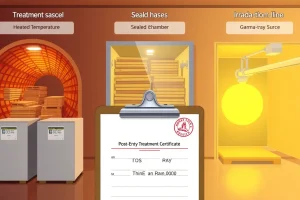
Common operational errors lead to border rejections. These include improper probe placement, calibration errors in sensors, and failure to account for pre-cooling times. Additionally, documentation errors, such as mismatched treatment codes on the phytosanitary certificate, are frequent causes of delays. Importers should verify that the treatment certificate accompanies the shipment and that the treatment date precedes the export date within the validity period.
Real-World Example
Consider a scenario where mangoes are exported from Country A to Country B. Country B requires Vapor Heat Treatment for the Mediterranean fruit fly. The exporter loads the fruit into a VHT chamber. Sensors are placed in the coldest expected fruit. The system heats the air until the fruit core reaches 46.5°C for 15 minutes. If one sensor records 46.0°C, the treatment fails. The consignment cannot be certified as treated. Alternatively, if cold treatment were chosen, the fruit would need to remain at 1.1°C for 18 days. The exporter chooses heat treatment to reduce transit time, accepting the higher risk of fruit quality impact due to heat sensitivity.
Quick Facts Table
| Feature | Heat Treatment | Cold Treatment |
|---|---|---|
| Duration | Hours (Short) | Days to Weeks (Long) |
| Infrastructure | Heating Chambers | Cold Storage Facilities |
| Commodity Risk | Heat Injury (Scald) | Chilling Injury |
| Cost | Higher Energy per Unit | Higher Storage Time Cost |
Conclusion
Selecting between heat and cold treatment is a critical decision in the export supply chain. While heat treatment offers speed, it carries risks of quality degradation for sensitive fruits. Cold treatment preserves quality better for some commodities but requires significant lead time and storage capacity. Compliance with ISPM standards and NPPO regulations is non-negotiable. Exporters must collaborate closely with treatment providers and regulatory authorities to ensure all technical and documentation requirements are met, securing smooth market access and protecting global agriculture from invasive fruit fly species.
FAQ
Can heat treatment damage fruit quality?
Yes, excessive heat can cause scald or softening. Commodities must be tested for tolerance before approval.
Is cold treatment acceptable for all fruit flies?
No, some species are cold-tolerant. The importing country's NPPO must approve the specific schedule.
Who approves the treatment facility?
The exporting country's NPPO approves the facility, and the importing country's NPPO accepts the schedule.





Leave a Reply