Short Answer
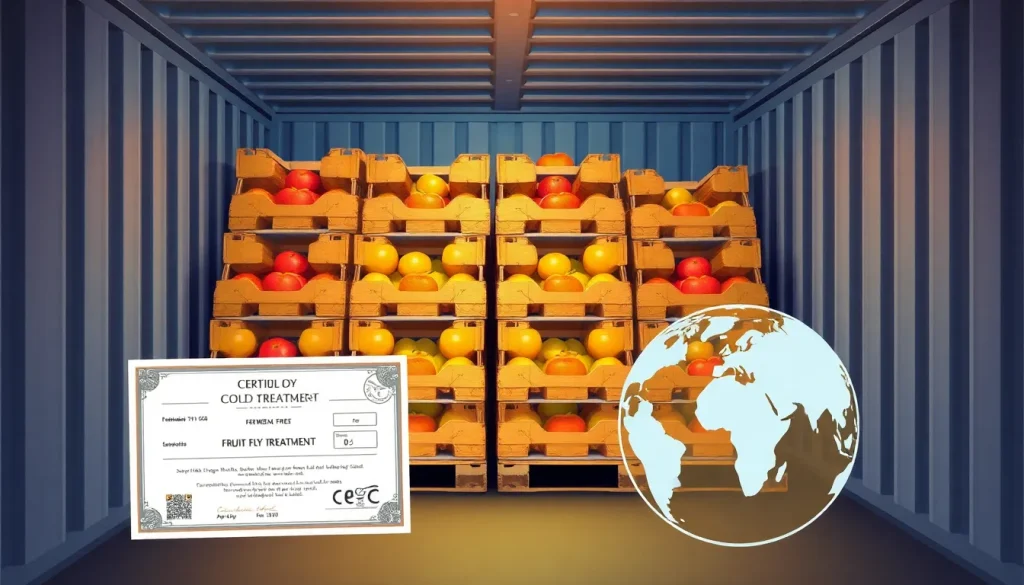
Cold treatment has become the preferred, residue‑free method for managing fruit fly infestations in exported fruit. By exposing consignments to a precisely controlled low temperature for a defined period, the treatment kills all life stages of the pest without compromising fruit quality. This article walks exporters, importers, customs brokers, freight forwarders, and agriculture students through the science, regulations, and practical steps needed to obtain a phytosanitary clearance for cold‑treated fruit.
Overview
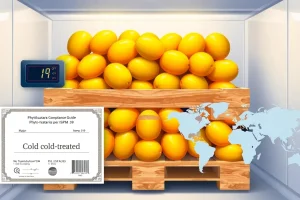
Cold treatment, also called low‑temperature treatment (LTT), is a post‑harvest phytosanitary measure that reduces or eliminates the risk of fruit fly (family Tephritidae) spread via fresh produce. The most common protocol—often referenced as the Cold Treatment Standard (CTS)—requires cooling fruit to 0 °C (32 °F) or lower for a minimum of 14 days, though exact parameters vary by pest species and destination country.
| Parameter | Typical Value | Notes |
|---|---|---|
| Target Temperature | 0 °C (32 °F) or –1 °C (30 °F) | Must be maintained throughout the exposure period. |
| Exposure Time | 14 days (minimum) | Some NPPOs require 21 days for specific hosts. |
| Target Pests | Mexican fruit fly (Ceratitis capitata), Mediterranean fruit fly (Ceratitis capitata), Oriental fruit fly (Bactrocera dorsalis) | Applicable to all life stages. |
Why It Matters (Real Stakes for Exporters/Importers)
Fruit fly infestations can devastate agricultural economies. A single breach can trigger:
- Immediate rejection of the shipment at the port of entry.
- Quarantine measures that halt further trade for months.
- Economic loss from destroyed fruit, loss of market access, and possible export bans.
For example, the 2016 Ceratitis capitata incursion into California resulted in a US$ 150 million eradication program and temporary closure of several export markets. By using cold treatment, exporters demonstrate compliance with the International Plant Protection Convention (IPPC) and avoid costly delays.
How It Works
Cold treatment exploits the physiological limits of fruit fly eggs, larvae, pupae, and adults. At temperatures near freezing, metabolic processes cease, leading to mortality. The key steps are:
- Pre‑cooling inspection: Verify fruit meets size, maturity, and absence of visible infestation.
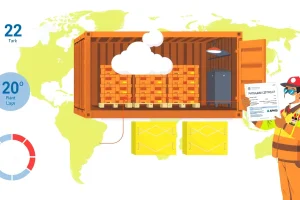
- Loading: Place fruit in a calibrated, insulated cold chamber with uniform airflow.
- Temperature monitoring: Use data loggers to record temperature at multiple points; any deviation beyond ±2 °C invalidates the treatment.
- Holding period: Maintain the target temperature for the prescribed duration (e.g., 14 days).
- Post‑treatment verification: Generate a temperature log and a certification statement signed by an authorized officer.
Because the treatment does not involve chemicals, it is compatible with organic certification and retains fruit firmness and flavor.
Requirements & Standards
The primary standards governing cold treatment for fruit flies are:
IPPC Standard ISPM 32 (2015) – “Regulation of Post‑Harvest Treatments for Fruit Flies”. This document defines temperature, time, and verification requirements for cold treatment and is the reference for most NPPOs.
National Plant Protection Organizations (NPPOs) may adopt stricter parameters. Exporters should consult the destination country’s NPPO website for any supplemental conditions.
- Temperature: ≤ 0 °C (32 °F) for a minimum of 14 days, unless a lower temperature is specified.
- Monitoring: Continuous recording with calibrated sensors; logs must be retained for at least 12 months.
- Certification: A Phytosanitary Certificate (PSC) signed by an authorized NPPO officer, referencing ISPM 32.
Failure to meet any of these criteria results in non‑compliance and possible rejection.
Import/Export Procedure
The procedural flow for a cold‑treated shipment typically follows these steps:
- Pre‑export approval: Obtain a pre‑clearance letter from the exporting NPPO confirming that the cold‑treatment protocol is accepted for the target market.
- Cold treatment execution: Conduct treatment at an approved facility; retain temperature logs.
- Inspection & sampling: An NPPO inspector may take samples before or after treatment for laboratory confirmation.
- Phytosanitary Certificate issuance: The exporter submits the temperature log and treatment record to the NPPO, which issues the PSC.
- Customs clearance: The importer presents the PSC to the destination customs authority; the shipment may be subject to a spot inspection.
- Post‑entry monitoring: Some countries require a post‑entry quarantine period or a follow‑up inspection within 30 days.
All documentation must be in the language required by the destination country (often English or the national language) and must be signed by an authorized official.
Required Documents
Exporters should prepare the following paperwork before shipment:
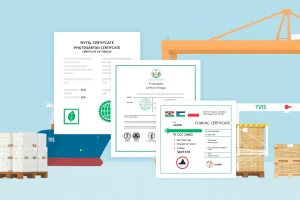
- Phytosanitary Certificate (PSC) referencing ISPM 32.
- Cold‑treatment log sheet (digital or paper) showing temperature, duration, and sensor calibration certificates.
- Pre‑export approval letter (if required).
- Commercial invoice and packing list (standard customs documents).
- Certificate of Origin (if requested by the importing country).
Electronic submission is increasingly common; verify the NPPO’s portal for upload specifications.
Step‑by‑Step Checklist (How‑to Trigger a Valid Cold Treatment)
- Confirm pest status: Verify that the fruit fly species present is covered by the destination’s cold‑treatment requirement.
- Choose an approved facility: Ensure the cold chamber is certified by the exporting NPPO.
- Calibrate sensors: Perform a calibration check within 30 days of treatment.
- Document calibration certificates.
- Load fruit ensuring even distribution and adequate airflow.
- Set temperature to ≤ 0 °C and start the timer.
- Record start time in UTC.
- Monitor continuously with at least three data loggers (top, middle, bottom of load).
- Complete exposure period (e.g., 14 days). Verify that temperature never rose above the allowed limit.
- Generate log report and have it signed by the facility manager.
- Submit documentation to the NPPO for PSC issuance.
- Attach PSC to shipment and retain copies for audit.
Following this checklist reduces the risk of rejection due to procedural gaps.
Common Mistakes & Rejection Reasons
Even experienced exporters encounter pitfalls. The most frequent causes of rejection are:
- Temperature deviation: Any recorded temperature above 0 °C for more than 2 hours invalidates the treatment.
- Insufficient exposure time: Shortening the 14‑day period, even by a few hours, is considered non‑compliant.
- Inadequate documentation: Missing calibration certificates, unsigned logs, or absent PSC.
“The presence of a complete, signed temperature log is a mandatory condition for acceptance under ISPM 32.” – IPPC, ISPM 32, 2015.
- Improper packing: Over‑packed crates can create cold spots, leading to temperature gradients.
- Late submission: PSC must be issued before the cargo departs; late issuance results in detention.
Mitigation strategies include routine internal audits, redundant temperature monitoring, and pre‑shipment verification by the NPPO.
Real‑World Example/Scenario
Case Study: Export of Mangoes from Mexico to the United States (2023)
Mexico’s NPPO required cold treatment for mangoes destined for California because the state lists the Oriental fruit fly (Bactrocera dorsalis) as a quarantine pest. The exporter followed these steps:
- Selected a USDA‑approved cold‑storage facility capable of maintaining –1 °C.
- Installed three calibrated data loggers per 20‑ton container.
- Ran the treatment for 14 days; the logs showed a maximum temperature of –0.3 °C.
- Submitted the logs and a pre‑export approval letter to the Mexican NPPO.
- Received a PSC referencing ISPM 32 and shipped the mangoes.
- U.S. Customs and Border Protection performed a spot inspection; the PSC and temperature log were accepted, and the cargo entered without delay.
This scenario illustrates how strict adherence to cold‑treatment standards enables seamless market access.
Conclusion
Cold treatment offers a scientifically validated, chemical‑free solution for managing fruit fly pests in exported fruit. By understanding the underlying biology, complying with IPPC’s ISPM 32, and following a disciplined documentation process, exporters can safeguard their shipments, maintain market access, and avoid costly rejections. Use the checklist and best‑practice tips provided here to ensure every cold‑treated consignment meets the highest phytosanitary standards.
FAQ
Can cold treatment be combined with other treatments like fumigation?
Yes, but the combined approach must be approved by the importing NPPO. Cold treatment alone is often sufficient and preferred because it leaves no chemical residues.
What happens if the temperature rises above the limit for a short period?
Any breach above the allowed temperature (typically >0 °C) for more than 2 hours invalidates the treatment, and the shipment will be rejected or require re‑treatment.
Is cold treatment accepted for all fruit fly species?
Most major fruit fly species (Mexican, Mediterranean, Oriental) are covered under ISPM 32, but exporters should verify specific requirements for less common species with the destination NPPO.




Leave a Reply