Short Answer
International trade in plants and plant products is governed by strict phytosanitary rules. A single error on a Phytosanitary Certificate (PC) can halt a shipment, trigger costly re‑inspection, or even lead to a consignment being destroyed. This pillar article breaks down the ten most frequent reasons PCs are rejected, explains why each matters, and gives a clear, step‑by‑step remedy so exporters, importers, customs brokers, freight forwarders, and agriculture students can keep cargo moving.
Overview
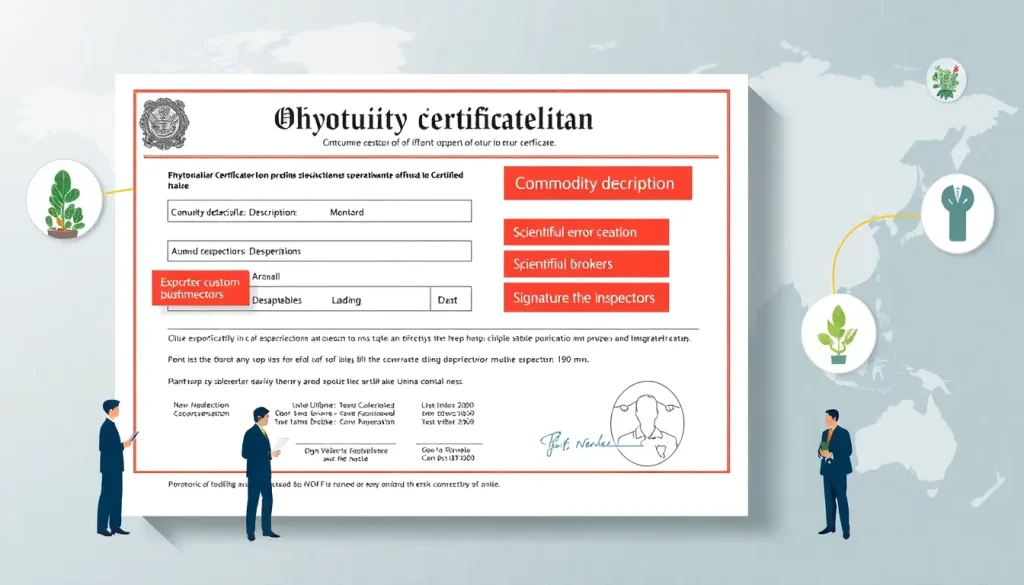
A Phytosanitary Certificate is the official document issued by the National Plant Protection Organization (NPPO) of the exporting country, confirming that a consignment complies with the plant‑health requirements of the importing country. Despite its apparent simplicity, the certificate contains many data fields, each tied to international standards (IPPC, ISPM). Mistakes are common, and the top ten rejection triggers are:
- Incorrect commodity description or HS code.
- Missing, outdated, or improperly recorded phytosanitary inspection.
- Wrong scientific name or taxonomic error.
- Incomplete or absent treatment information.
- Failure to meet the importing country’s quarantine or prohibited‑pest criteria.
- Absent, illegible, or unauthorized signature/stamp.
- Certificate expiration date not aligned with shipment date.
- Inconsistent origin, harvest, or packing data.
- Missing supporting documents (e.g., laboratory test reports).
- Non‑compliance with the ISPM‑12 format (mandatory fields, layout).
Understanding each point and applying the corrective actions outlined below can reduce rejection rates dramatically.
Why It Matters
For exporters, a rejected PC translates directly into:
- Delays that breach delivery contracts.
- Additional inspection fees and possible fines.
- Loss of market credibility and future trade opportunities.
Importers face similar risks, including:
- Production downtime when raw material arrivals are postponed.
- Increased inventory holding costs.
- Potential phytosanitary quarantine measures that can affect downstream supply chains.
Customs brokers and freight forwarders also bear the administrative burden of re‑filing, re‑routing, or storing cargo while the issue is resolved.
Required Documents
The minimum dossier that must accompany a PC varies by destination, but the following items are universally required under IPPC’s ISPM‑12:
- Phytosanitary Certificate (original) – completed on the official form.
- Export permit or phytosanitary inspection report.
- Laboratory test results for regulated pests (if required).
- Bill of Lading or Air Waybill showing the consignment details.
- Certificate of Origin (where requested by the importer).
- Any treatment certificates (e.g., fumigation, heat treatment) attached as annexes.
All documents must be dated, signed, and stamped in accordance with the issuing NPPO’s guidelines.
Common Mistakes & Rejection Reasons
Below each of the ten frequent errors is a brief explanation and a practical fix.
- Incorrect commodity description or HS code
- What happens: Customs cannot match the PC to the cargo, triggering a refusal.
- Fix: Verify the Harmonized System (HS) code and description against the importer’s commodity list before filling the form.
- Missing or outdated phytosanitary inspection
- What happens: The PC states that the consignment was inspected, but no record exists.
- Fix: Schedule the inspection no more than 30 days before export (or as required) and retain the official inspection report.
- Wrong scientific name or taxonomic error
- What happens: Importing NPPO may consider the commodity a different pest‑vector.
- Fix: Use the latest taxonomic database (e.g., EPPO Global Database) and cross‑check the accepted scientific name.
- Incomplete treatment information
- What happens: Required treatments (fumigation, cold treatment) are missing or lack dosage details.
- Fix: Attach the treatment certificate, include method, temperature, duration, and chemical used.
- Failure to meet import quarantine requirements
- What happens: The commodity is listed as a high‑risk pathway for a regulated pest.
- Fix: Check the importing country’s A1/A2 pest list (IPPC) and, if necessary, obtain a pre‑clearance phytosanitary permit.
- Missing or invalid signature/stamp
- What happens: The certificate is considered unofficial.
- Fix: Ensure the authorized NPPO officer signs and stamps the original form; electronic signatures must follow the country’s e‑PC protocol.
- Expiration date not aligned with shipment
- What happens: The PC expires before the cargo departs or arrives.
- Fix: Issue the PC within the validity window specified by the importing country (often 30 days).
- Inconsistent origin/harvest data
- What happens: The origin listed differs from the packing list or bill of lading.
- Fix: Synchronize all documents; use the same farm name, region, and GPS coordinates throughout.
- Missing supporting documents
- What happens: Required lab test or fumigation certificate is absent.
- Fix: Attach all annexes before submission; double‑check the importer’s checklist.
- Non‑compliance with ISPM‑12 format
- What happens: Fields are left blank, or the layout is altered.
- Fix: Use the official PDF or paper form provided by the NPPO; do not modify field order or add unofficial notes.
Requirements & Standards (IPPC/NPPO)
International standards that govern PC issuance are set out primarily in:
- ISPM‑12 – Regulation of Phytosanitary Certificates. It defines mandatory fields, signature requirements, and electronic‑certificate protocols.
- ISPM‑5 – Regulation of Pest Risk Analysis. Determines whether a pest is listed as A1 (absent) or A2 (present) for a given region.
- National Plant Protection Organization (NPPO) guidelines – each country publishes a supplemental manual that may add treatment specifics or documentation nuances.
“A phytosanitary certificate shall be issued only after the NPPO is satisfied that the consignment meets the phytosanitary requirements of the importing country” – IPPC, ISPM‑12, 2022
Compliance with these standards is non‑negotiable; failure to do so is the most common root cause of rejection.
Step‑by‑Step Checklist (How‑to Trigger a Valid Certificate)
- Confirm the exact commodity name, HS code, and scientific name using the EPPO or CABI database.
- Check the importing country’s pest‑risk list (A1/A2) and any specific treatment mandates.
- Schedule a phytosanitary inspection within the allowed window (usually 30 days).
- Obtain all required supporting documents (lab test reports, treatment certificates).
- Complete the official PC form (paper or e‑PC) following ISPM‑12 layout.
- Enter the same origin, harvest date, and packing details as on the commercial invoice.
- Have the authorized NPPO officer sign and affix the official stamp.
- Verify the certificate’s expiration date aligns with the estimated departure and arrival dates.
- Attach a copy of the bill of lading or airway bill for cross‑reference.
- Submit the complete packet to the importer’s customs broker at least 5 working days before shipment.
- Retain a digital copy for record‑keeping and possible audit.
Regulatory Authority & Contact
Key contacts differ by region but typically include:
| Region | NPPO Authority | Contact Point |
|---|---|---|
| North America (USA) | USDA–APHIS Plant Protection and Quarantine | aphis.help@usda.gov / 1‑800‑874‑6527 |
| Europe (EU) | European Commission – Directorate‑General for Health and Food Safety (DG SANTE) | phytosanitary@ec.europa.eu |
| Asia‑Pacific (Australia) | Department of Agriculture, Fisheries and Forestry (DAFF) | phytosanitary@agriculture.gov.au |
Most NPPOs also maintain an online portal for e‑certificate submission; register early to avoid last‑minute technical issues.
Import/Export Procedure
The generic flow for a phytosanitary‑certified shipment is:
- Pre‑export verification – exporter checks import requirements.
- Phytosanitary inspection – NPPO inspector examines the consignment.
- Certificate issuance – NPPO completes PC and attaches annexes.
- Customs declaration – importer’s broker submits PC with the import declaration.
- Border inspection – importing NPPO may re‑inspect; if compliant, cargo is released.
Any break in this chain, especially at step 3, is a typical rejection trigger.
Real‑World Example/Scenario
Case Study: Mango Export from Mexico to the EU (2023)
ABC Fresh Produce shipped 20 t of Hass avocados to the Netherlands. The PC listed the HS code 0804.90 but omitted the required “cold‑treatment” annex. Dutch customs rejected the shipment, causing a 7‑day delay and a €12,000 penalty. After the incident, ABC implemented the step‑by‑step checklist, added a mandatory treatment certificate, and trained staff on ISPM‑12 compliance. Subsequent shipments were cleared on first inspection.
This example demonstrates how a single missing annex (reason 4) can cascade into financial loss, and how a systematic checklist prevents recurrence.
Conclusion
Phytosanitary certificate rejections are almost always preventable. By understanding the ten most common errors, aligning documentation with IPPC’s ISPM‑12 standards, and following a disciplined checklist, exporters and importers can keep their supply chains moving and avoid costly delays. Regular communication with the relevant NPPO and staying current on pest‑risk updates are essential for long‑term compliance.
| Quick Facts |
|---|
| ISPM‑12 governs the layout and mandatory fields of every PC. |
| Only 30 days is the typical validity window for most exporting countries. |
| Incorrect HS code is the single most cited reason for customs rejection (≈ 28 %). |
| Electronic PCs (e‑PC) must follow the same data‑field integrity as paper forms. |
| Contacting the NPPO’s “Phytosanitary Desk” early reduces re‑inspection risk. |
FAQ
Can I correct a mistake on a phytosanitary certificate after it has been issued?
Yes, most NPPOs allow a supplemental amendment or re‑issuance, but the process can take 2–5 business days and may require a new signature and stamp.
Do electronic phytosanitary certificates have the same legal standing as paper ones?
When issued through an authorized e‑PC system that complies with ISPM‑12, electronic certificates are legally equivalent to paper certificates.
What is the best way to verify the scientific name of a commodity?
Consult the EPPO Global Database or the CABI Crop Protection Compendium for the most current accepted name and synonym list.




Leave a Reply