Short Answer
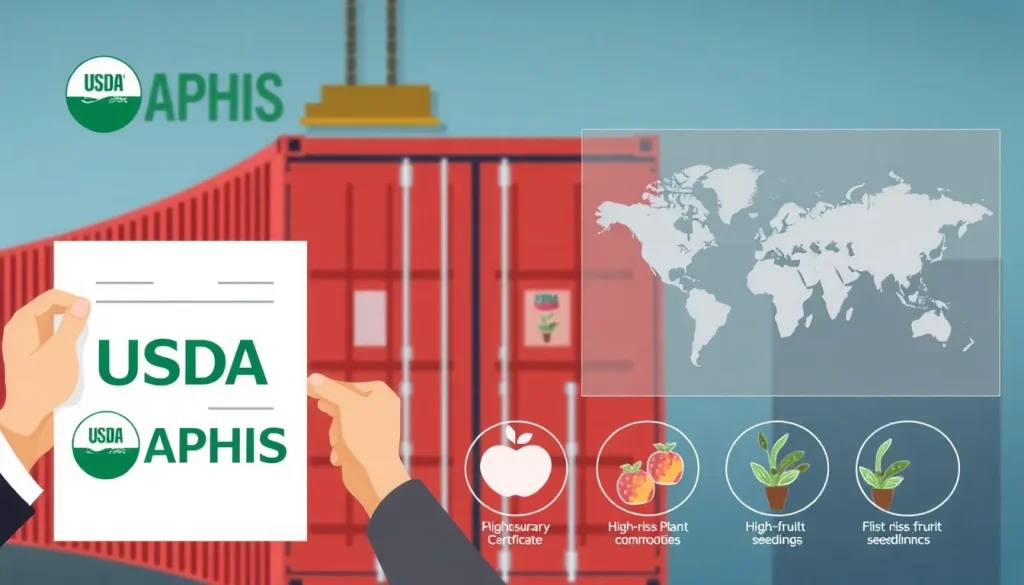
Importing plant material that is classified as high‑risk—such as certain fruits, seeds, or live plants—requires a US Department of Agriculture (USDA) Animal and Plant Health Inspection Service (APHIS) import permit. Failure to secure the correct permit can lead to shipment denial, costly re‑exports, or even fines. This pillar article walks exporters, importers, customs brokers, freight forwarders, and agriculture students through the entire process, from the legal basis to a practical, step‑by‑step checklist.
Overview
APHIS issues import permits under the Plant Protection Act (PPA) to prevent entry of regulated pests and diseases. A high‑risk commodity is any plant product that could serve as a pathway for a quarantine pest listed in the International Plant Protection Convention (IPPC) Annex 1 or in USDA’s own quarantine pest list.
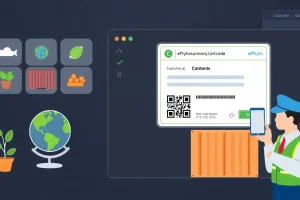
The permit process is electronic via the APHIS e‑Permit portal. Once approved, the permit is attached to the phytosanitary certificate (PC) issued by the exporting country’s National Plant Protection Organization (NPPO).
Why It Matters (Real Stakes for Exporters/Importers)
Missing or inaccurate permits can have severe financial and operational impacts:
- Shipment rejection at the port of entry – cargo may be held, re‑routed, or destroyed.
- Regulatory penalties – USDA can assess fines up to $10,000 per violation.
- Supply‑chain disruption – delayed product release can breach contracts with retailers.
- Reputational damage – repeated non‑compliance may place your company on the USDA Watch List.
For high‑value crops (e.g., fresh mangoes, avocado seedlings), these risks translate directly into lost revenue and market access.
How It Works
The APHIS import‑permit workflow follows three core stages:
- Pre‑application screening – determine if the commodity is high‑risk and identify the specific pest risk analysis (PRA) reference.
- Electronic submission – complete the e‑Permit application, upload supporting documents, and pay the user fee (currently US$35 per permit).
- Post‑approval compliance – ensure the shipment matches the permit’s conditions (treatments, origin, labeling) and present the permit to the port of entry officer.
APHIS may request additional evidence, such as laboratory test results, before granting final approval.
Regulatory Authority & Contact
The governing statutes and agencies are:
- Plant Protection Act (7 U.S.C. 7701‑1 et seq.) – primary legal authority for plant‑health import permits.
- USDA‑APHIS Plant Health Inspection Service – administers permits, inspections, and quarantine enforcement.
- National Plant Protection Organization (NPPO) of the exporting country – issues the phytosanitary certificate that must accompany the APHIS permit.
Contact information for APHIS:
| Office | Phone | |
|---|---|---|
| Plant Health Permit Center (PHPC) | +1‑202‑720‑2791 | phpc@aphis.usda.gov |
| Regional Plant Health Offices | See regional list at APHIS website | regional@aphis.usda.gov |
Import/Export Procedure
Below is the end‑to‑end flow for a high‑risk commodity:
- Identify the commodity’s classification in the APHIS Import Permit List (IPL).
- Confirm the exporting NPPO can provide a phytosanitary certificate that meets APHIS conditions.
- Log in to the e‑Permit portal and select “New Permit – High‑Risk Commodity.”
- Enter commodity details (HS code, quantity, origin, intended use).
- Attach required documents (PC, treatment certificates, lab test reports).
- Pay the user fee and submit.
- Monitor status; APHIS may issue “Conditional Approval” pending additional data.
- Upon final approval, download the permit PDF, print two copies, and attach one to the cargo.
- At the U.S. port of entry, present the permit, PC, and any treatment records to the APHIS inspector.
- Inspector validates compliance; cargo is released or held for further action.
Required Documents
All documents must be in English or accompanied by a certified translation.
| Document | Purpose | Typical Source |
|---|---|---|
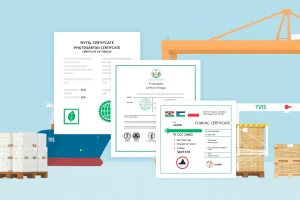
| Phytosanitary Certificate (PC) | Official NPPO attestation that the commodity meets the plant‑health requirements of the United States. | Exporting country’s NPPO |
| Import Permit (APHIS) | Authorization to bring the high‑risk commodity into the U.S. | APHIS e‑Permit system |
| Treatment Certificate | Proof that required pre‑export treatment (e.g., fumigation, heat) was performed. | Certified treatment provider |
| Laboratory Test Report | Evidence that the shipment is free of the specific quarantine pest. | Accredited USDA‑approved lab |
| Bill of Lading / Air Waybill | Logistics documentation linking the permit to the physical cargo. | Freight forwarder |
Requirements & Standards (Cite Primary Source)
APHIS permits are grounded in three international and national standards:
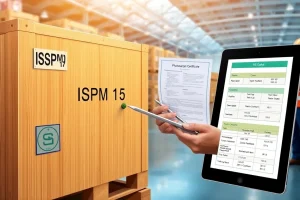
- IPPC Standard ISPM 15 – Regulates wood packaging material; required for all high‑risk shipments that include pallets or crates.
- USDA‑APHIS Plant Protection Regulations (PPR) – Provides the detailed pest‑specific conditions for each high‑risk commodity (see 7 CFR 319.56‑319.58).
- World Trade Organization SPS Agreement – Ensures that U.S. measures are based on scientific risk assessment and are not more trade‑restrictive than necessary.
“Import permits shall be issued only when the applicant demonstrates that the consignment meets all phytosanitary requirements, including any treatment, testing, or certification stipulated in the relevant PPR and ISPM standards.” – 7 CFR 319.56(b)
Step‑by‑Step Checklist (How‑to Trigger)
- Commodity verification: Search the APHIS Import Permit List (IPL) for your HS code.
- Risk analysis: Identify any quarantine pests linked to the commodity (e.g., Thaumatotibia leucotreta for mangoes).
- NPPO coordination: Request a phytosanitary certificate that includes the exact treatment code required by APHIS.
- Pre‑export treatment: Complete the mandated treatment (e.g., hot water dip 53 °C for 30 min) and obtain a treatment certificate.
- Laboratory testing: If a specific pest test is required, submit a sample to an USDA‑approved lab and retain the report.
- e‑Permit submission: Log in, fill out the form, upload PC, treatment certificate, lab report, and pay the fee.
- Permit review: Respond promptly to any APHIS queries within 7 business days.
- Print & attach: Print two copies of the approved permit; attach one to the cargo and keep one for records.
- Port of entry presentation: Provide the permit, PC, and supporting documents to the APHIS inspector.
- Post‑entry compliance: Retain all records for at least 3 years in case of audit.
Common Mistakes & Rejection Reasons
Even seasoned exporters stumble over a few recurring issues:
- Incorrect HS code – leads APHIS to apply the wrong permit criteria.
- Missing treatment details – permits are denied if the PC does not list the exact treatment code and parameters.
- Out‑of‑date phytosanitary certificate – certificates are valid for 30 days unless otherwise specified.
- Failure to meet ISPM 15 for wood packaging – pallets without the “HT” stamp are rejected.
- Insufficient laboratory evidence – for commodities requiring pest‑free status, a negative test must be dated within 14 days of shipment.
When a rejection occurs, APHIS issues a Written Refusal Notice (WRN) outlining corrective actions. Promptly addressing the WRN can avoid a full shipment denial.
Real‑World Example/Scenario
Scenario: A Colombian exporter wants to ship 10 metric tons of fresh mangoes to California.
- HS code 080450 identifies mangoes as a high‑risk commodity for the quarantine pest Thaumatotibia leucotreta.
- The exporter contacts Colombia’s NPPO, which issues a PC stating that mangoes were treated with a hot water dip (53 °C, 30 min) and tested negative for the pest.
- The exporter submits an e‑Permit, uploads the PC, treatment certificate, and a USDA‑approved lab report dated 5 days before departure.
- APHIS issues a conditional permit, requesting a second lab test because the first test was performed 22 days before shipment (outside the 14‑day window).
- The exporter obtains a second test, submits it, and receives final approval.
- At the Port of Los Angeles, the APHIS inspector verifies the permit, PC, and HT‑marked pallets; cargo is released without delay.
This example illustrates the importance of timing, accurate documentation, and responsiveness to APHIS queries.
Conclusion
Securing an APHIS import permit for high‑risk commodities is a structured process that hinges on accurate classification, strict adherence to treatment and testing standards, and clear communication with both the exporting NPPO and USDA‑APHIS. By following the checklist and avoiding common pitfalls, exporters can keep their supply chains moving and maintain access to the lucrative U.S. market.
FAQ
How long does it take to receive an APHIS import permit for a high‑risk commodity?
Standard processing is 5‑7 business days after a complete electronic submission. If APHIS requests additional data, the timeline extends by the response period, typically another 5‑7 days.
Can a single permit cover multiple shipments of the same commodity?
Yes, if the permit explicitly states a multi‑shipment allowance and the shipments occur within the permit’s validity period. Otherwise, a new permit is required for each shipment.
What happens if my shipment is denied at the port of entry?
APHIS will issue a Written Refusal Notice (WRN) detailing the deficiencies. The exporter can correct the issue and re‑apply, or request a review. In some cases, the cargo may be re‑exported or destroyed at the exporter’s expense.




Leave a Reply