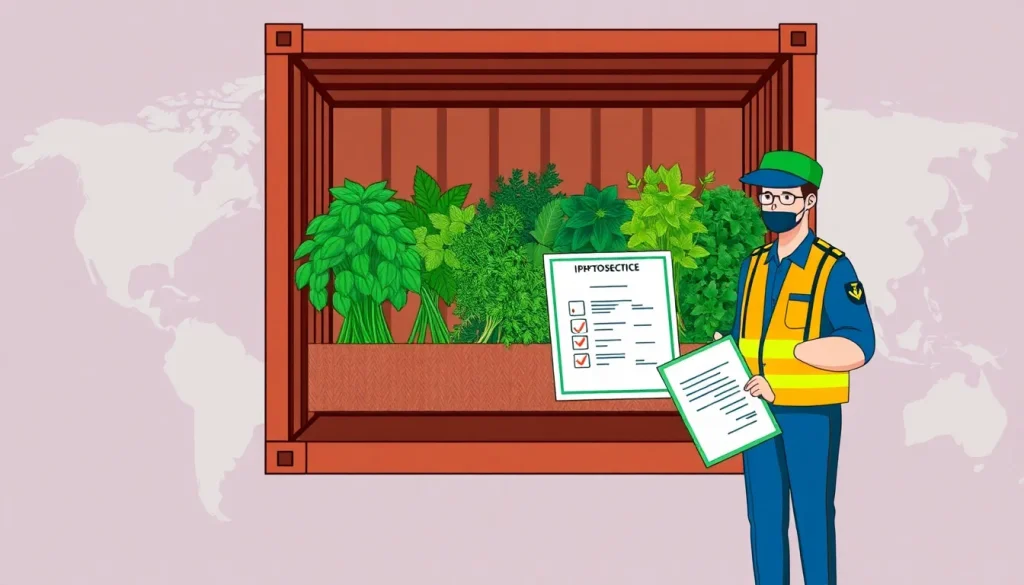
Short Answer
Fresh herbs—basil, mint, cilantro, rosemary, and others—are high‑value commodities that move quickly through global supply chains. Because they can carry soil‑borne pests or quarantine organisms, most importing countries demand a phytosanitary certificate (PC) issued by the exporting nation’s National Plant Protection Organization (NPPO). This article provides a plain‑English, encyclopedia‑style roadmap for obtaining a PC for fresh herbs, helping exporters, importers, customs brokers, freight forwarders, and agriculture students avoid costly delays.
Overview
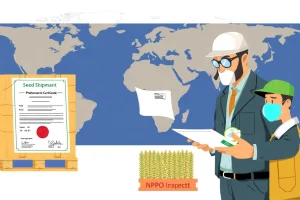
A phytosanitary certificate is an official document confirming that a consignment meets the importing country’s plant‑health requirements. It is issued after an NPPO‑authorized inspector inspects the shipment and verifies that it is free of regulated pests or that required treatments have been applied. For fresh herbs, the certificate typically covers the whole consignment (e.g., a container of packed basil) rather than individual packages.
Why it Matters (Real Stakes for Exporters/Importers)
Failure to present a valid PC can result in:
- Detention or rejection of the cargo at the port of entry.
- Additional inspection fees and possible re‑export costs.
- Loss of market reputation and future trade privileges.
- Legal penalties under the WTO SPS Agreement.

Timely issuance of a PC protects the supply chain, maintains buyer confidence, and ensures compliance with international trade rules.
Import/Export Procedure
The flow of activities is the same for most trading partners, though exact timelines vary. The generic sequence is:
- Confirm the importing country’s phytosanitary requirements (often listed in the country’s Import Requirements Database).
- Arrange a pre‑export inspection with the NPPO or an accredited private laboratory.
- Submit the required documents (see the next section).
- Receive the inspection report and, if satisfactory, the phytosanitary certificate.
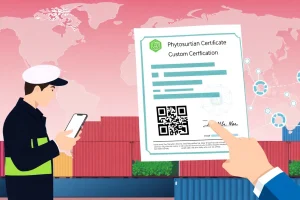
- Attach the PC to the commercial invoice and present it to customs on arrival.
Most NPPOs allow electronic submission of documents, but a hard copy of the PC must accompany the shipment.
Required Documents
Exporters should prepare a complete dossier before requesting inspection. Missing items are the most common cause of delay.
| Document | Purpose | Typical Format |
|---|---|---|
| Export Permit | Authorises movement out of the origin country | PDF issued by NPPO |
| Commercial Invoice | Shows value, HS code, and consignee details | Standard invoice |
| Packing List | Details quantity, weight, and container number | Excel or PDF |
| Origin Declaration | Confirms country of origin for each herb | Form 700‑1 (US) or equivalent |
| Treatment Certificate (if required) | Proves that a phytosanitary treatment was applied | Lab report or certificate of fumigation |
| Phytosanitary Certificate Application Form | Formal request to the NPPO inspector | Electronic portal entry |
All documents must be legible, dated within the last 30 days (unless the importing country allows a longer validity), and match the details on the consignment.
Requirements & Standards
The baseline standards come from the International Plant Protection Convention (IPPC) and are implemented by each NPPO. Key references for fresh herbs include:
- ISPM 15 – Regulates wood packaging; mandatory for pallets that hold herb bags.
- ISPM 31 – Provides guidelines for the issuance of phytosanitary certificates.
- NPPO‑specific commodity annexes – e.g., USDA‑APHIS (USA), CFIA (Canada), and the Australian Department of Agriculture list herb‑specific pest exclusions.
“A phytosanitary certificate shall be issued only after the NPPO is satisfied that the consignment complies with the importing country’s phytosanitary import requirements as defined in the relevant ISPM and national annexes.” – IPPC, ISPM 31 (2023)
For most fresh herbs, the primary pest concerns are Phylloxera spp., Thrips palmi, and seed‑borne fungi such as Fusarium oxysporum. The NPPO will verify that the herb material is:
- Free of soil and plant debris.
- Harvested after a minimum post‑harvest interval (often 7 days) to allow any surface pests to die.
- Stored at < 4 °C to suppress pest development.
Step‑by‑Step Checklist (How‑to Trigger)
- Identify the importing country’s herb‑specific requirements. Use the IPPC’s global database or the destination country’s NPPO website.
- Schedule a pre‑export inspection. Contact the NPPO’s inspection unit at least 10 business days before shipment.
- Gather all required documents. Use the table above as a checklist; verify dates and consistency.
- Complete the PC application. Submit electronically; include high‑resolution photos of the packed herbs if requested.
- Allow the inspector to sample. Typical sample size: 0.5 kg per herb variety.
- Receive the inspection report. If no regulated pests are found, the inspector will issue the PC.
- Attach the PC to the shipment. Place the original certificate with the commercial invoice in the cargo manifest.
- Notify the importer. Provide a scanned copy of the PC for advance customs filing.
Following this checklist reduces the chance of last‑minute rejections.
Common Mistakes & Rejection Reasons
Even experienced exporters slip up. The most frequent issues are:
- Out‑of‑date documents. Certificates older than 30 days are often rejected.
- Mismatched commodity descriptions. HS code or botanical name inconsistencies trigger additional inspections.
- Missing treatment evidence. Some countries require a cold‑treatment certificate for specific pests.
- Improper packaging. Use of untreated wooden pallets violates ISPM 15.
- Inadequate sampling. Inspectors may reject a PC if they suspect insufficient sampling.
Address these points before the inspection to avoid costly delays.
Real‑World Example/Scenario
ABC Herbs Ltd., based in Mexico, shipped 20 tons of fresh cilantro to the United Kingdom in March 2024. The UK’s Department for Environment, Food & Rural Affairs (DEFRA) required a phytosanitary certificate confirming that the cilantro was free of Thrips palmi. ABC followed the checklist above, but they omitted the cold‑treatment certificate required for shipments from high‑risk zones. Upon arrival, UK Border Force detained the cargo, and the shipment was re‑exported at a cost of US $45,000. After the incident, ABC updated its SOP to include a mandatory verification of treatment certificates for all high‑risk origins, eliminating future rejections.
Conclusion
Obtaining a phytosanitary certificate for fresh herbs is a systematic process that hinges on clear communication with the NPPO, meticulous documentation, and adherence to international standards such as ISPM 31. By understanding why the certificate matters, following the step‑by‑step checklist, and avoiding common pitfalls, exporters can keep their herb consignments moving swiftly through customs and maintain strong trading relationships.
FAQ
Can I obtain a phytosanitary certificate electronically?
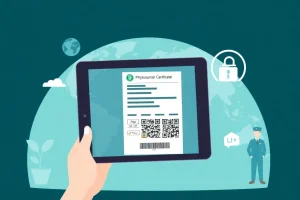
Yes. Most NPPOs, including USDA‑APHIS and CFIA, offer electronic portals (e‑APIS, e‑PHIS) for submitting applications and receiving the certificate, though a printed copy must accompany the cargo.
What if my shipment is delayed and the certificate expires?
If the PC expires, you must request a new inspection and re‑issue the certificate. Some importing countries allow a short grace period, but it is safest to coordinate shipment dates with the NPPO.
Are wooden pallets allowed for fresh herb shipments?
Only if the pallets comply with ISPM 15 (heat‑treated or fumigated). Non‑compliant wood will cause detention and may require repackaging.





Leave a Reply