Short Answer
International trade in plants, seeds, fruits, and other agricultural commodities moves billions of dollars each year, but it also carries the risk of moving harmful pests across borders. The International Plant Protection Convention (IPPC) created ISPM 2 – the International Standard for Regulated Pest Lists – to give every National Plant Protection Organization (NPPO) a common language for defining which pests are subject to phytosanitary measures. This article breaks down ISPM 2 in plain English, showing exporters, importers, customs brokers, freight forwarders, and students exactly what the standard requires, how it works, and how to avoid costly rejections.
Overview
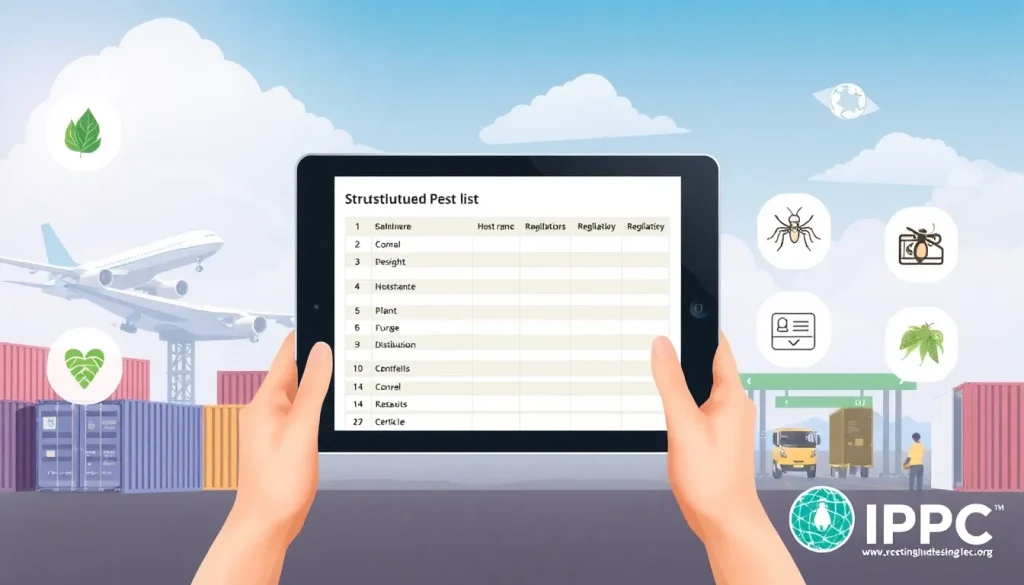
ISPM 2 is a global reference framework that standardises the format, content, and terminology of regulated pest lists used by NPPOs. The standard does not create new pest regulations; it merely ensures that when a country publishes a pest list, the list is clear, comparable, and machine‑readable.
- Scope: All plant pests (insects, nematodes, fungi, bacteria, viruses, viroids) that may be regulated for import, export, or domestic control.
- Key elements: Pest scientific name, common name, taxonomy, host range, distribution, regulatory status (A1, A2, etc.), and references to the legal instrument that imposes the regulation.
- Format: CSV, XML, or JSON files that follow the ISPM 2 data dictionary, enabling automated risk analysis tools.
By using a single, harmonised format, trade partners can quickly compare lists, identify gaps, and apply the correct phytosanitary measures.
Why it matters (real stakes for exporters/importers)
Non‑compliance with a regulated pest list can trigger shipment delays, costly treatment, or outright rejection. The financial impact can be severe:
- Lost revenue: A single container held at the border can represent $10,000–$30,000 in product value plus demurrage.
- Reputational damage: Repeated rejections erode buyer confidence and may lead to loss of market access.
- Regulatory penalties: Some jurisdictions impose fines for illegal importation of regulated pests.
Because ISPM 2 is referenced in many bilateral and multilateral agreements (e.g., WTO SPS Agreement), understanding the standard is a prerequisite for maintaining a smooth supply chain.
How it works
When an NPPO decides that a pest requires regulation, it creates an entry that conforms to ISPM 2. The entry is then published on the IPPC’s official portal or shared through regional databases. Importing countries download the list, map it to their own legislation, and use it to:
- Trigger inspection or treatment requirements for shipments that contain host material.
- Generate automated alerts in customs‑brokerage software.
- Inform risk‑assessment models that calculate the likelihood of pest entry.
Because the data are structured, a single API call can return the regulatory status of any pest for any trading partner, dramatically reducing manual cross‑checking.
Requirements & standards (citing IPPC/NPPO)
The ISPM 2 standard is defined in IPPC Standard ISPM 2 (2023). The key requirements are:
| Requirement | Explanation |
|---|---|
| Scientific name (binomial) | Must follow the latest accepted taxonomy (e.g., Phylloxera vitifoliae). |
| Regulatory status code | A1 = quarantine pest, A2 = regulated non‑quarantine pest, etc., as defined by the NPPO. |
| Host range list | All known hosts, with crop‑specific notes where relevant. |
| Geographic distribution | Current presence/absence by country/region, using FAO’s Global Pest Distribution database. |
| Reference to legal instrument | Link to the decree, ordinance, or annex that imposes the regulation. |
Each NPPO must publish the list in the required format and keep it up‑to‑date. Failure to do so can be considered a breach of the WTO SPS Agreement.
Import/export procedure
Below is a typical workflow that incorporates ISPM 2 data:
- Pre‑shipment check: Exporter queries the destination country’s ISPM 2 list (via API or downloaded CSV) for pests that affect the commodity.
- Risk assessment: If a pest is listed as A1 or A2, the exporter determines whether the commodity is a host.
- Treatment decision: Apply the required treatment (e.g., cold treatment, fumigation) or obtain a phytosanitary certificate stating the pest is absent.
- Documentation: Attach the phytosanitary certificate, treatment evidence, and a copy of the relevant ISPM 2 entry.
- Customs clearance: Importer’s broker presents documents; customs cross‑checks the pest list against the shipment’s declaration.
- Post‑arrival monitoring: If the pest is detected, the shipment may be subject to emergency measures under the destination NPPO’s contingency plan.
This process is repeated for each destination country, making a reliable ISPM 2 source essential for multi‑country supply chains.
Required documents
When a regulated pest is involved, the following documents are typically required:
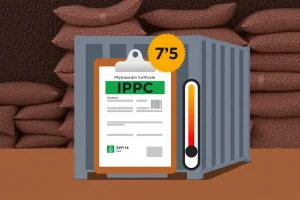
- Phytosanitary certificate (PC): Issued by the exporting NPPO, stating that the consignment is free of the listed regulated pest or has undergone the prescribed treatment.
- Treatment certificate: Laboratory or inspection report confirming that the commodity received the required treatment (e.g., methyl bromide fumigation).
- ISPM 2 pest list excerpt: A printed or electronic copy of the specific pest entry that triggered the requirement.
- Origin declaration: Statement of the field location, confirming that the area is free of the pest according to the NPPO’s surveillance data.
All documents must be in the language accepted by the importing NPPO (often English, the official language of the IPPC, or the local language).
Common mistakes & rejection reasons
Even experienced exporters stumble over a few recurring pitfalls:
- Out‑of‑date pest list: Using an older version of the destination’s ISPM 2 list, leading to missed A1 pests.
- Incorrect scientific name: Misspelling or using a synonym not recognised by the NPPO.
- Missing host confirmation: Assuming a commodity is non‑host without checking the host‑range column.
- Incomplete documentation: Forgetting to attach the treatment certificate or the pest‑list excerpt.
- Language errors: Translating the phytosanitary certificate incorrectly, causing ambiguity about pest status.
Customs agents often reject shipments on the spot if any of these issues are detected, resulting in costly re‑routing or destruction of the cargo.
Step‑by‑step checklist (How‑to trigger compliance)
Use this checklist before dispatching any plant‑based cargo:
- Identify the HS code and commodity description.
- Access the latest ISPM 2 pest list for the destination country (download CSV or query API).
- Search the list for pests that affect the identified commodity.
- Record the regulatory status (A1, A2, etc.) for each matching pest.
- If status is A1 or A2, verify host‑range details and decide on required treatment.
- Arrange treatment and obtain a certified treatment report.
- Request a phytosanitary certificate that references the specific pest entry.
- Attach the following to the export documentation package:
- Phytosanitary certificate
- Treatment certificate
- ISPM 2 pest‑list excerpt (including code, host, distribution)
- Origin declaration
- Provide the complete package to the freight forwarder and customs broker.
- Confirm receipt and acceptance with the importing NPPO before loading.
Following this list reduces the chance of a border hold to less than 2 % for most high‑value commodities.
Real‑world example / scenario
Scenario: A Kenyan exporter ships fresh mangoes to the European Union (EU). The EU’s NPPO lists Thaumatotibia pyriformis (the false codling moth) as an A1 quarantine pest for mangoes.
“All consignments of mangoes (HS 080450) entering the EU must be accompanied by a phytosanitary certificate stating that Thaumatotibia pyriformis has been inspected and found absent, or that the fruit has undergone an approved cold‑treatment of –2 °C for 14 days. – EU Commission Regulation 2019/2072″
Using ISPM 2, the exporter:
- Downloads the EU pest list (CSV) and finds the entry for T. pyriformis.
- Confirms mangoes are a known host.
- Orders a certified cold‑treatment at the packing facility.
- Receives a treatment certificate and a phytosanitary certificate that cites the EU ISPM 2 entry number.
- Ships the cargo with all documents.
- Result: The EU customs officer scans the documents, the pest‑list reference matches, and the consignment clears without delay.
If the exporter had omitted the cold‑treatment or used an outdated pest list, the shipment would have been detained, and the mangoes could have been destroyed under EU emergency measures.
Conclusion
ISPM 2 is the backbone of modern phytosanitary risk management. By providing a single, machine‑readable format for regulated pest lists, the standard enables exporters, importers, customs brokers, and freight forwarders to verify compliance quickly and accurately. Understanding the standard’s structure, the regulatory authority behind it, and the practical steps for using the data can spare businesses millions in lost revenue and protect global agriculture from invasive pests.
| Quick Fact | Detail |
|---|---|
| Year ISPM 2 adopted | 2023 (latest revision) |
| Primary authority | International Plant Protection Convention (IPPC) |
| Key code | A1 = quarantine pest; A2 = regulated non‑quarantine pest |
| Data formats | CSV, XML, JSON |
| Global users | Over 190 NPPOs and 2,500+ trade partners |
FAQ
Do I need to download the ISPM 2 list for every country I trade with?
You only need the latest list for the destination country. Many customs‑broker platforms provide API access that automatically pulls the current ISPM 2 data, eliminating manual downloads.
What happens if a pest is listed as A1 but my commodity is not a host?
If the host‑range column shows ‘No’ for your commodity, you generally do not need treatment. However, you must still document the host‑range verification in the export paperwork.
Can I use a synonym for a pest name if it is more familiar to my team?
No. ISPM 2 requires the accepted scientific name as per the latest taxonomy. Using a synonym can cause the shipment to be flagged as non‑compliant.




Leave a Reply