Short Answer
Every year, millions of containers cross borders loaded with wood pallets, crates, and dunnage. While these items keep goods stable, untreated wood can harbor insects that devastate forests, farms, and economies. The International Standards for Phytosanitary Measures No. 15 (ISPM 15) was created to stop that pathway. This pillar article breaks down the standard, the compliance steps, and the documents you need to keep shipments moving smoothly.
Overview
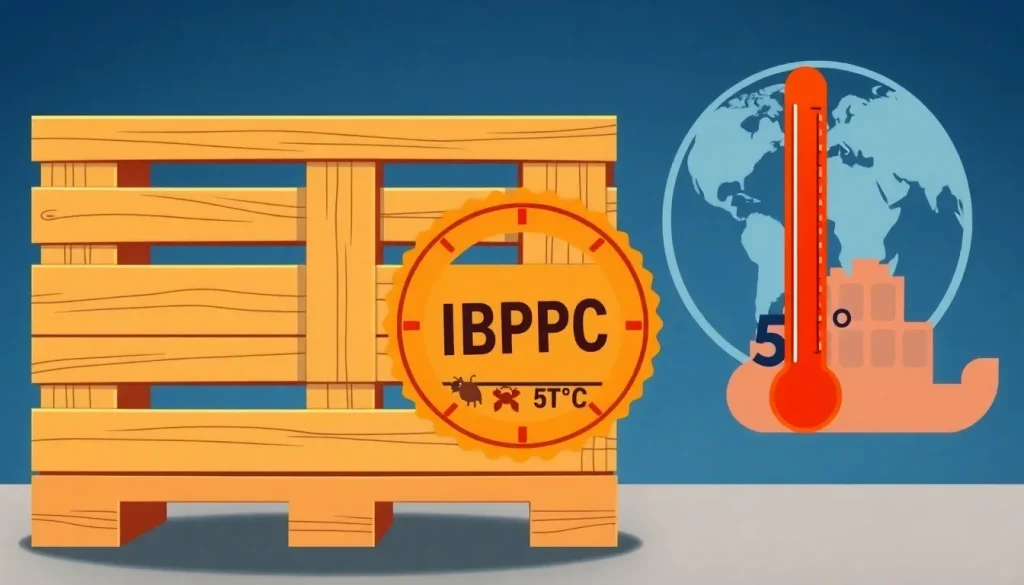
ISPM 15 is an IPPC (International Plant Protection Convention) standard that requires all wood packaging material (WPM) used in international trade to be either heat‑treated (HT) or methyl bromide‑fumed (MB) and marked with an internationally recognised stamp (the “IPPC mark”). The goal is to eliminate wood‑boring pests such as the Asian long‑horned beetle, pine wood nematode, and many bark beetles.
- Scope: Applies to solid wood, wood chips, bark, and any wood product that can serve as a pest carrier.
- Exemptions: Naturally occurring wood (e.g., live trees, bonsai), wood that is part of the cargo itself, and wood that has been processed into non‑wood products (e.g., paper, cardboard) are not covered.
- Key symbol: The IPPC stamp consists of the country code, a unique WPM code, and the treatment symbol (HT or MB).
Why It Matters (Real Stakes for Exporters/Importers)
Non‑compliance can halt a shipment at the border, trigger costly re‑treatments, or even lead to fines and bans. The economic impact is measurable:
- Loss of market access – many countries refuse entry for shipments lacking a valid ISPM 15 mark.
- Supply‑chain delays – average detention time for non‑compliant WPM is 2‑7 days, jeopardising just‑in‑time deliveries.
- Environmental protection – preventing the introduction of invasive pests protects native forests, agriculture, and biodiversity.
For example, the 2006 introduction of the pine wood nematode into Japan via untreated pallets caused an estimated US$ 2 billion loss in the timber sector.
How It Works
ISPM 15 follows a simple two‑step process: treatment and marking.
- Treatment: Either heat‑treatment (minimum 56 °C for at least 30 minutes throughout the wood) or methyl bromide fumigation (minimum 30 g m⁻³ for 24 hours).
- Marking: After treatment, the wood must bear the IPPC mark, which includes:
| Element | Description |
|---|---|
| Country Code | Two‑letter ISO 3166‑1 alpha‑2 (e.g., US, CN, DE) |
| Unique WPM Code | Three‑character identifier assigned by the national plant protection organization (NPPO) |
| Treatment Symbol | HT for heat‑treated, MB for methyl bromide‑fumed |
Only certified facilities may apply the mark. The marking must be legible, permanent, and placed on at least one side of each wood item.
Requirements & Standards (Citing Primary Sources)
“All wood packaging material (WPM) used in international trade shall be treated, marked, and approved in accordance with ISPM 15 (2022) to prevent the spread of quarantine pests.” – International Plant Protection Convention, ISPM 15, 2022.
The core requirements are:
- Heat‑treatment: ≥56 °C (133 °F) for a minimum of 30 minutes, measured by calibrated thermocouples placed in the core of the wood.
- Methyl bromide fumigation: ≥30 g m⁻³ for a minimum of 24 hours, with proper ventilation before release.
- Marking: IPPC stamp must be applied by an authorized treatment provider; the stamp must be visible without disassembly.
- Verification: Importing countries may request treatment certificates, photographs of the mark, or on‑site inspections.
National Plant Protection Organizations (NPPOs) publish local guidelines that mirror the IPPC standard. For example, the United States Department of Agriculture (USDA) – Animal and Plant Health Inspection Service (APHIS) follows the same temperature and time parameters, and issues a Phytosanitary Certificate for Wood Packing Material when requested.
Import/Export Procedure
Both exporters and importers share responsibility for compliant WPM. The typical workflow is:
- Pre‑shipment planning: Identify all wood items, confirm they are sourced from a certified treatment facility.
- Treatment: Arrange heat‑treatment or fumigation; obtain a treatment certificate.
- Marking: Verify the IPPC stamp is correctly applied.
- Documentation: Attach the treatment certificate to the commercial invoice or provide it electronically.
- Customs declaration: Declare WPM on the export declaration (e.g., Exporter’s Electronic Data Interchange) and the import declaration.
- Inspection: If the destination authority selects the shipment for inspection, present the certificate and allow visual verification of the mark.
- Release: Upon acceptance, the cargo proceeds to the final consignee.
Failure at any step can trigger a hold or rejection.
Required Documents
The following documents are commonly requested:
- Phytosanitary Certificate for Wood Packing Material (PC‑WPM): Issued by the NPPO of the exporting country, stating treatment type, date, and provider.
- Commercial Invoice: Must list WPM as a separate line item and reference the PC‑WPM number.
- Bill of Lading / Air Waybill: Include a notation such as “ISPM 15 compliant” or the IPPC mark code.
- Import Permit (if required): Some countries (e.g., Australia, New Zealand) require a specific import permit for WPM.
Electronic submission through the IPPC’s e‑Phytosanitary platform (e‑Phyto) is increasingly accepted, reducing paperwork delays.
Common Rejection Reasons at the Border
Customs and plant health officials cite the following issues most frequently:
- Missing or illegible IPPC mark.
- Treatment certificate not provided or does not match the mark.
- Evidence of untreated wood (e.g., bark, sawdust, or visible insect damage).
- Use of non‑certified treatment facilities.
- Incorrect country code or WPM code on the stamp.
When a shipment is rejected, the typical outcomes are:
- Re‑treatment at the exporter’s expense.
- Destruction of the non‑compliant WPM.
- Fines ranging from US$ 200 to US$ 5 000 per container, depending on the country.
Step‑by‑Step Checklist (How‑to Trigger Compliance)
Use this checklist before loading any container for export:
- Identify every piece of solid wood, wood chips, or bark that will accompany the cargo.
- Confirm the wood source is a certified treatment provider listed by the NPPO.
- Choose a treatment method (HT or MB) that meets ISPM 15 minimums.
- Obtain a treatment certificate that includes:
- Treatment type and code (HT/MB).
- Date and temperature or fumigant concentration.
- Provider’s registration number.
- Verify that the IPPC mark is applied correctly on each wood item.
- Check legibility, correct country code, and treatment symbol.
- Attach the certificate to the commercial invoice or upload via e‑Phyto.
- Declare WPM on export and import customs forms, referencing the certificate number.
- Keep a copy of the certificate and photos of the marks for at least 12 months (required by many NPPOs).
Common Mistakes & Rejection Reasons
Even experienced shippers slip up. The most common errors are:
- Assuming “treated” means safe: Some facilities claim treatment without proper monitoring; verify calibration logs.
- Using reclaimed pallets without re‑treatment: Re‑use is allowed only after a new certified treatment.
- Applying the mark on the wrong side: The mark must be visible without dismantling the pallet.
- Mixing treated and untreated wood: All wood in the same container must meet ISPM 15.
- Neglecting paperwork for multi‑modal shipments: Air, sea, and rail carriers each require the same documentation.
Proactive internal audits and a “WPM compliance log” can prevent these pitfalls.
Real‑World Example/Scenario
Scenario: A U.S. furniture exporter ships a container of wooden chairs to Brazil. The pallets are sourced from a third‑party warehouse that claims the pallets are heat‑treated.
- The exporter requests the treatment certificate; the warehouse provides a copy dated six months earlier, but the IPPC mark is faded and missing the country code.
- Brazilian customs selects the shipment for inspection. The officer notes the absent mark and requests a current certificate.
- Because the pallets were not re‑treated after the last shipment, the exporter must arrange emergency heat‑treatment at a certified U.S. facility, obtain a new certificate, and re‑mark the pallets.
- The delay adds 4 days to the transit time and incurs a US$ 1 200 re‑treatment fee, but the shipment is eventually released.
This example illustrates the cost of overlooking a single element—proper marking—and the value of a pre‑shipment verification step.
Conclusion
ISPM 15 is the cornerstone of global plant‑health security for wood packaging material. By treating, marking, and documenting WPM correctly, exporters keep markets open, importers avoid costly holds, and customs agencies protect their ecosystems. Use the checklist, keep records, and work only with certified treatment providers to ensure a smooth, compliant supply chain.
| Quick Facts | Details |
|---|---|
| Effective year | 1997 (latest revision 2022) |
| Minimum heat‑treatment temperature | 56 °C for ≥30 min |
| Fumigant concentration | ≥30 g m⁻³ methyl bromide for 24 h |
| IPPC mark components | Country code, WPM code, treatment symbol |
| Common penalties | Fines up to US$ 5 000 per container; possible shipment destruction |
FAQ
Do I need an ISPM 15 certificate if the wood packaging is already marked?
Yes. The IPPC mark proves treatment, but many importing countries also require a phytosanitary certificate as proof of the specific treatment event. Always carry the certificate or have it available electronically.
Can I reuse pallets that already have an IPPC mark?
Only if the pallets have been re‑treated after their last use. The mark must reflect the most recent certified treatment; otherwise the pallets are considered non‑compliant.
Is methyl bromide still allowed despite its phase‑out under the Montreal Protocol?
Methyl bromide is permitted for ISPM 15 only where national regulations allow it. Many countries are moving toward heat‑treatment only, but MB remains an accepted method where approved.





Leave a Reply