Short Answer
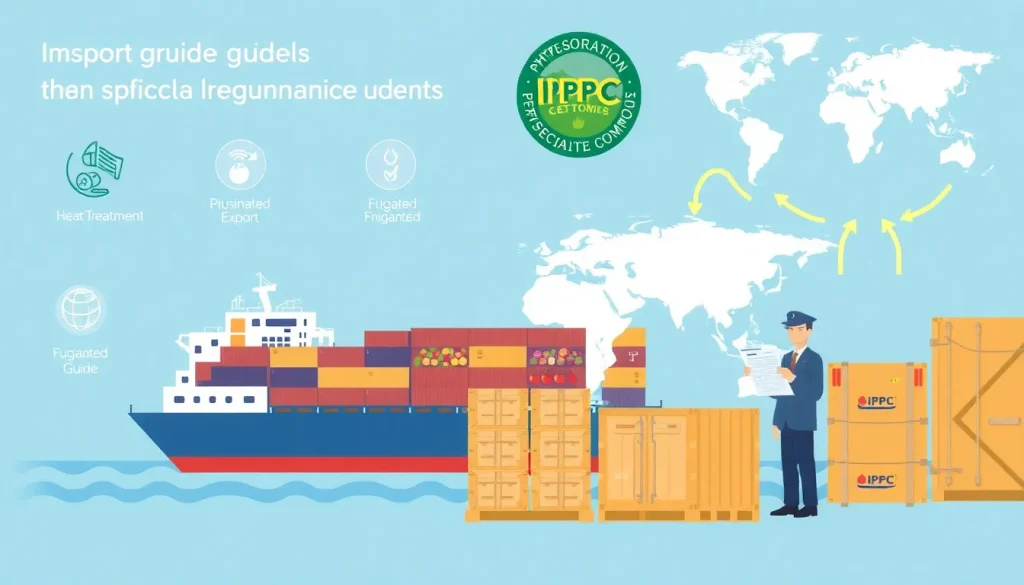
International trade in plants, plant products, and other regulated commodities is the backbone of the global food and horticulture sectors. To keep pests from crossing borders, the International Plant Protection Convention (IPPC) created ISPM 7 – Guidelines for Regulated Commodities. The standard tells exporters exactly what treatments, inspections, and paperwork are needed so that a shipment can move smoothly from farm to foreign market. This article breaks down ISPM 7 in plain English, showing how each requirement affects exporters, importers, customs brokers, freight forwarders, and even agriculture students who need quick, reliable answers.
Overview
ISPM 7 is an IPPC‑approved standard that defines:
- The definition of a regulated commodity (any plant or plant product that can carry a quarantine pest).
- The minimum phytosanitary measures (treatments, inspections, certification) required before export.
- The format and content of the Phytosanitary Certificate of Export (PCE) that must accompany each consignment.
Each National Plant Protection Organization (NPPO) uses ISPM 7 as a baseline, then may add national‑specific requirements (e.g., additional treatments or stricter inspection frequencies). The standard is regularly updated; the latest version (2023) is available on the IPPC website.
Why it matters (real stakes for exporters/importers)
Non‑compliance can cost exporters dearly:
- Shipment rejection or delayed release at the border, leading to spoilage and lost revenue.
- Fines or penalties imposed by the importing country’s customs or NPPO.
- Loss of market access if a pest outbreak is traced back to a non‑compliant shipment.
- Reputational damage that can affect future contracts.
Conversely, a well‑documented, ISPM 7‑compliant export builds trust with import partners and can speed up customs clearance.
How it works
ISPM 7 follows a logical flow:
- Identify the commodity – Determine whether the item is listed as a regulated commodity for the destination country.
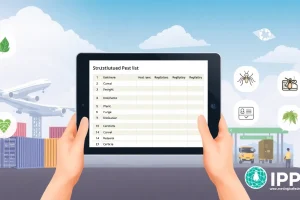
- Determine the pest risk – Review the pest list (A1/A2) for the importing NPPO.
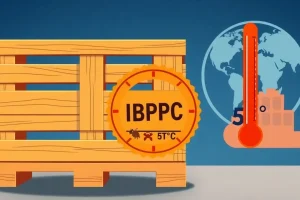
- Apply the required treatment(s) – Heat, fumigation, cold treatment, or other approved methods.
- Conduct a pre‑export inspection – An authorized NPPO inspector verifies that the treatment was effective and that the commodity is pest‑free.
- Issue the Phytosanitary Certificate of Export (PCE) – The NPPO signs the certificate, which must travel with the consignment.
- Customs clearance – Importing officials compare the PCE to their own regulations before release.
Any break in this chain can trigger a rejection.
Import/export procedure
The generic procedure, adaptable to most trading partners, is summarized in the table below:
| Step | Who Performs It | Key Output |
|---|---|---|
| 1. Commodity classification | Exporter & freight forwarder | Regulated‑commodity list match |
| 2. Treatment selection | Exporter, NPPO, treatment provider | Treatment protocol (e.g., 56 °C for 30 min) |
| 3. Pre‑export inspection | Authorized NPPO inspector | Inspection report |
| 4. Certificate issuance | NPPO | Phytosanitary Certificate of Export (PCE) |
| 5. Documentation hand‑over | Exporter / freight forwarder | PCE attached to commercial invoice |
| 6. Border clearance | Importing customs & NPPO | Release order or rejection notice |
Required documents
ISPM 7 specifies a minimum document set. Most importing NPPOs also ask for the following:
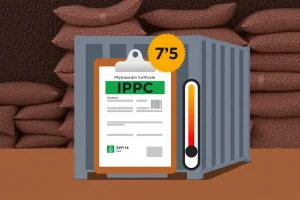
- Phytosanitary Certificate of Export (PCE) – Completed on the official IPPC form (FAO‑ISPM 7).
- Commercial invoice – Shows commodity description, HS code, and value.
- Packing list – Details container numbers, weight, and quantity.
- Treatment certificate – If a post‑harvest treatment is required, a separate treatment certificate must be attached.
- Origin phytosanitary inspection report – Occasionally requested for high‑risk commodities.
All documents must be in the language required by the importing NPPO (often English, Spanish, or French) or accompanied by a certified translation.
Common rejection reasons at that border
Importing officials frequently cite the following deficiencies:
- Missing or incomplete PCE (e.g., wrong pest code, absent signature).
- Incorrect treatment records (temperature not recorded, duration too short).
- Commodity not listed as regulated for the destination (mis‑classification).
- Visible signs of pest infestation during visual inspection.
- Failure to provide a required laboratory test result (e.g., seed health test).
Addressing these issues before shipment prevents costly hold‑ups.
Requirements & standards (cite primary source: IPPC/NPPO)
“The Phytosanitary Certificate of Export shall be issued in accordance with ISPM 7 (FAO, 2023) and shall contain, at a minimum, the name of the exporter, the name of the consignee, the description of the commodity, the treatment applied, and the signature of an authorized NPPO official.” – FAO ISPM 7, 2023, Article 6
Key standards derived from the primary source:
- Certificate format – Use the IPPC standard form (FAO‑ISPM 7) with pre‑printed fields.
- Treatment validation – Temperature‑controlled treatments must be recorded by calibrated data loggers; chemical treatments must include batch numbers and residue limits.
- Inspection timing – The inspection must occur within 48 hours of shipment departure, unless the NPPO specifies otherwise.
- Record‑keeping – Exporters must retain all treatment and inspection records for at least five years for audit purposes.
National NPPOs may add annexes that specify local pest lists (A1 – prohibited, A2 – regulated) and any additional phytosanitary measures.
Step‑by‑step checklist (How‑to trigger compliance)
- Confirm destination requirements – Consult the importing NPPO’s website or the IPPC’s Pest Lists database.
- Classify the commodity – Use the HS code and the ISPM 7 commodity matrix.
- Arrange approved treatment – Book a certified treatment facility; obtain a treatment protocol sheet.
- Schedule pre‑export inspection – Contact the exporting country’s NPPO at least 10 days before loading.
- Prepare documentation package – Fill the PCE, attach treatment certificate, invoice, and packing list.
- Verify language and signatures – Ensure all documents meet the language and notarization rules of the importing country.
- Load and seal containers – Keep the PCE with the cargo; seal containers according to ISPM 15 if wood packaging is used.
- Notify the freight forwarder – Provide electronic copies of all documents for customs filing.
- Monitor arrival – Follow up with the importer to confirm that the PCE was accepted.
- Archive records – Store all paperwork for the mandated retention period.
Common mistakes & rejection reasons
Even experienced exporters slip up. The most frequent errors are:
- Using an outdated version of the PCE form (the IPPC updates the template every few years).
- Failing to match the exact pest code listed by the importing NPPO.
- Providing treatment data that is not traceable to an accredited laboratory.
- Omitting the required signature of the NPPO official who performed the inspection.
- Neglecting to certify that wood packaging complies with ISPM 15 (heat‑treated or fumigated).
Each mistake can be avoided with a pre‑shipment compliance audit.
Real‑world example/scenario
Scenario: A Kenyan exporter ships fresh mangoes to the European Union (EU). The EU’s NPPO classifies mangoes as a regulated commodity for the pest Thaumatotibia leucotreta (false codling moth). The exporter follows these steps:
- Checks the EU pest list and learns that an approved hot water treatment (45 °C for 30 min) is mandatory.
- Contracts a certified treatment plant in Mombasa; receives a treatment certificate with temperature logs.
- Requests a pre‑export inspection from Kenya’s NPPO; the inspector signs the PCE on the official FAO‑ISPM 7 form.
- Attaches the PCE, treatment certificate, commercial invoice, and a phytosanitary inspection report to the shipment.
- Loads the mangoes in containers with ISPM 15‑certified wooden pallets.
- Upon arrival at Rotterdam, the EU customs officer verifies the PCE, confirms the treatment temperature, and releases the cargo without delay.
If the exporter had omitted the treatment certificate, the EU would have detained the mangoes, leading to a loss of >$200,000 in spoilage and penalties.
Conclusion
ISPM 7 provides a clear, internationally recognized framework that protects plant health while facilitating trade. By understanding each element—commodity classification, required treatments, documentation, and inspection timing—exporters can avoid costly rejections and keep market access open. A disciplined checklist, regular liaison with the NPPO, and up‑to‑date knowledge of pest lists are the best safeguards for a smooth export journey.
FAQ
Do I need an ISPM 7 certificate for every export shipment?
Only if the commodity is listed as a regulated commodity for the destination country. Unregulated items may still require a phytosanitary certificate, but ISPM 7‑specific requirements apply only to regulated goods.
Can I use an electronic Phytosanitary Certificate instead of a paper one?
Yes. Many NPPOs now accept electronic certificates (e‑PCE) that meet the same data standards as the paper form. Verify that the importing country has accepted e‑PCEs before shipment.
What happens if my treatment records are missing a temperature log?
The importing NPPO will likely reject the shipment for insufficient evidence of treatment efficacy. Provide calibrated data logger records for all heat or cold treatments to avoid this issue.




Leave a Reply