Short Answer
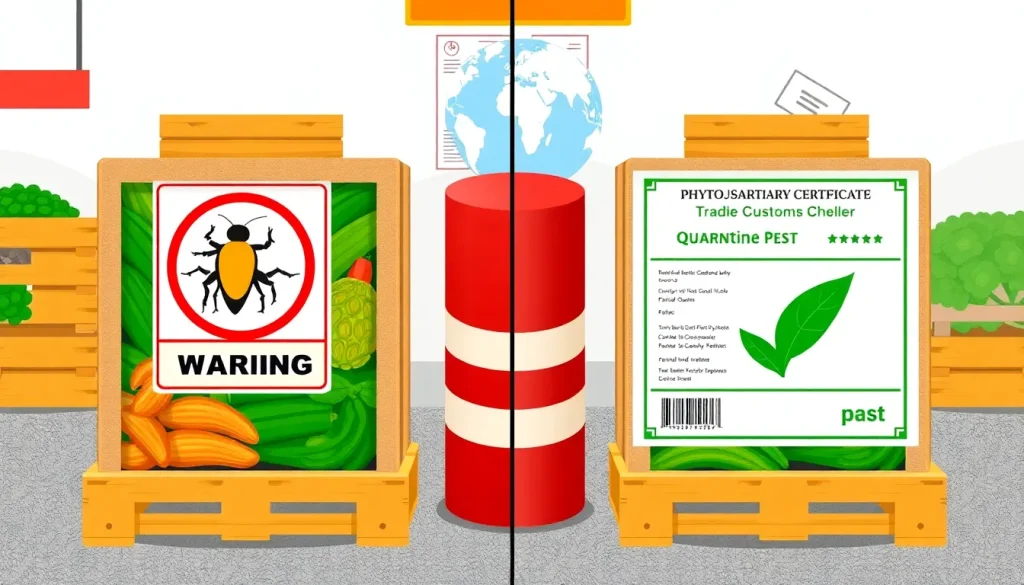
International trade in plants and plant products moves billions of dollars each year, but it also carries the risk of moving unwanted organisms across borders. Two regulatory concepts dominate the plant‑health landscape: Quarantine Pests (QPs) and Regulated Non‑Quarantine Pests (RNQPs). Although both are listed in the International Plant Protection Convention (IPPC) standards, they trigger very different compliance requirements. This pillar article breaks down the distinctions, explains why they matter to exporters, and provides a practical roadmap to avoid costly delays.
Overview
Both QPs and RNQPs are defined by the International Standards for Phytosanitary Measures (ISPMs) administered by the IPPC. A Quarantine Pest is an organism that is not present in a country or region, or is present but under official control, and whose entry could cause significant economic or environmental damage. A Regulated Non‑Quarantine Pest is already present in the importing country, but it can affect the quality of the exported commodity and is therefore subject to specific standards to limit its presence.
| Characteristic | Quarantine Pest (QP) | Regulated Non‑Quarantine Pest (RNQP) |
|---|---|---|
| Regulatory Goal | Prevent entry/establishment | Limit incidence on exported commodity |
| Typical Action | Import prohibition or treatment requirement | Maximum allowed prevalence (e.g., ≤1 %) |
| Reference Standard | ISPM 11 & ISPM 21 | ISPM 21 Annex II |
| Impact on Trade | High – often leads to shipment rejection | Moderate – may require additional certification |
Why it Matters (Real Stakes for Exporters/Importers)
Understanding the distinction can mean the difference between a smooth shipment and a costly rejection. Key stakes include:
- Financial loss: Rejected cargo can incur storage fees, re‑treatment costs, or outright disposal.
- Market access: Persistent non‑compliance may lead to trade bans for specific commodities.
- Reputation: Repeated phytosanitary failures damage relationships with buyers and national plant protection organizations (NPPOs).
- Legal liability: Importing a QP can trigger enforcement actions, fines, or civil suits under WTO SPS agreements.
Types / Categories
Both QPs and RNQPs are grouped by taxonomic class, host range, and pathway relevance. Common categories include:
- Insects – e.g., Bactrocera dorsalis (Oriental fruit fly) – QP in many regions.
- Fungi – e.g., Fusarium oxysporum f.sp. cubense (Panama disease) – QP in EU, RNQP in some Asian markets.
- Viruses – e.g., Citrus tristeza virus – RNQP where citrus is already grown.
- Nematodes – e.g., Meloidogyne incognita – QP in temperate zones, RNQP elsewhere.
- Weeds & invasive plants – e.g., Parthenium hysterophorus – QP in many island nations.
Regulatory Authority & Contact
Compliance is overseen by two layers of authority:
- International: International Plant Protection Convention (IPPC) – ippc.int
- National: Each country’s National Plant Protection Organization (NPPO). Exporters should maintain a contact list for the NPPOs of both the origin and destination countries.
Typical NPPO contact points:
| Country | Agency | Phone | |
|---|---|---|---|
| United States | USDA‑APHIS PPQ | +1‑202‑720‑2791 | ppq@aphis.usda.gov |
| European Union | EU Commission DG SANTE | +32‑2‑281‑25‑25 | planthealth@ec.europa.eu |
| Australia | Department of Agriculture, Water and the Environment | +61‑2‑6272‑2322 | plantbio@agriculture.gov.au |
Import/Export Procedure
Below is the generic flow for shipments involving either QPs or RNQPs. Specific steps may vary by country.
- Identify the pest status of the commodity (QP, RNQP, or pest‑free).
- Consult the importing NPPO’s pest list and any bilateral agreements.
- Arrange pre‑export treatment if required (e.g., hot water, fumigation).
- Obtain a phytosanitary certificate (PC) from the exporting NPPO.
- Submit the PC and any additional permits to the importing customs authority.
- Customs or border inspection may request a sample for laboratory analysis.
- If the shipment passes, it is released; otherwise, corrective action (re‑treatment, disposal) is mandated.
Required Documents
Exporters should prepare the following core documents. Missing or inaccurate items are the most common cause of rejection.
- Phytosanitary Certificate (PC): Issued by the exporting NPPO, confirming the commodity is free of QPs and meets RNQP thresholds.
- Certificate of Origin (CO): Required by some importing countries for tariff classification.
- Import Permit: Mandatory when the destination country imposes a permit for specific commodities.
- Treatment Certificate: Evidence of any required pre‑export treatment (e.g., fumigation, irradiation).
- Laboratory Test Report: For RNQPs, a recent test confirming prevalence is below the allowed limit.
Requirements & Standards
The IPPC’s ISPM 21 (Regulation of Non‑Quarantine Pests) and ISPM 11 (Pest Risk Analysis for Quarantine Pests) form the backbone of global standards. National NPPOs translate these into specific thresholds.
“The phytosanitary certificate shall state that the consignment is free from quarantine pests and that any regulated non‑quarantine pest does not exceed the maximum allowed prevalence as defined by the importing country’s NPPO.” – IPPC ISPM 21, Annex II
Key standards to verify:
- Maximum prevalence for RNQPs (often ≤1 % of inspected units).
- Approved treatment methods and validated parameters (temperature, exposure time).
- Sampling protocols – e.g., ISPM 31 for inspection of consignments.
Common Rejection Reasons at the Border
Even well‑prepared exporters encounter refusals. The most frequent causes are:
- Undeclared QP: The shipment contains a pest listed as quarantine in the destination.
- RNQP prevalence above limit: Laboratory testing shows >1 % infection.
- Incorrect or missing PC details: Wrong commodity description, missing treatment declaration.
- Improper sampling: Sample size does not meet ISPM 31 requirements.
- Expired treatment certificate: Date on the certificate is older than the permissible window.
Step‑by‑Step Checklist (How‑to Trigger Compliance)
- Pre‑shipment risk assessment – Use the importing country’s pest list to flag QPs and RNQPs.
- Confirm treatment eligibility – Verify that the chosen method is listed in the destination’s approved treatment schedule.
- Schedule inspection – Arrange for the exporting NPPO to inspect the consignment at least 48 hours before loading.
- Gather documentation – PC, treatment certificate, lab test report, and any permits.
- Validate data – Cross‑check commodity codes, scientific names, and pest names for spelling errors.
- Submit electronic PC (e‑PC) if available – Many countries now accept digital certificates via the e‑Phytosanitary system.
- Notify the importer – Provide copies of all documents and the expected arrival time.
- Track shipment – Use a logistics platform that records border inspection outcomes.
- Post‑arrival follow‑up – Confirm release status and retain records for the statutory retention period (usually 3 years).
Real‑World Example/Scenario
Scenario: A U.S. avocado exporter ships a container to the EU. The EU lists Phytophthora ramorum (causal agent of sudden oak death) as a quarantine pest, while Persea americana (avocado) is a host for the RNQP Avocado Sunblotch Viroid (ASBV).
Steps taken:
- Risk assessment identified P. ramorum as a QP – the exporter applied a mandatory hot‑water treatment (53 °C for 30 min) approved by the EU.
- Laboratory testing showed ASBV incidence of 0.4 % (below the EU 1 % RNQP threshold).
- The USDA‑APHIS PPQ issued a PC stating: “Free of quarantine pest P. ramorum; ASBV prevalence 0.4 % (≤1 %).”
- The EU’s DG SANTE accepted the PC, and the shipment cleared customs without delay.
If the hot‑water treatment had not been performed, the consignment would likely have been rejected under EU quarantine regulations, resulting in estimated losses of $150,000 in product value plus $20,000 in re‑treatment costs.
Conclusion
Quarantine pests and regulated non‑quarantine pests are two sides of the same plant‑health coin, each demanding specific attention from exporters. By understanding the regulatory definitions, aligning with the correct standards, and following a disciplined documentation checklist, trade professionals can minimize border disruptions, protect market access, and keep supply chains moving.
| Quick Fact | Detail |
|---|---|
| QP definition | Organism absent or under official control that could cause serious damage. |
| RNQP definition | Present pest limited by a maximum allowed prevalence on exported goods. |
| Key ISPMs | ISPM 11 (QP risk analysis) and ISPM 21 (RNQP regulation). |
| Typical prevalence limit | ≤1 % of inspected units for most RNQPs. |
| Primary document | Phytosanitary Certificate issued by the exporting NPPO. |
| Common rejection cause | Undeclared or untreated quarantine pest. |
| Retention period | Export records must be kept for at least 3 years. |
FAQ
What is the difference between a quarantine pest and a regulated non‑quarantine pest?
A quarantine pest is not present or is under official control in the importing country and could cause major damage if introduced. A regulated non‑quarantine pest is already present but must be kept below a set prevalence level on the exported commodity.
Do I need a phytosanitary certificate for commodities with only RNQPs?
Yes. The phytosanitary certificate must state that the consignment is free of quarantine pests and that any RNQP does not exceed the importing country's allowed prevalence.
How can I avoid shipment rejection due to RNQP prevalence?
Conduct a pre‑export laboratory test within the required sampling window, ensure the result is below the permitted threshold, and include the test report with the phytosanitary certificate.




Leave a Reply