Short Answer
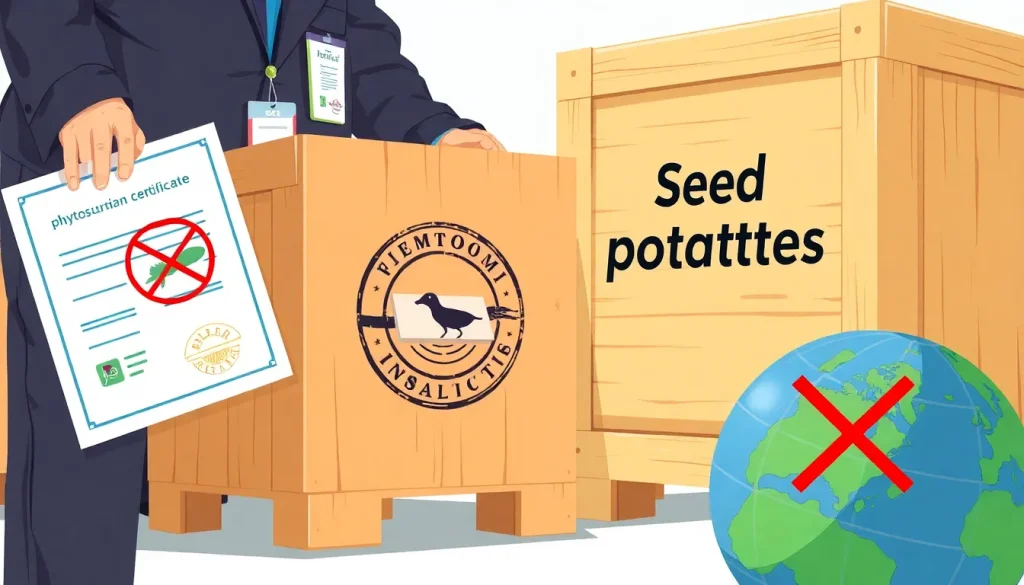
Seed potatoes are a high‑value agricultural commodity, and moving them across international borders triggers strict plant‑health controls. A phytosanitary certificate (PhC) issued by the National Plant Protection Organization (NPPO) confirms that the consignment meets the importing country’s pest‑free standards. This article provides a complete, encyclopedia‑style reference for exporters, importers, customs brokers, freight forwarders, and agriculture students who need fast, accurate answers.
Overview
A phytosanitary certificate is an official document that attests a shipment of plant material is free from regulated pests and diseases, and complies with the import requirements of the destination country. For seed potatoes, the certificate must be based on a field inspection, laboratory tests (if required), and compliance with any pre‑export treatments stipulated by the importing NPPO.
Why it Matters (Real Stakes for Exporters/Importers)
Without a valid PhC, a consignment can be:
- Detained at the border, causing costly demurrage.
- Returned to the country of origin, risking loss of fresh product.
- Subject to phytosanitary sanctions, including fines or a temporary ban on future shipments.
For exporters, a reliable certification process protects market access and reputation. For importers, it safeguards domestic agriculture from invasive pests such as Phytophthora infestans (late blight) that can devastate potato crops.
Regulatory Authority & Contact
The issuing authority is the NPPO of the exporting country, operating under the International Plant Protection Convention (IPPC). In the United States, the USDA‑APHIS Plant Protection and Quarantine (PPQ) program handles certification; in the European Union, the national plant health services (e.g., DG AGRI in France) issue the PhC.
Key contact points (example for the United States):
| Agency | Phone | |
|---|---|---|
| USDA‑APHIS PPQ – Plant Inspection Station | +1-202-720‑2791 | ppq@usda.gov |
Exporters should verify the specific office that handles seed potatoes, as some countries have dedicated seed certification bodies.
Required Documents
Before the inspection, gather the following paperwork:
- Export permit or license issued by the NPPO.
- Commercial invoice and packing list.
- Origin seed certification (variety, germination rate, disease‑free status).
- Pre‑export treatment certificates (e.g., hot water treatment records).
- Previous phytosanitary certificates for the same lot (if re‑exporting).
All documents must be in the language required by the importing country or accompanied by a certified translation.
Step‑by‑Step Checklist (How‑to Trigger)
Follow this chronological checklist to obtain a PhC for seed potatoes:
- Confirm Import Requirements: Review the importing country’s NPPO website for pest‑free lists, required treatments, and any special lab testing.
- Apply for Export Permit: Submit an application to your own NPPO with the commercial invoice, seed certification, and any required treatment records.
- Schedule Field Inspection: Request an inspection at least 7‑10 days before the intended shipment date. Inspectors will verify field conditions, seed health, and compliance with treatment protocols.
- Conduct Laboratory Tests (if required): Some importing countries demand testing for specific pathogens (e.g., Ralstonia solanacearum). Submit samples to an accredited lab and retain the test report.
- Receive Inspection Report: The inspector issues a report indicating “Phytosanitary Condition Satisfactory” or notes deficiencies.
- If deficiencies exist, correct them (e.g., repeat treatment) and request a re‑inspection.
- Issue Phytosanitary Certificate: Once the inspection report is satisfactory, the NPPO issues the PhC. The certificate includes:
- Consignment details (quantity, variety, batch number).
- Declaration of freedom from regulated pests.
- Reference to the specific ISPM standard applied.
- Attach Certificate to Shipment: Place the original PhC with the commercial invoice in the cargo manifest. Some countries also require a digital copy uploaded to an e‑phytosanitary portal.
- Post‑Export Monitoring: Keep records for at least 3 years in case of a post‑entry quarantine investigation.
Common Mistakes & Rejection Reasons
Even experienced exporters can encounter avoidable setbacks. The most frequent causes of rejection at the border are:
- Incomplete Documentation: Missing treatment certificates or untranslated documents.
- Incorrect Pest Declaration: Failing to list a pest that is regulated by the importing country.
- Non‑Compliance with Pre‑Export Treatment: For example, omitting the required 52 °C hot‑water treatment for the EU.
- Expired Certificate: PhCs are typically valid for 30 days; shipping after expiration triggers denial.
- Improper Packing: Use of non‑certified containers can be interpreted as a biosecurity risk.
To avoid these pitfalls, perform a pre‑shipment audit using the checklist above and confirm the latest import regulations.
Requirements & Standards (Citing Primary Sources)
The IPPC establishes International Standards for Phytosanitary Measures (ISPM) that all NPPOs must follow. For seed potatoes, the most relevant standards are:
ISPM 15 – Regulates wood packaging material; applicable when seed potatoes are shipped in wooden crates.
ISPM 36 – Provides guidelines for the certification of seed potatoes, including pest‑free declarations and sampling procedures.
National regulations adapt these standards. For example, the United States follows 21 CFR 340.4 (seed potato certification) and the European Union references Commission Implementing Regulation (EU) No 2019/208 for the hot‑water treatment.
Key compliance points:
- Sampling must follow the International Seed Testing Association (ISTA) rule 1.2.1 (minimum 400 tubers per lot).
- All seed must be free of Phytophthora infestans, Rhizoctonia solani, and any quarantine pests listed by the importing NPPO.
- Certificates must be signed by an authorized phytosanitary inspector and stamped with the official NPPO seal.
Real‑World Example/Scenario
Scenario: A Canadian exporter wishes to ship 10 tonnes of certified seed potatoes of the variety “Russet Burbank” to Kenya.
- The exporter checks Kenya’s NPPO portal and discovers that Kenya requires a pre‑export treatment of 50 °C for 30 minutes and a laboratory test for Ralstonia solanacearum.
- After completing the hot‑water treatment, the exporter submits three tuber samples to an accredited lab. The lab report confirms no presence of the bacterium.
- An inspection is scheduled at the Canadian Food Inspection Agency (CFIA) field office. The inspector verifies the treatment records, lab report, and visual health of the tubers.
- The CFIA issues a phytosanitary certificate referencing ISPM 36 and Kenya’s import standard (KE‑PH‑2023‑001).
- The PhC is attached to the shipping documents, and the consignment clears Nairobi’s border without delay.
This example illustrates how aligning with both exporting and importing standards prevents costly re‑exports.
Conclusion
Obtaining a phytosanitary certificate for seed potatoes is a systematic process that hinges on accurate documentation, strict adherence to treatment protocols, and clear communication with both the exporting and importing NPPOs. By following the step‑by‑step checklist and avoiding common mistakes, exporters can maintain market access, importers can protect domestic agriculture, and all parties can reduce the risk of shipment delays.
FAQ
Can a phytosanitary certificate be issued electronically?
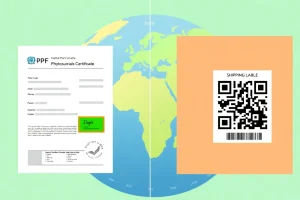
Yes. Many NPPOs now provide e‑PhCs through the IPPC’s e‑Phyto portal. The digital certificate must be printed or presented electronically at the border and must contain a secure QR code linking to the official record.
What happens if my seed potatoes are found with a regulated pest after arrival?
The consignment will be detained, and the importing NPPO may order treatment, destruction, or re‑export. The exporter may be liable for disposal costs and could face a temporary suspension of export privileges.
Do I need a separate certificate for each container?
Generally, one PhC covers the entire lot as described on the certificate, regardless of the number of containers, provided the containers are sealed and the cargo manifest matches the certificate details.





Leave a Reply