Short Answer
Indonesia stands as a significant producer of tropical fruits, with bananas representing a critical commodity for international agricultural trade. For exporters, importers, and logistics professionals, understanding the regulatory framework governing plant health is essential to prevent economic loss and ensure biosecurity. The phytosanitary certificate serves as the primary document verifying that consignments meet the plant health requirements of the importing country. This article provides a detailed, encyclopedia-style reference on securing this certification specifically for banana exports originating from Indonesia, adhering to International Plant Protection Convention (IPPC) standards.
Overview
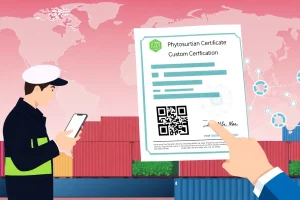
A phytosanitary certificate is an official document issued by the National Plant Protection Organization (NPPO) of the exporting country. For Indonesia, this authority resides within the Ministry of Agriculture. The certificate attests that the banana consignment has been inspected and found free from regulated pests and diseases according to the importing country’s specific requirements. It is not a guarantee of quality or commercial value but strictly a plant-health security measure. Under the IPPC framework, this document is mandatory for moving regulated plants and plant products across international borders to prevent the spread of quarantine pests.
Regulatory Authority and Contact
The primary regulatory body responsible for issuing phytosanitary certificates in Indonesia is the Indonesian Agricultural Quarantine Agency (Barantani), operating under the Ministry of Agriculture. Exporters must engage with local quarantine offices located at major ports and airports. These offices are equipped with inspectors trained to identify pests specific to Musa species. Contacting the nearest Barantani office prior to harvest is recommended to understand specific port-level protocols. The central authority maintains oversight to ensure all issued certificates comply with ISPM 12 standards.
Import and Export Procedure
The export procedure involves a coordinated effort between the grower, the exporter, and the quarantine authority. Initially, the exporting entity must be registered with the relevant agricultural authorities. Once the bananas are harvested and packed, the exporter submits an application for inspection. Quarantine officers then conduct a physical examination of the consignment, often including sampling for laboratory testing if required by the destination country. Upon successful inspection, the certificate is issued electronically or in hard copy, allowing the shipment to clear customs.
Required Documents
To process a phytosanitary certificate application, several supporting documents must be submitted alongside the official form. These documents verify the origin and handling of the commodity. The standard dossier includes:
- Commercial Invoice: Details the value and parties involved in the transaction.
- Packing List: Specifies the quantity, weight, and packaging type of the bananas.
- Bill of Lading or Air Waybill: Provides logistics and routing information.
- Letter of Credit (if applicable): Confirms payment terms and banking details.
- Declaration of Origin: Confirms the bananas were grown within Indonesia.
Requirements and Standards
All phytosanitary certificates issued in Indonesia must adhere to the model certificates outlined in ISPM 12 (International Standards for Phytosanitary Measures). This standard ensures uniformity in language and structure, facilitating recognition by foreign NPPOs. The certificate must include the scientific name of the commodity (Musa spp.), the declared quantity, and the specific declaration required by the importing country. Any additional declarations regarding freedom from specific pests, such as Banana Bunchy Top Virus, must be accurately stated based on field inspections.
“Phytosanitary certificates should be printed on official paper and bear the official seal of the NPPO to be considered valid under IPPC guidelines.”
Step-by-Step Checklist
Exporters should follow this logical sequence to minimize delays and ensure compliance:
- Register: Ensure your export company is registered with the Indonesian Ministry of Agriculture.
- Verify Requirements: Check the importing country’s specific phytosanitary import requirements (PIRs).
- Prepare Consignment: Pack bananas in clean, new materials to prevent contamination.
- Submit Application: File the application with Barantani at least 3-5 working days before shipment.
- Facilitate Inspection: Provide access to quarantine officers for physical inspection and sampling.
- Receive Certificate: Collect the signed phytosanitary certificate and attach it to shipping documents.
Common Mistakes and Rejection Reasons
Shipments are frequently rejected due to administrative errors or pest detection. Common issues include discrepancies between the certificate and the commercial invoice, such as mismatched weights or container numbers. Biologically, the presence of soil on roots (if exporting tissue culture plants) or signs of fungal infection on fruit can lead to immediate rejection. Additionally, failing to include specific additional declarations mandated by the destination country is a frequent cause of customs holds. Exporters must ensure the certificate is legible and free of unauthorized alterations.
Real-World Example Scenario
Consider an exporter in Lampung shipping Cavendish bananas to China. The importer requires a declaration stating the fruit is free from Pseudococcus jacobi. The exporter applies through Barantani, undergoes inspection, and receives the certificate. However, upon arrival in Shanghai, customs notice the certificate lists the variety as “Banana” instead of “Musa acuminata”. This lack of scientific precision causes a delay while the NPPO verifies the error. This scenario highlights the importance of precise botanical naming and adherence to the importing country’s exact wording requirements.
Quick Facts Table
n
| Feature | Detail |
|---|---|
| Issuing Authority | Indonesian Agricultural Quarantine Agency (Barantani) |
| Validity Period | Typically 14 to 30 days from issuance |
| Governing Standard | IPPC ISPM 12 |
| Primary Commodity | Musa spp. (Bananas) |
| Processing Time | 3 to 5 working days |
Conclusion
Obtaining a phytosanitary certificate for banana exports from Indonesia is a structured process that demands attention to regulatory detail and biological compliance. By adhering to IPPC standards and maintaining open communication with Barantani, exporters can mitigate the risk of shipment rejection. This document remains the cornerstone of safe and legal agricultural trade, protecting global ecosystems while facilitating economic growth for Indonesian producers.
FAQ
How long is a phytosanitary certificate valid for banana exports from Indonesia?
Typically, the certificate is valid for 14 to 30 days from the date of issuance, depending on the importing country's regulations.
Can I apply for a phytosanitary certificate after the shipment has left the port?
No, the inspection and certification must occur before the shipment departs the country of origin.
What happens if pests are found during the inspection?
The consignment may be treated, rejected, or destroyed depending on the severity and the importing country's requirements.






Leave a Reply