Short Answer
Quick definition
ISPMs (International Standards for Phytosanitary Measures) are the international rulebook for plant health and quarantine. <cite index=”155-1″>As of March 2026, there are 47 adopted ISPMs, 36 Diagnostic Protocols (DPs), 46 Phytosanitary Treatments (PTs), and 1 Commodity Standard (CS) adopted by the International Plant Protection Convention (IPPC).</cite> <cite index=”157-1″>The WTO Agreement on the Application of Sanitary and Phytosanitary Measures (SPS Agreement) recognizes standards developed under the auspices of the IPPC as the only international standards for plant health.</cite> When a country passes a phytosanitary regulation — whether requiring a certificate, banning a pest, or setting treatment standards — that regulation should be based on an ISPM to be credible under international trade law.
Overview
The IPPC is the global plant health treaty. Since 1951, its member countries have worked to develop a shared language for regulating plant pests and protecting agriculture from cross-border pest introductions. But treaties themselves are too broad — they set principles but not specifics. That’s where ISPMs come in.
An ISPM is a detailed technical standard that clarifies how to implement the treaty’s principles. It answers concrete questions: How do you certify that a seed lot is pest-free? What qualifies as a “quarantine pest”? How do you prove a region is free of a specific pest? When is a phytosanitary certificate valid? What treatment kills a particular insect?
<cite index=”164-1″>ISPMs ensure that national or regional-level measures are scientifically justified, encourage fair trade and are not used as barriers to trade of plants or plant products or other regulated items.</cite> This prevents countries from using phytosanitary rules as hidden protectionism — banning a competitor’s fruit under the pretense of pest risk, when the real motivation is trade protection.
For an exporter, understanding ISPMs is understanding the legitimacy of requirements imposed on your goods. If an importing country cites an ISPM when rejecting your shipment, that requirement is internationally recognized and defensible. If it doesn’t, the requirement may be challengeable under WTO trade rules.
Why it matters
Phytosanitary rules would be chaotic without ISPMs. Imagine each country inventing its own certification procedure, its own pest definitions, its own inspection methodology. A seed exporter would need 195 different certification systems for 195 countries. A fresh fruit exporter would face contradictory treatment requirements.
ISPMs solve this by harmonizing at the international level. <cite index=”163-1″>The SPS Agreement recognizes the IPPC as the reference organization developing international standards for plant health (phytosanitary) measures. The same principles reflected in the SPS Agreement — sovereignty, necessity, harmonization, transparency, equivalence, and non-discrimination — are reflected in the IPPC and particularly in ISPMs.</cite>
For Indonesia’s Badan Karantina Indonesia (Barantin), ISPMs are the framework for issuing phytosanitary certificates and maintaining credibility with trading partners. When Barantin issues a green coffee certificate citing freedom from coffee berry borer per ISPM 38, an importing country’s NPPO recognizes that the certificate follows an internationally agreed-upon standard. That recognition is what makes the certificate acceptable at the border.
Without ISPMs, countries might not trust each other’s certifications at all, and trade would slow or stop.
The IPPC framework: from convention to standards to national implementation
The hierarchy looks like this:
Level 1: International Plant Protection Convention (IPPC) The treaty itself (adopted 1951, revised 1997). It’s the legal agreement all member countries sign. It sets the vision: prevent introduction of pests, manage pests that are established, facilitate trade. But it’s general.
Level 2: ISPMs Adopted by the Commission on Phytosanitary Measures (CPM), the IPPC’s governing body. <cite index=”157-1″>The standard setting work of the IPPC is led by the Commission’s Standards Committee. The Standards Committee (SC) is supported by various technical panels, expert working groups, and the IPPC Secretariat.</cite> Each ISPM is a detailed specification that operationalizes the treaty.
Level 3: National Phytosanitary Regulations Each country’s NPPO (National Plant Protection Organization) reads the ISPMs and writes its own regulations based on them. Indonesia’s Barantin writes regulations implementing ISPM 12 (phytosanitary certificates), ISPM 38 (seeds), ISPM 15 (wood packaging), etc. The USA’s APHIS does the same. The EU’s plant health authorities do the same. These national regulations are the ones that actually govern trade.
Level 4: Practical Implementation Exporters apply for certificates, inspectors conduct inspections, laboratories run tests — all per the standards.
The major ISPMs: what exporters need to know
<cite index=”155-1,156-1″>There are 47 adopted ISPMs as of March 2026.</cite> Not all are equally relevant to exporters, but the following are essential reading:
ISPM 1 — Phytosanitary Principles for the Protection of Plants (Foundational)
<cite index=”161-1,162-1″>This standard describes phytosanitary principles for the protection of plants and describes the operational principles under the IPPC, which are related to the establishment, implementation and monitoring of phytosanitary measures. The operational principles are: pest risk analysis, pest listing, recognition of pest free areas and areas of low pest prevalence, official control for regulated pests, systems approach, surveillance, pest reporting, phytosanitary certification, phytosanitary integrity and security.</cite>
Why it matters: This is the philosophy and principle set. Every other ISPM is built on ISPM 1. Knowing the principles (transparency, non-discrimination, technical justification) helps you understand why a requirement exists and whether it’s legitimate.
ISPM 5 — Glossary of Phytosanitary Terms (Reference)
Defines every term used in phytosanitary work: quarantine pest, regulated article, pathogen, pathways, pest-free area, and dozens more. When an ISPM says “regulated pests,” it’s using ISPM 5’s definition.
Why it matters: Ambiguity in terminology can void a certificate or cause rejection. Use ISPM 5’s definitions in your documentation.
ISPM 7 — Export Certification System (For NPPOs mainly)
Describes what infrastructure, personnel, and procedures an NPPO needs in place to issue credible phytosanitary certificates.
Why it matters: When an exporter uses a country’s NPPO (like Barantin), that NPPO should follow ISPM 7. If it doesn’t, its certificates may not be trusted.
ISPM 11 — Pest Risk Analysis for Quarantine Pests (Technical foundation)
<cite index=”161-1″>This standard describes the principles and methodology for analyzing whether a pest poses a risk and what measures should be applied.</cite> Pest risk analysis (PRA) is the scientific method used to justify why a particular pest is regulated or why a treatment is required.
Why it matters: If an importing country cites a PRA when rejecting your shipment, that PRA should follow ISPM 11’s methodology. If it doesn’t, the requirement may be challengeable as not technically justified.
ISPM 12 — Phytosanitary Certificates (Critical for exporters)
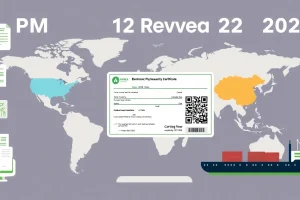
Covered in detail in Pillar 1. Specifies the template, content, validity period, and procedures for issuing and accepting phytosanitary certificates.
Why it matters: This is what governs the actual document you need to ship. Know it.
ISPM 15 — Guidelines for Regulating Wood Packaging Material (If you use wooden packaging)
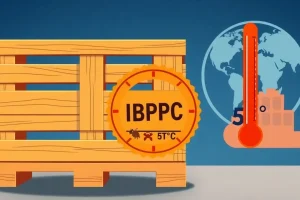
Specifies heat treatment (HT) or methyl bromide (MB) standards for wooden pallets, crates, and dunnage used in international shipments. Marked wood is accepted globally; unmarked wood is rejected.
Why it matters: Even if your commodity doesn’t require a phytosanitary certificate, your packaging might. ISPM 15 is mandatory for most countries.
ISPM 32 — Categorization of Commodities According to Their Pest Risk (Critical for exporters)
Covered in detail in Pillar 4. Divides commodities into four categories based on processing and intended use, which determines what phytosanitary requirements apply.
Why it matters: This is how you determine whether your commodity needs a certificate at all.
ISPM 38 — International Movement of Seed (For seed exporters)
<cite index=”135-1″>This standard provides guidance to assist national plant protection organizations (NPPOs) in identifying, assessing and managing the pest risk associated with the international movement of seeds, and on procedures to establish phytosanitary import requirements to facilitate the international movement of seeds.</cite>
Why it matters: If you export seeds, this standard governs the inspection, testing, and certification process.
How ISPMs are developed: transparency and consensus
ISPMs aren’t written in a back room. <cite index=”157-1″>The standard setting work is led by the Commission’s Standards Committee and is supported by various technical panels, expert working groups, and the IPPC Secretariat, committed to efficiently facilitate the development of harmonized international standards through a transparent and inclusive process.</cite>
The process is:
- Proposal: A country or working group identifies a need (a new pest, a new trade pathway, a clarification of an old standard).
- Drafting: Technical experts write a draft ISPM.
- Consultation: The draft is published for country comment (typically 6 months). Any IPPC member can comment.
- Revision: Comments are incorporated; the draft is refined.
- Adoption: The Commission on Phytosanitary Measures (all member countries) votes. ISPMs require consensus or super-majority adoption.
- Implementation: Countries have time to align their national regulations with the new or revised ISPM.
<cite index=”153-1″>Recent advancements include the Standards Committee approving specifications and recommending draft standards for adoption, such as the first specific commodity standard on the trade of fresh mango fruit, which provides harmonized phytosanitary measures and pest-specific guidance to help national plant protection organizations mitigate pest risks.</cite> (Adopted November 2024, to be voted on at CPM-19 in 2025.)
ISPMs and the WTO SPS Agreement: the legal link
<cite index=”165-1″>The SPS Agreement identifies the IPPC as the reference organization developing international standards for plant health (phytosanitary) measures. The WTO’s SPS Agreement states that to harmonize sanitary and phytosanitary measures on as wide a basis as possible, Members shall base their sanitary or phytosanitary measures on international standards, guidelines or recommendations, and the Agreement names the IPPC for plant health standards.</cite>
This means if a country’s phytosanitary requirement is based on an ISPM, it’s presumed to be WTO-compliant. If it’s not based on an ISPM, a trading partner can challenge it as a disguised trade barrier. This gives ISPMs real teeth in international commerce.
How ISPMs affect day-to-day export work
Scenario 1: Fresh papaya export to the EU
The EU’s Plant Health Law (Regulation EU 2019/2072) requires a phytosanitary certificate for papaya. That requirement is based on a PRA following ISPM 11, because papaya is a host for fruit flies (Tephritidae), which are quarantine pests in the EU. The certificate template follows ISPM 12. The exporter (from Indonesia via Barantin) must follow ISPM 12’s procedures to get the certificate. The importer (in the EU) checks the certificate against ISPM 12’s requirements before accepting it.
Scenario 2: Green coffee export to the USA
Green coffee is a pathway for coffee berry borer and other pests. Under ISPM 38, the exporting country must certify the seed lot is free from pests. Barantin, acting per ISPM 38, inspects the lot and issues an electronic phytosanitary certificate (ePhyto, which also follows ISPM 12 structure). The US importer and APHIS accept it because it follows the harmonized ISPM standard.
Scenario 3: Seed potato export to the EU
Seed potatoes are plants for planting (Category 4, highest risk). ISPM 38 and ISPM 36 (Integrated Measures for Plants for Planting) govern the requirements. The exporting NPPO must certify the lot is free from regulated pathogens (potato viruses, etc.), often via laboratory testing. The EU may also require post-entry quarantine. All these measures are outlined in ISPMs.
Sources
- IPPC Overview — International Plant Protection Convention (https://www.ippc.int/en/about/overview/)
- ISPM 1 — Phytosanitary Principles for the Protection of Plants and the Application of Phytosanitary Measures in International Trade (adopted 2006, current version)
- ISPM List and Adopted Standards (https://www.ippc.int/en/core-activities/standards-setting/ispms/) — as of March 2026
- ISPM Standard Setting Process — IPPC Secretariat
- IPPC Standards Committee Meeting Report, November 2024 — draft mango commodity standard
- WTO SPS Agreement — Sanitary and Phytosanitary Measures Agreement (1994); recognized by WTO as the basis for plant health standards
- WTO-IPPC Collaboration Statement (https://www.wto.org/english/thewto_e/coher_e/wto_ippc_e.htm)
- FAO ISPM 1 Principles Document — foundation for all international phytosanitary standards
- Badan Karantina Indonesia (Barantin) — plant quarantine regulations under Presidential Regulation No. 45/2023, implementing Law No. 21/2019, aligned with ISPMs
Last verified: 31 July 2026. New ISPMs are adopted regularly by the Commission on Phytosanitary Measures; check https://www.ippc.int for the most current list and any recently adopted standards post-March 2026.
FAQ
Do I need a phytosanitary certificate for every shipment?
Yes. Each export consignment requires its own up‑to‑date certificate that matches the exact commodity, origin, and treatment status.
What is the difference between ISPM 15 and ISPM 11?
ISPM 15 governs the treatment of wood packaging material, while ISPM 11 outlines the methodology for conducting a pest risk analysis.
Can electronic records replace paper certificates for traceability?
Electronic records are accepted when they meet the same authenticity and accessibility standards as paper; most importing authorities now recognize digital traceability platforms.






Leave a Reply