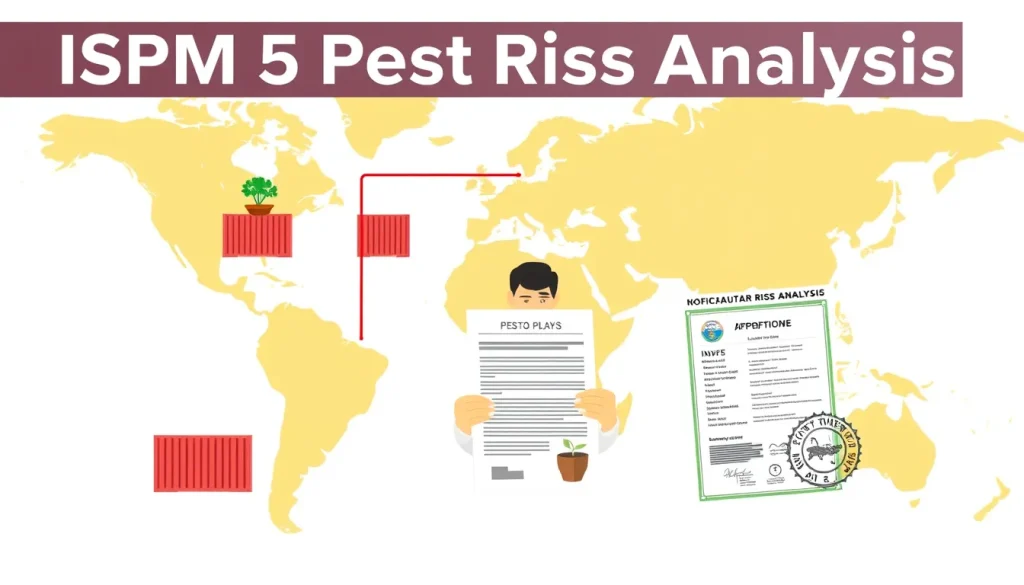
Short Answer
International trade in plants and plant products can only move safely when the risk of spreading pests is scientifically assessed and managed. The International Plant Protection Convention (IPPC) codifies that assessment in ISPM 5 – Pest Risk Analysis for Regulated Pests. For anyone involved in moving commodities across borders—exporters, importers, customs brokers, freight forwarders, or agriculture students—understanding ISPM 5 is essential to avoid costly delays, rejected shipments, and potential trade bans.
Overview
ISPM 5 provides a standardized, science‑based framework for evaluating the likelihood that a pest will be introduced, become established, and cause economic or environmental harm in a new area. The analysis is performed by the exporting country’s National Plant Protection Organization (NPPO) and forms the backbone of the phytosanitary certificate issued to the exporter.
- Scope: Applies to all regulated pests listed in the importing country’s quarantine pest list.
- Outcome: Determines if a phytosanitary measure (e.g., treatment, restriction, or certification) is required.
- Legal basis: IPPC Annex II, Article 4.2 and the WTO SPS Agreement.
Why It Matters (Real Stakes for Exporters/Importers)
Failure to comply with ISPM 5 can have immediate financial and long‑term reputational impacts:
- Shipment rejection: Customs may detain or destroy consignments lacking a valid phytosanitary certificate.
- Market access loss: Repeated non‑compliance can trigger import bans for entire product categories.
- Increased costs: Re‑inspection, re‑treatment, and storage fees quickly add up.
- Legal liability: Importing parties may claim damages if pest incursions cause crop losses.
Understanding the risk analysis process lets exporters anticipate required treatments, prepare accurate documentation, and negotiate smoother border clearance.
How It Works
ISPM 5 follows a three‑step workflow: Initiation, Assessment, and Decision. Each step is documented and reviewed by the NPPO.
| Step | Key Activities | Typical Output |
|---|---|---|
| 1. Initiation | Identify the pest, commodity, and destination; gather scientific literature. | Preliminary risk profile (Pest‑Commodity‑Country matrix). |
| 2. Assessment | Evaluate entry, establishment, spread, and impact using quantitative or qualitative methods. | Full Pest Risk Analysis report with likelihood and consequence scores. |
| 3. Decision | NPPO reviews the PRA, decides on phytosanitary measures, and issues the certificate. | Phytosanitary certificate, treatment recommendation, or import restriction. |
Exporters must provide the data needed for each step, especially accurate commodity descriptions and origin details.
Requirements & Standards (Cite Primary Source: IPPC/NPPO)
“The NPPO shall ensure that a pest risk analysis is performed in accordance with ISPM 5 (2021) and that the resulting phytosanitary measures are reflected on the phytosanitary certificate issued to the exporter.” – IPPC Annex II, Article 4.2
Key standards derived from ISPM 5 include:
- Use of the International Standard for Phytosanitary Measures (ISPM) 5 (2021 edition) as the methodological baseline.
- Adherence to the importing country’s quarantine pest list (often published in the NPPO’s plant health portal).
- Compliance with the WTO SPS Agreement for scientific justification of measures.
- Documentation must be in the language required by the importing NPPO (usually English, French, or Spanish).
Required Documents
When a PRA concludes that a phytosanitary measure is needed, the exporter must submit the following alongside the shipment:
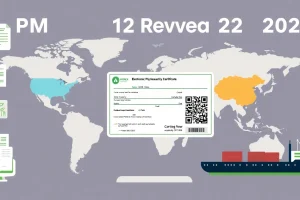
- Completed Phytosanitary Certificate (issued by the exporting NPPO).
- Detailed Commodity Description (species, variety, production method, packing).
- Evidence of treatment (e.g., fumigation certificate, heat‑treatment report) when required.
- Laboratory test results for pest detection, if the PRA recommends testing.
- Copy of the Pest Risk Analysis Report (often retained by the NPPO but may be requested).
All documents must bear the official seal or digital signature of the NPPO and be dated within the validity period (usually 30 days for most commodities).
Import/Export Procedure
The procedural flow from exporter to importer typically follows these steps:
- Pre‑shipment planning: Verify that the destination country lists the pest as regulated and confirm any special treatment requirements.
- Request PRA: Submit commodity data to the exporting NPPO; receive the PRA report.
- Apply required measures: Conduct approved treatment, testing, or post‑harvest handling.
- Obtain Phytosanitary Certificate: Present treatment records and test results to the NPPO for certification.
- Customs declaration: Include certificate number, pest code, and treatment code on the export declaration.
- Border inspection: Importing NPPO may verify the certificate and re‑sample.
- Release or rejection: If all criteria are met, the consignment is released; otherwise, it is detained.
Freight forwarders should coordinate with both NPPOs to ensure timing aligns with the certificate’s validity.
Common Rejection Reasons at the Border
Even with a valid certificate, shipments are frequently turned back for the following reasons:
- Invalid or expired certificate: Date outside the permitted window.
- Mismatched commodity description: Scientific name or packing code differs from the certificate.
- Missing treatment evidence: No supporting fumigation or heat‑treatment documentation.
- Unlisted pest: The pest identified in the PRA is not on the importing country’s regulated list.
- Improper seal or signature: Counterfeit or illegible NPPO seal.
Addressing these points before shipment dramatically reduces the risk of detention.
Step‑by‑Step Checklist (How‑to Trigger a Valid PRA)
Use this checklist to prepare a compliant export:
- Identify the target market and confirm the pest list of the importing NPPO.
- Collect commodity details: scientific name, variety, production method, and packaging.
- Submit a Request for Pest Risk Analysis to your national NPPO (online portal or email).
- Provide any existing test data or treatment records that may simplify the PRA.
- Receive the PRA report and note any required phytosanitary measures.
- Implement the prescribed treatment or testing within the time frame specified.
- Gather all supporting documents (treatment certificates, lab reports).
- Apply for the Phytosanitary Certificate; verify that all fields are correctly completed.
- Attach the certificate to the export declaration and inform the freight forwarder.
- Maintain a copy of the PRA and certificate for at least 2 years for audit purposes.
Real‑World Example/Scenario
Scenario: A U.S. exporter wishes to ship Rosa hybrida cut roses to the EU. The EU’s NPPO lists the aphid Aphis gossypii as a quarantine pest.
Steps taken:
- The exporter contacts the USDA-APHIS Plant Protection and Quarantine (PPQ) office and requests a PRA for A. gossypii on roses.
- PPQ evaluates entry pathways (e.g., aerial parts, soil) and determines a low likelihood of entry but a moderate impact if established.
- PPQ recommends a cold‑treatment at 1 °C for 14 days and a post‑treatment visual inspection.
- The exporter arranges the cold‑treatment, obtains a treatment certificate, and submits all records to PPQ.
- PPQ issues a Phytosanitary Certificate stating: “Treatment applied – Cold, 1 °C, 14 days; Pest: Aphis gossypii – No detection.”
- At the EU border, the certificate is scanned, and the consignment is released without further inspection.
Had the exporter omitted the cold‑treatment, the EU could have detained the roses, leading to a loss of €250,000 in product value and additional storage fees.
Common Mistakes & Rejection Reasons (Beyond the Border)
Even experienced exporters stumble on these pitfalls:
- Assuming a global PRA applies: Each importing country may require a separate analysis.
- Using outdated pest lists: NPPOs update regulated pest lists annually; always check the latest version.
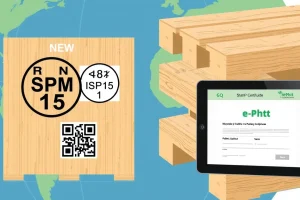
- Failing to align treatment codes: ISPM 15 uses specific three‑letter codes; mismatches cause automatic rejection.
- Neglecting language requirements: Some countries demand the certificate in their official language.
- Over‑reliance on digital copies: Physical seals are still mandatory for many jurisdictions.
Proactive communication with both NPPOs and freight forwarders mitigates these errors.
Conclusion
ISPM 5 is the scientific engine that drives phytosanitary certification worldwide. By mastering the pest risk analysis workflow, preparing the exact documents, and avoiding common slip‑ups, exporters can secure market access, protect global agriculture, and keep supply chains moving efficiently. The checklist and real‑world example above provide a practical roadmap for turning the abstract standard into concrete, border‑ready shipments.
| Quick Facts | Details |
|---|---|
| Standard | ISPM 5 – Pest Risk Analysis (2021) |
| Governing body | International Plant Protection Convention (IPPC) |
| Key output | Phytosanitary Certificate with treatment code |
| Typical validity | 30 days from issuance (varies by commodity) |
| Primary authority | National Plant Protection Organization (NPPO) |
| Related WTO agreement | Agreement on the Application of Sanitary and Phytosanitary Measures (SPS) |
FAQ
Do I need a separate ISPM 5 analysis for each importing country?
Yes. Each country may have a different list of regulated pests and may require distinct phytosanitary measures, so a separate PRA is typically required.
How long does a Phytosanitary Certificate remain valid?
Most certificates are valid for 30 days, but validity can vary by commodity and treatment; always check the importing NPPO’s specific rules.
Can I use a digital copy of the certificate for customs clearance?
Some jurisdictions accept electronic certificates with a secure digital signature, but many still require a physical copy bearing the official seal. Verify the importer's acceptance policy before shipping.




Leave a Reply