Short Answer
Indonesia stands as one of the world’s leading producers of cocoa, supplying essential raw materials to the global chocolate industry. However, accessing international markets requires strict adherence to phytosanitary standards and food safety regulations, particularly concerning pesticide residues. Understanding Pesticide Residue Limits in Indonesian Cocoa Exports is critical for exporters, importers, and logistics professionals to ensure smooth customs clearance and maintain consumer safety. This comprehensive guide details the regulatory frameworks, testing procedures, and documentation necessary to comply with Maximum Residue Limits (MRLs) imposed by key importing regions such as the European Union, United States, and Asia.
Overview of Pesticide Residue Regulations
Pesticide residues are trace amounts of chemical plant protection products that may remain on cocoa beans after harvest and post-harvest treatment. Regulatory bodies establish Maximum Residue Limits (MRLs) to ensure these traces do not pose health risks to consumers. For Indonesian cocoa, compliance is not optional; it is a mandatory requirement for market entry. The regulations vary significantly by destination country, requiring exporters to stay informed about the specific thresholds applicable to their target markets. Failure to comply can result in shipment rejection, financial loss, and damage to national trade reputation.
Why Compliance Matters for Stakeholders
The stakes for non-compliance are high for all parties involved in the supply chain. For exporters, a rejected shipment means direct financial loss and potential blacklisting from buyers. Importers face supply chain disruptions and liability issues if contaminated products reach retail shelves. Customs brokers and freight forwarders risk delays and increased storage costs when shipments are held for inspection. Furthermore, agriculture students and researchers must understand these limits to develop sustainable farming practices that reduce chemical dependency. Adhering to residue limits protects public health and ensures the long-term viability of the Indonesian cocoa industry in the global marketplace.
Regulatory Authority and Contact Points

In Indonesia, the primary authority overseeing plant health and pesticide regulation is the Ministry of Agriculture, specifically the National Agency for Food and Drug Supervision (BPOM) and the Quarantine Agency (Barantan). Exporters should coordinate with local Barantan offices for phytosanitary certification. For importing countries, regulatory bodies include the European Food Safety Authority (EFSA) for the EU, the Environmental Protection Agency (EPA) and Food and Drug Administration (FDA) for the US, and the Ministry of Health, Labour and Welfare for Japan. Direct contact with these agencies or their official websites provides the most current MRL databases.
Requirements and Standards
Compliance is anchored in international and national standards. The Codex Alimentarius Commission sets international food standards, including MRLs for cocoa. However, individual countries often enforce stricter limits. For example, the European Union operates under Regulation (EC) No 396/2005, which maintains a dynamic database of MRLs. The United States follows tolerances set under the Federal Food, Drug, and Cosmetic Act. Indonesian exporters must ensure their cocoa beans meet the specific standards of the destination country, not just general international guidelines. Regular monitoring of these standards is essential as regulations frequently update based on new toxicological data.
Regulation (EC) No 396/2005 establishes the maximum residue levels of pesticides permitted in or on food and feed of plant and animal origin within the European Union.
Import and Export Procedure
The export procedure begins at the farm level with integrated pest management (IPM) to minimize pesticide use. Upon harvest, beans must be sampled and tested by accredited laboratories. Once results confirm compliance with the destination’s MRLs, the exporter applies for a Phytosanitary Certificate through the Indonesian Quarantine Agency. The shipment is then inspected at the port of exit. Upon arrival in the importing country, customs authorities may conduct additional sampling and testing. If the residue levels are within limits, the goods are cleared; otherwise, they are detained or destroyed. This end-to-end process requires tight coordination between farmers, processors, and regulatory bodies.
Required Documents for Clearance
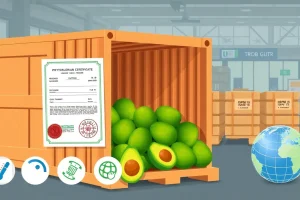
Accurate documentation is vital for proving compliance. The primary document is the Phytosanitary Certificate, which attests that the shipment is free from quarantine pests. Additionally, a Laboratory Analysis Report detailing pesticide residue levels is often required by buyers and customs authorities. Commercial invoices and packing lists must accurately describe the commodity code (HS Code) for cocoa beans. Some markets may require a Certificate of Origin or specific health certificates. Missing or inconsistent documentation is a common cause of delays, so exporters should maintain a complete digital and physical file for every shipment.
Common Rejection Reasons at Borders
Shipments are most commonly rejected due to exceeding MRLs for specific pesticides such as organochlorines or fungicides used during storage. Another frequent issue is the presence of unauthorized pesticides that are not approved for use on cocoa in the destination country. Incomplete documentation or discrepancies between the lab report and the physical shipment also lead to rejection. Contamination during transport or storage due to poor warehouse hygiene can also cause compliance failures. Exporters must implement strict quality control measures to mitigate these risks before the goods leave Indonesian ports.
Real-World Example and Scenario
Consider a scenario where an Indonesian exporter ships a container of cocoa beans to Germany. Upon arrival, German authorities sample the beans and detect traces of a fungicide exceeding the EU MRL by 0.05 mg/kg. Although the level is low, it violates Regulation (EC) No 396/2005. The shipment is rejected and must be re-exported or destroyed. The exporter incurs significant costs and loses the client. Had the exporter tested the beans in an accredited Indonesian lab prior to shipment using the EU MRL database, this issue could have been prevented. This example underscores the necessity of pre-shipment testing and regulatory awareness.
Quick Facts Table
| Factor | Detail |
|---|---|
| Primary Regulation | Codex Alimentarius & EU Reg 396/2005 |
| Key Authority (ID) | Ministry of Agriculture (Barantan) |
| Common Pesticides | Fungicides, Insecticides, Herbicides |
| Testing Requirement | Accredited Laboratory Analysis |
| Key Document | Phytosanitary Certificate |
In conclusion, Understanding Pesticide Residue Limits in Indonesian Cocoa Exports is fundamental for successful international trade. By adhering to regulatory standards, maintaining accurate documentation, and implementing rigorous testing protocols, stakeholders can ensure market access and consumer safety. Continuous education and collaboration with regulatory authorities will further strengthen Indonesia’s position as a reliable cocoa supplier.
FAQ
What is the most common reason for cocoa shipment rejection?
The most common reason is exceeding Maximum Residue Limits (MRLs) for specific pesticides or the presence of unauthorized chemicals not approved in the destination country.
Which authority issues Phytosanitary Certificates in Indonesia?
The Indonesian Quarantine Agency (Barantan), under the Ministry of Agriculture, is responsible for issuing Phytosanitary Certificates for exports.
Do MRLs vary by destination country?
Yes, MRLs vary significantly by country. Exporters must check the specific regulations of the importing country, such as EU Regulation 396/2005 or US FDA tolerances.






Leave a Reply