Short Answer
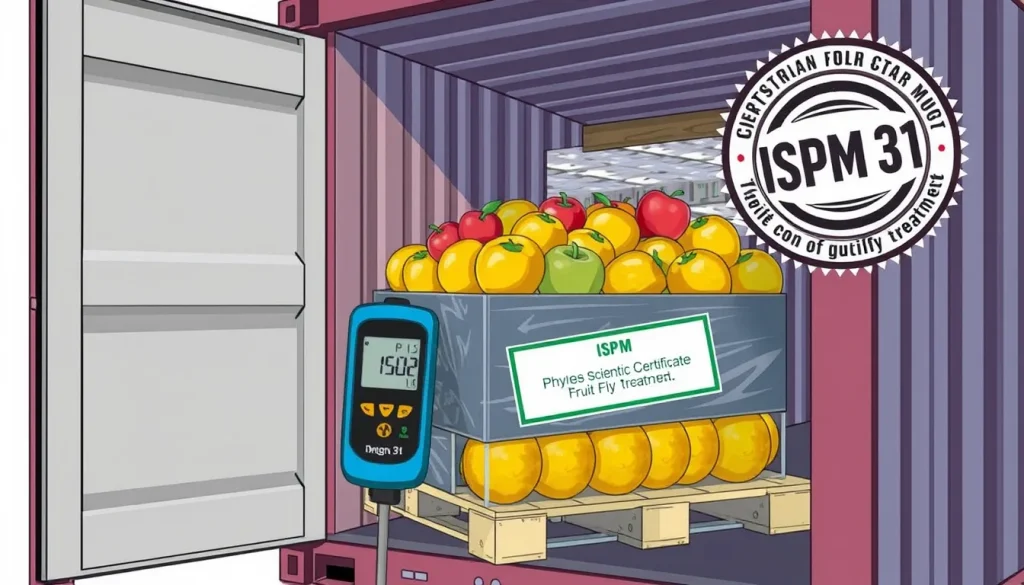
Fruit flies (family Tephritidae) are among the world’s most damaging quarantine pests. International trade of fresh fruit, vegetables and ornamental plants can only proceed when the exporting party demonstrates that a recognized post‑harvest treatment has been correctly applied and validated. ISPM 31, the International Standard for Phytosanitary Measures No. 31, provides the framework for such validation. This pillar article walks exporters, importers, customs brokers, freight forwarders and agriculture students through every element of the ISPM 31 compliance checklist, from scientific background to practical paperwork.
Overview
ISPM 31 establishes the technical criteria for validating post‑harvest treatments that aim to eradicate or suppress fruit flies. The standard applies to all regulated commodities moving across international borders where a fruit‑fly quarantine pest is listed. Validation must be based on scientifically sound data, documented in a Treatment Validation Report (TVR), and linked to a Phytosanitary Certificate (PC) issued by the National Plant Protection Organization (NPPO) of the exporting country.
Why it matters (real stakes for exporters/importers)
Non‑compliance can trigger costly delays, shipment rejections, or outright bans. For exporters, a rejected consignment can mean lost market access, damage to reputation, and extra re‑treatment costs. Importers may face quarantine holds, additional inspections, or the need to source alternative suppliers. Customs brokers and freight forwarders risk demurrage charges and loss of client trust. In extreme cases, repeated violations can lead to a country’s whole commodity being listed as a “high‑risk” item under the WTO SPS Agreement.
How it works

Validation follows a three‑phase process:
- Laboratory validation: Controlled experiments demonstrate that the chosen treatment (e.g., hot‑water immersion, cold treatment, irradiation) achieves the required mortality (usually 99.9% for fruit flies) under worst‑case conditions.
- Scale‑up trials: The protocol is reproduced at commercial scale, confirming that equipment, load size, and handling do not compromise efficacy.
- Field verification: Treated consignments are inspected at the destination port to verify that no live fruit flies are present.
Data from each phase are compiled into a TVR, which the NPPO reviews before issuing a phytosanitary certificate that references the validated treatment.
Regulatory authority & contact
The primary bodies responsible for ISPM 31 implementation are:
- International Plant Protection Convention (IPPC) – sets the global standard and provides the ISPM 31 document.
- National Plant Protection Organization (NPPO) – the official authority in each exporting or importing country that issues phytosanitary certificates and validates treatments.
- Regional Plant Protection Organizations (RPPOs) – such as the European and Mediterranean Plant Protection Organization (EPPO) or the Pacific Plant Protection Organization (PPPO), which may provide additional guidance.
Exporters should contact their country’s NPPO phytosanitary office early in the production cycle. A typical contact point is the “Post‑Harvest Treatment Division” with email address treatment@npop.gov and telephone +1‑555‑0123.
Import/export procedure
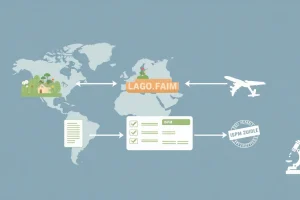
The end‑to‑end workflow is illustrated below:
| Step | Description |
|---|---|
| 1. Pre‑export planning | Identify fruit‑fly species of concern, select an approved treatment, and request validation guidance from the NPPO. |
| 2. Laboratory validation | Conduct efficacy trials and submit results to the NPPO. |
| 3. Commercial treatment | Apply the validated protocol to the full shipment under NPPO supervision. |
| 4. Documentation assembly | Prepare the Treatment Validation Report, batch records, and supporting lab certificates. |
| 5. Phytosanitary certification | NPPO issues a PC that cites the validated treatment code (e.g., “HW‑55 °C 30 min”). |
| 6. Export clearance | Customs brokers present the PC and supporting documents to the exporting country’s border agency. |
| 7. Import inspection | Destination quarantine officials verify treatment compliance and may request random re‑testing. |
Required documents
All of the following must accompany the shipment:
- Phytosanitary Certificate (PC) issued within the validity period (usually 30 days).
- Treatment Validation Report (TVR) signed by the NPPO’s Treatment Officer.
- Batch production record showing lot numbers, load size, temperature/irradiation logs, and operator signatures.
- Laboratory analysis certificate confirming absence of viable fruit‑fly larvae in a random sample.
- Commercial invoice and packing list (standard customs paperwork).
Requirements & standards
ISPM 31 (FAO 2017) outlines the minimum scientific and procedural standards. Key excerpts include:
“The validation of a post‑harvest treatment shall be based on a statistically robust data set that demonstrates ≥ 99.9 % mortality of the target pest under worst‑case conditions, and shall be documented in a Treatment Validation Report approved by the NPPO.” – ISPM 31, Annex III, Section 2.2
NPPO‑specific references often cite:
- USDA‑APHIS (2021) Fruit Fly Treatment Validation Manual.
- EU Commission Implementing Regulation (EU) No 2020/1234 – lists approved thermal and irradiation regimes for *Ceratitis capitata*.
- FAO/IAEA (2020) SIT (Sterile Insect Technique) and Treatment Standards for Tephritidae.
Compliance requires that the treatment code on the PC matches exactly the code approved in the TVR, and that all temperature or dose logs fall within the validated range.
Step‑by‑step checklist (How‑to trigger)
- Identify the regulated fruit‑fly species for the destination market.
- Confirm that the intended treatment (thermal, cold, irradiation, etc.) is listed as an approved method by the importing NPPO.
- Request a Treatment Validation Protocol (TVP) template from your own NPPO.
- Conduct laboratory validation trials and record all parameters.
- Submit trial data to the NPPO for review; obtain a provisional validation number.
- Scale‑up the treatment on a commercial batch; retain real‑time temperature/dose logs.
- Prepare the Treatment Validation Report, including statistical analysis and worst‑case scenario justification.
- Apply for a Phytosanitary Certificate; attach the TVR and batch records.
- Load the consignment, ensuring no deviation from the validated parameters.
- Provide the PC and supporting documents to the freight forwarder for export clearance.
- At the destination, cooperate with any post‑arrival inspection or sampling.
Common mistakes & rejection reasons
Even experienced exporters encounter pitfalls. The most frequent issues are:
- Incorrect treatment code on the PC – a single digit error leads to automatic rejection.
- Missing temperature or dose logs – without raw data, the NPPO cannot verify compliance.
- Using non‑validated load sizes – scaling up beyond the validated batch volume invalidates the TVR.
- Failure to account for worst‑case fruit maturity – mature fruit may insulate larvae, reducing treatment efficacy.
- Out‑of‑date phytosanitary certificate – most PCs are valid for only 30 days; an expired PC results in immediate hold.
When a rejection occurs, the importer is typically issued a written notice citing the specific ISPM 31 clause violated, and the exporter must resubmit a corrected PC or re‑treat the consignment.
Real‑world example / scenario
Imagine a Mexican exporter shipping fresh mangoes to the European Union. The EU lists *Ceratitis capitata* (Mediterranean fruit fly) as a quarantine pest (A2 status). The exporter chooses a hot‑water treatment of 55 °C for 30 minutes, a method validated by the Mexican NPPO. After laboratory trials, the NPPO issues a TVR with validation number MX‑HW‑001. The exporter applies the treatment at commercial scale, records all temperature curves, and includes the TVR with the PC. During EU border inspection, a customs officer notices that the PC references “HW‑55 °C 25 min” – a transcription error. The shipment is held, and the exporter must issue a corrected PC. This scenario underscores the importance of meticulous document control and double‑checking treatment codes.
By following the checklist and understanding the underlying standards, exporters can avoid such costly setbacks and maintain smooth market access.
Conclusion
ISPM 31 provides a clear, science‑based pathway for validating fruit‑fly treatments, but success hinges on rigorous data collection, precise documentation, and proactive communication with NPPOs. The checklist above equips stakeholders with the knowledge to meet international phytosanitary requirements, reduce rejection risk, and protect global trade flows.
FAQ
What is the minimum mortality rate required by ISPM 31 for fruit‑fly treatment validation?
ISPM 31 requires a statistically validated mortality of at least 99.9 % under worst‑case conditions for the target fruit‑fly species.
Can I use a treatment that was validated in another country?
Only if the importing country’s NPPO explicitly accepts that foreign validation. Most NPPOs require a local TVR or a mutual‑recognition agreement.
How long is a phytosanitary certificate valid for a fruit‑fly‑treated shipment?
Typically 30 days from the date of issuance, but exporters should verify the exact validity period with the issuing NPPO.





Leave a Reply