Short Answer
International trade of plants, seeds, fruits, and other agricultural commodities hinges on one critical moment: the phytosanitary inspection. A single missed requirement can trigger detention, re‑inspection, or outright rejection, costing time and money. Preparing a detailed commodity checklist before the shipment leaves the warehouse transforms uncertainty into confidence, ensuring that the product meets the importing country’s plant‑health standards and that the required certification is issued without delay.
Overview
The commodity checklist is a living document that captures every element required for a phytosanitary inspection. It aligns the exporter’s internal processes with the expectations of the National Plant Protection Organization (NPPO) of the importing country and the International Plant Protection Convention (IPPC) standards such as ISPM 15, ISPM 31, and others.
- Purpose: Verify compliance, streamline paperwork, and reduce inspection time.
- Scope: Applies to all plant‑based shipments, including raw produce, processed foods, seeds, cut‑flowers, and live plants.
- Outcome: Issuance of a Phytosanitary Certificate (PC) that satisfies the importing country’s plant‑health entry requirements.
Why it Matters (Real Stakes for Exporters/Importers)
Failure to present a complete and accurate checklist can lead to:
- Detention at the border, incurring storage fees and demurrage.
- Re‑inspection or additional treatment, extending lead times by days or weeks.
- Loss of market reputation and future trade privileges.
- Potential fines under the WTO SPS Agreement for non‑compliance.
For example, in 2022 the United States lost US$12 million in fresh‑fruit exports to the EU after missing the ISPM 15 heat‑treatment requirement for wood packaging.
How it Works
The checklist functions as a bridge between three entities:
- Exporter: Provides product details, treatment records, and packaging information.
- NPPO/Inspection Agency: Reviews the checklist, conducts the physical inspection, and issues the PC.
- Customs Authority: Uses the PC to clear the shipment for entry.
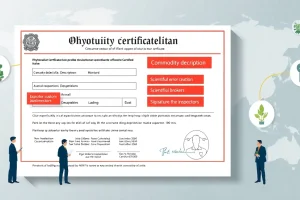
During the inspection, the officer cross‑references the checklist items with the actual commodity. Any discrepancy triggers a “non‑conformity” note, which must be resolved before the PC can be signed.
Required Documents
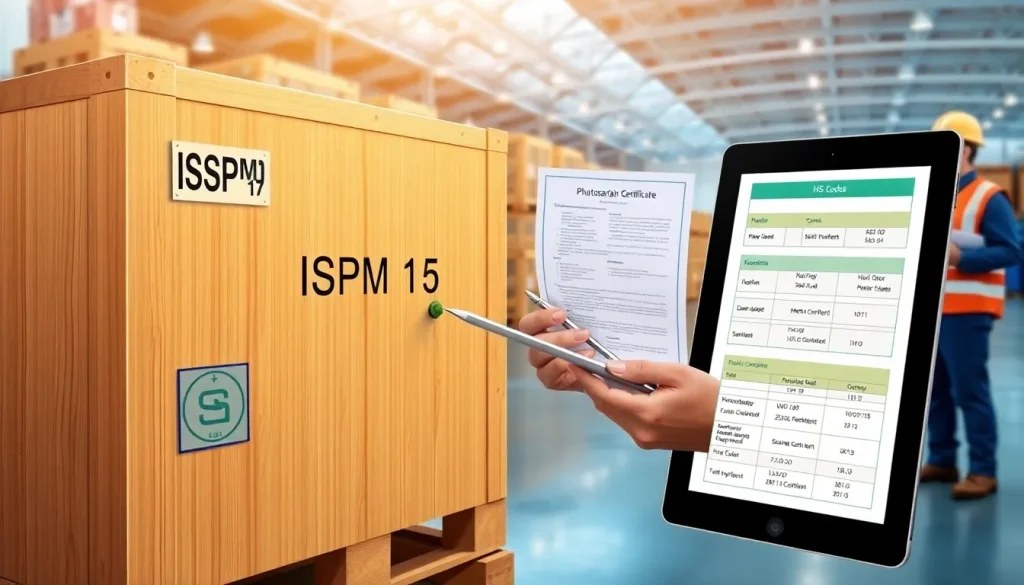
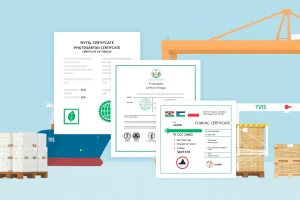
Each export must be accompanied by a core set of documents. The table below summarizes the typical package:
| Document | Purpose | Typical Source |
|---|---|---|
| Phytosanitary Certificate (PC) | Official proof of compliance with the importing country’s plant‑health regulations | NPPO of the exporting country |
| Commercial Invoice | Customs valuation and product description | Exporter |
| Bill of Lading / Air Waybill | Transport contract and cargo details | Freight forwarder |
| Treatment Records | Evidence of required phytosanitary treatments (e.g., fumigation, heat) | Certified treatment provider |
| Packaging Certification (e.g., ISPM 15 Mark) | Proof that wood packaging complies with international standards | Approved wood‑packaging manufacturer |
Additional documents may be required for specific commodities, such as seed germination reports or pest‑free area certificates.
Step‑by‑Step Checklist (How‑to Trigger)
- Identify the commodity code using the HS (Harmonized System) classification. This determines the applicable NPPO regulations.
- Consult the importing country’s NPPO website for any A1/A2 pest lists, treatment mandates, or special documentation.
- Gather treatment evidence (e.g., heat‑treatment logs, fumigation certificates) and verify that the method meets the IPPC standard cited by the NPPO.
- Inspect packaging for ISPM 15 marks, seal integrity, and any country‑specific labeling requirements.
- Complete the internal checklist template (see appendix example) and have it signed by the quality‑assurance manager.
- Submit the package to the authorized NPPO inspection agency at least 48 hours before the intended shipment date.
- Address any non‑conformities on the spot (e.g., re‑treat, re‑package) to avoid delays.
- Obtain the Phytosanitary Certificate and attach it to the commercial invoice and bill of lading.
- Notify the freight forwarder that the PC is ready, and confirm that the cargo will be loaded within the certificate’s validity window.
Following this sequence reduces the likelihood of a “hold” at the border and keeps the supply chain moving.
Common Mistakes & Rejection Reasons
Even seasoned exporters stumble over recurring pitfalls. Recognizing them early can save days of delay.
- Out‑of‑date ISPM 15 markings: Using wood pallets that lack the current heat‑treatment stamp leads to immediate rejection.
- Missing treatment records: Inspectors cannot verify compliance without original certificates; scanned copies are often insufficient.
- Incorrect HS code: Misclassification can trigger the wrong set of phytosanitary requirements.
- Failure to declare pest‑free area status: Some countries (e.g., Japan) require a declaration that the commodity originates from a certified pest‑free zone.
- Improper packaging material: Plastic netting that allows insect entry is prohibited in many EU member states.
When a non‑conformity is noted, the inspector typically issues a “Notice of Non‑Compliance” (NNC). The exporter must remediate within the time frame specified, often under supervision.
Real‑World Example/Scenario
Scenario: A Colombian exporter ships fresh mangoes to the United Kingdom. The UK’s NPPO requires:
- Cold‑treatment at 1 °C for at least 14 days (ISPM 31).
- ISPM 15‑compliant wooden crates.
- Declaration of freedom from Carposina sasakii (fruit moth).
The exporter prepares the following checklist:
- HS code 080450 (fresh mangoes).
- Cold‑treatment log signed by a certified laboratory.
- Photographs of ISPM 15‑marked crates.
- Pest‑free area certificate from the Colombian Ministry of Agriculture.
- Commercial invoice and bill of lading.
During the UK inspection, the officer finds the crate markings intact but notes that the cold‑treatment log is missing the temperature calibration certificate. The exporter provides the missing page on‑site, the NNC is cleared, and the PC is issued within two hours. The shipment departs on schedule, and the UK importer receives the cargo without quarantine.
This example illustrates how a thorough checklist anticipates the exact documents the inspector will request.
Requirements & Standards (Cite Primary Source: IPPC/NPPO)
The backbone of any phytosanitary checklist is the set of internationally recognised standards developed by the IPPC and adopted by each NPPO. Key references include:
“ISPM 15 – Regulation of wood packaging material in international trade” – International Plant Protection Convention, 2021.
“ISPM 31 – Standards for the treatment of fruits, vegetables and other perishable plant commodities” – IPPC, 2020.
Exporters must also comply with the importing country’s specific regulations, which are usually published on the NPPO’s official website. For instance, the United States Animal and Plant Health Inspection Service (APHIS) cites ISPM 15 in 7 CFR 319.30‑1, while the European Union references ISPM 15 in the EU Plant Health Regulation (EU) 2016/2031.
When drafting the checklist, cite the exact article or annex number (e.g., “ISPM 15, Annex II – Heat treatment specifications”) to demonstrate alignment with the standard.
Conclusion
Preparing a commodity checklist is not a bureaucratic afterthought; it is a strategic risk‑mitigation tool that safeguards the flow of plant‑based goods across borders. By understanding why the checklist matters, mastering the required documents, following a clear step‑by‑step process, and avoiding common mistakes, exporters and their logistics partners can secure phytosanitary certification quickly and keep their supply chains resilient.
FAQ
What is the minimum time before shipment that I should request a phytosanitary inspection?
Most NPPOs require the inspection to be completed within 48–72 hours before loading, allowing time for the PC to be issued and attached to the shipping documents.
Can electronic Phytosanitary Certificates be used instead of paper copies?
Yes. Many NPPOs now accept e‑PCs generated through the IPPC’s e‑Phytosanitary Certificate system, provided the importing country has recognized the electronic format.
Do I need a separate checklist for each commodity in a mixed shipment?
Each distinct commodity (different HS code or treatment requirement) must have its own checklist entry. Mixed shipments are common, but the checklist should list every item separately to avoid confusion.




Leave a Reply