Short Answer
Exporting fresh mangoes to international markets demands strict phytosanitary control, especially against fruit‑fly species such as Bactrocera dorsalis. Cold treatment—exposing fruit to low temperatures for a defined period—has become the preferred non‑chemical method to satisfy import requirements while preserving fruit quality. This article provides a practical, encyclopedia‑style reference for exporters, importers, customs brokers, freight forwarders, and agriculture students who need fast, reliable answers.
Overview
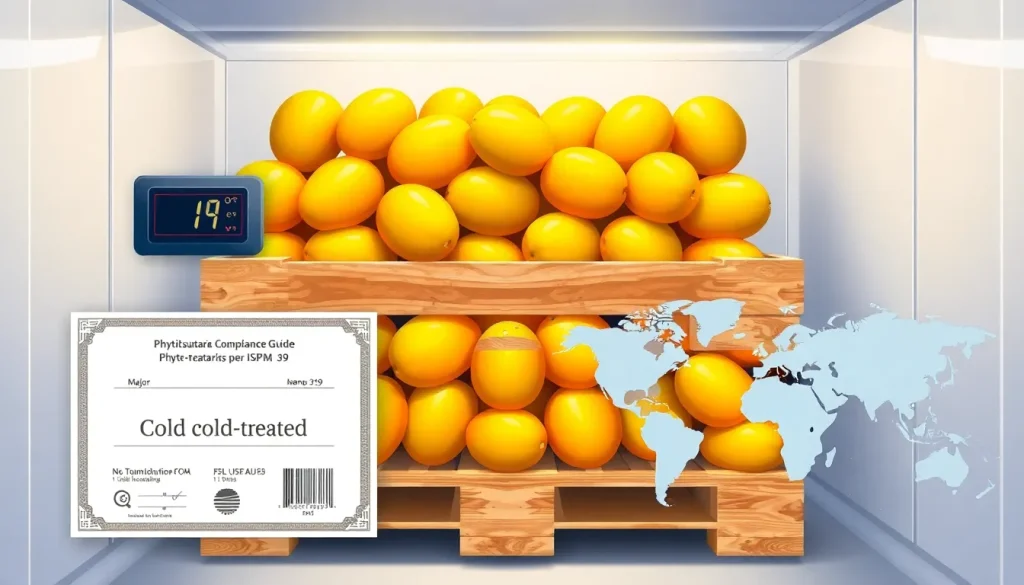
Cold treatment for mangoes is a phytosanitary measure that kills life stages of quarantine pests by maintaining a specific temperature (typically 1.0 °C ± 0.5 °C) for a set duration (usually 14 days). The protocol is recognized by the International Plant Protection Convention (IPPC) under ISPM 39 – Cold Treatment for Mangoes and is adopted by national plant protection organizations (NPPOs) worldwide.
- Target pests: Primarily fruit flies (e.g., Bactrocera spp.) and associated larvae.
- Temperature range: 0 °C to 2 °C, monitored continuously.
- Duration: Minimum 14 consecutive days at the target temperature.
- Scope: Applies to whole fruit, pulp, and sliced mangoes intended for fresh consumption.
The treatment must be validated, documented, and verified by an accredited laboratory before export.
Why It Matters (Real Stakes for Exporters/Importers)
Failure to meet cold‑treatment requirements can lead to costly shipment rejections, market loss, and reputational damage. The economic stakes are high:
- Market access: Many major importers—EU, USA, Canada, Australia, and Japan—require certified cold treatment for mangoes from fruit‑fly‑infested regions.
- Financial loss: Rejected consignments can incur disposal fees, demurrage, and loss of perishable inventory.
- Regulatory penalties: Non‑compliance may trigger fines or suspension of export privileges by the NPPO.
- Consumer safety: Eliminating fruit‑fly larvae protects downstream supply chains and maintains consumer confidence.
Thus, adhering to the protocol is not optional—it is a prerequisite for successful trade.
How It Works
Cold treatment follows a controlled‑environment process:
- Pre‑cooling: Mangoes are brought to an initial temperature of 10 °C within 24 hours to avoid chill injury.
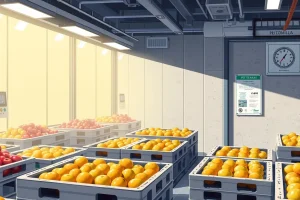
- Cold chamber loading: Fruit is stacked on perforated pallets to ensure uniform airflow.
- Temperature stabilization: Chamber temperature is lowered gradually (≈ 1 °C per hour) to the target range.
- Holding period: Maintain 1 °C ± 0.5 °C for 14 days, with continuous data logging.
- Post‑treatment conditioning: Gradually raise temperature to 12 °C before packaging for shipment.
During the holding period, a calibrated probe records temperature every 30 minutes. The log must show no deviation beyond the allowed ±0.5 °C.
Regulatory Authority & Contact
The primary authority governing cold treatment for mangoes is the International Plant Protection Convention (IPPC) through its standard ISPM 39. National implementation varies, but the following NPPOs are the most frequent points of contact:
- United States Department of Agriculture (USDA) – APHIS Plant Protection Division: aphis.usda.gov
- European Commission – Directorate‑General for Health and Food Safety (DG SANTE): ec.europa.eu/food
- Australian Department of Agriculture, Fisheries and Forestry (DAFF): agriculture.gov.au
Exporters should register with the NPPO of the destination country and obtain a designated “Cold‑Treatment Officer” contact for pre‑shipment queries.
Requirements & Standards (Cite Primary Source)
International Standard for Phytosanitary Measures No. 39 (ISPM 39) – Cold Treatment for Mangoes. FAO, 2022. Available at ippc.int.
Key elements extracted from ISPM 39 and corroborated by NPPO guidelines:
| Parameter | Requirement |
|---|---|
| Target Temperature | 1 °C ± 0.5 °C |
| Minimum Holding Time | 14 consecutive days |
| Monitoring Frequency | ≥ 30‑minute interval data logging |
| Validation | Laboratory‑tested efficacy ≥ 99.9 % mortality for target pest stage |
| Certification | Phytosanitary Certificate (PPC) stating “Cold‑treated per ISPM 39” |
Any deviation requires a “Variance Request” approved by the destination NPPO, which is rarely granted.
Step‑by‑Step Checklist (How‑to Trigger)
- Confirm pest status: Verify that the export origin is listed as a fruit‑fly‑infested area in the latest NPPO pest‑risk database.
- Obtain pre‑export approval: Submit a treatment plan to the destination NPPO for review (usually 7‑10 business days).
- Validate cold‑treatment protocol: Provide laboratory validation reports (mortality data, temperature uniformity tests).
- Prepare mangoes: Harvest at optimal maturity, wash, and pre‑cool to 10 °C.
- Load into certified cold chamber: Use pallets with ventilation; attach calibrated data logger.
- Run treatment: Maintain 1 °C ± 0.5 °C for 14 days; ensure continuous power backup.
- Export documentation:
- Phytosanitary Certificate indicating cold‑treatment compliance.
- Temperature log (PDF) signed by the chamber operator.
- Laboratory validation report.
- Post‑treatment handling: Condition fruit to 12 °C, pack in ventilated cartons, and load onto refrigerated containers (2 °C–4 °C).
- Customs declaration: Include HS code 080450 (Mangoes, fresh) and note “Cold‑treated per ISPM 39”.
- Follow‑up: Retain all records for at least 2 years for audit.
Completing each step reduces the likelihood of rejection at the border.
Common Mistakes & Rejection Reasons
Even experienced exporters encounter pitfalls. The most frequent causes of denial are:
- Temperature excursions: Logs showing > ±0.5 °C deviation for more than 2 hours.
- Insufficient holding time: Missing the full 14‑day period, often due to mis‑calculated transit days.
- Improper documentation: Missing or unsigned temperature log, or a PPC that does not explicitly reference ISPM 39.
- Packaging that blocks airflow: Leads to uneven cooling and localized warm spots.
- Using unvalidated chambers: Lack of calibration certificates for temperature sensors.
Border officials typically issue a “Non‑conformity” notice and may require re‑treatment, causing delays of 7‑14 days.
Real‑World Example/Scenario
In 2023, a mango exporter from Kenya shipped a 20‑tonne consignment to the United Arab Emirates. The shipment was rejected because the temperature log showed a 1.2 °C rise for 4 hours due to a power outage in the cold chamber. The importer’s customs broker filed an appeal, but the UAE NPPO required a fresh phytosanitary certificate and a repeat cold treatment. The exporter incurred US$45,000 in lost revenue and had to renegotiate freight contracts. After the incident, the exporter installed a UPS system and adopted a dual‑sensor logging protocol, eliminating subsequent rejections.
Required Documents
Exporters must assemble a packet that accompanies the cargo:
- Phytosanitary Certificate (PPC) – issued by the exporting NPPO, with the statement “Cold‑treated in accordance with ISPM 39”.
- Temperature Monitoring Report – PDF export of the data logger, signed by the chamber operator.
- Laboratory Validation Report – includes mortality percentages, test methodology, and accreditation number.
- Treatment Plan Approval – email or letter from the destination NPPO confirming acceptance of the submitted protocol.
- Commercial Invoice & Packing List – standard customs paperwork, HS code 080450.
- Certificate of Origin – required for preferential trade agreements.
All documents must be in English or accompanied by a certified translation.
Import/Export Procedure
The end‑to‑end workflow is summarized below:
- Pre‑export: Verify origin pest status and obtain NPPO approval.
- Harvest & pre‑cool: Process fruit within 24 hours of picking.
- Cold treatment: Execute ISPM 39 protocol, record data.
- Documentation: Compile PPC, logs, validation, and commercial paperwork.
- Freight booking: Reserve refrigerated container (2 °C–4 °C) and notify carrier of phytosanitary requirements.
- Customs clearance (export): Submit documents to local customs; obtain export clearance.
- Transit: Monitor container temperature; retain logs.
- Arrival (import): Present PPC and temperature logs to the destination NPPO; await clearance.
- Distribution: Release fruit to market once phytosanitary clearance is granted.
Each hand‑off point should have a designated compliance officer to ensure no paperwork is missed.
Common Rejection Reasons at That Border
While the exact list varies by country, the most commonly cited deficiencies are:
- Missing or illegible temperature log.
- Phytosanitary Certificate not signed by an authorized NPPO official.
- Evidence of fruit‑fly larvae in post‑arrival inspection (often linked to inadequate treatment).
- Non‑compliant packaging (e.g., solid cardboard without ventilation).
- Incorrect HS code or failure to declare cold‑treatment status.
Addressing these proactively can shave days off the clearance timeline.
Scientific Classification
Understanding the pest biology helps justify treatment parameters:
| Pest | Scientific Name | Life Stage Targeted | Temperature Lethality (°C) |
|---|---|---|---|
| Oriental fruit fly | Bactrocera dorsalis | Egg, larva, pupa | ≤ 2 °C for 14 days |
| Mexican fruit fly | Anastrepha ludens | Egg, larva | ≤ 1 °C for 14 days |
Both species are listed as quarantine pests by the IPPC and are the primary drivers behind cold‑treatment mandates.
Control/Treatment
Cold treatment is one of several approved phytosanitary measures. Alternatives include:
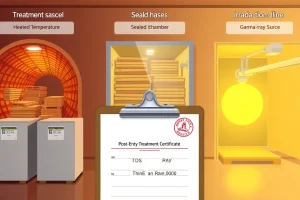
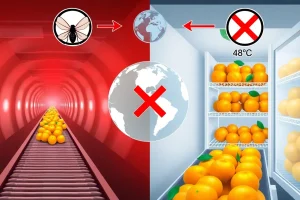
- Hot water dip: 48 °C for 10 minutes (effective for some fruit‑fly species but can affect fruit texture).
- Radiation (gamma or X‑ray): 150 Gy, limited to certain markets.
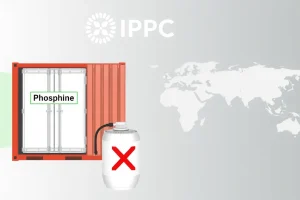
- Chemical fumigation: Methyl bromide (phased out in many regions due to ozone‑depletion concerns).
Cold treatment remains the most widely accepted method because it is residue‑free and maintains consumer‑acceptable quality.
Conclusion
Cold treatment for mangoes is a rigorously defined, globally recognized phytosanitary measure. By following the ISPM 39 standards, maintaining meticulous records, and communicating openly with destination NPPOs, exporters can secure market access, avoid costly rejections, and protect the integrity of the supply chain. Use the checklist provided, invest in reliable temperature‑monitoring equipment, and stay current with any regulatory updates to keep your mango shipments moving smoothly from farm to fork.
| Quick Facts | Details |
|---|---|
| Target temperature | 1 °C ± 0.5 °C |
| Minimum holding time | 14 consecutive days |
| Key pest | Bactrocera dorsalis (Oriental fruit fly) |
| Primary standard | IPPC ISPM 39 – Cold Treatment for Mangoes |
| Required certificate | Phytosanitary Certificate stating compliance with ISPM 39 |
| Typical rejection cause | Temperature log deviation > ±0.5 °C |
| Record‑keeping period | Minimum 2 years |
FAQ
What temperature and duration are required for cold treatment of mangoes?
The IPPC standard ISPM 39 requires maintaining 1 °C ± 0.5 °C for a minimum of 14 consecutive days, with continuous monitoring.
Can I use a regular freezer for cold treatment?
No. The treatment must be performed in a calibrated cold‑treatment chamber that provides uniform airflow, temperature stability, and data‑logging capability. Freezers lack the required certification and monitoring features.
What documents must accompany a mango shipment to the EU?
You need a Phytosanitary Certificate stating compliance with ISPM 39, the temperature monitoring report, a laboratory validation report, a commercial invoice, packing list, and a certificate of origin.




Leave a Reply