Short Answer
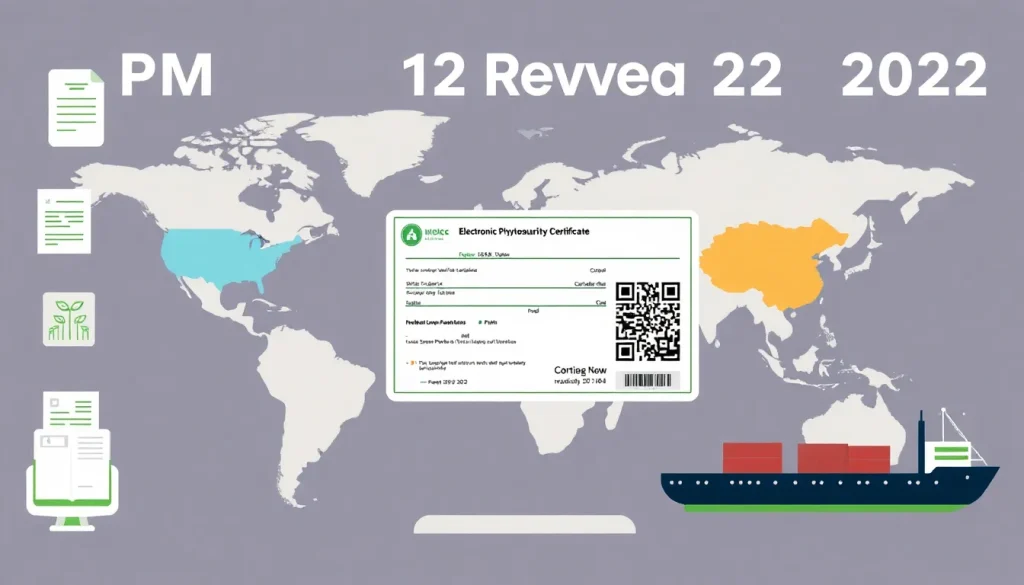
In January 2022, the International Plant Protection Convention (IPPC) released the latest revision of ISPM 12, the standard governing phytosanitary certificates. The update modernises the certification process, mandates electronic issuance, tightens data integrity, and aligns the standard with the WTO SPS Agreement. For exporters, importers, customs brokers, freight forwarders, and students of agricultural trade, understanding these changes is essential to avoid costly rejections and delays. This pillar article breaks down the most critical revisions, their practical implications, and actionable steps to keep your shipments moving.
Overview
ISPM 12 (International Standard for Phytosanitary Measures No. 12) defines the format, content, and issuance procedures for phytosanitary certificates (PCs). The 2022 revision introduced three major themes:
- Electronic Phytosanitary Certificates (ePCs): Mandatory use of the ePhyto platform for most bilateral trade where the partner NPPO has adopted the system.
- Uniform Data Standards: New mandatory data fields (e.g., Exporter Identification Number, Consignee Tax ID) and stricter validation rules to ensure traceability.
- Enhanced Verification & Signature Controls: Digital signatures, QR codes, and real‑time verification by the importing NPPO.
The revision also clarifies the role of national plant protection organizations (NPPOs) in certifying, amending, and revoking certificates, and it aligns ISPM 12 with the International Plant Protection Convention’s broader digital transformation agenda.
Why it Matters (Real Stakes for Exporters/Importers)
Failure to adopt the 2022 requirements can result in:
- Border Rejections: Missing or incorrectly formatted data leads to immediate refusal at the port of entry.
- Shipment Delays: Manual re‑issuance of certificates adds days to transit time, jeopardising market contracts.
- Financial Penalties: Some importing countries impose fines for non‑compliance with electronic certification.
- Loss of Market Access: Repeated non‑compliance may trigger a temporary ban on the commodity.
For high‑value or perishable crops, these consequences translate directly into lost revenue and damaged business relationships.
How it Works
The revised workflow follows a digital path:
- Pre‑Export Validation: Exporters register in the ePhyto system, upload shipment details, and receive a unique Exporter Identification Number (EIN).
- Application Submission: Using the ePhyto portal, the exporter submits a certificate request, attaching phytosanitary inspection reports, treatment certificates, and any required permits.
- NPPO Review: The NPPO validates the data against the new mandatory fields, applies a digital signature, and generates a QR‑linked ePC.
- Export Clearance: Customs brokers scan the QR code to verify authenticity before loading the cargo.
- Import Verification: The importing NPPO accesses the ePC in real time, confirming compliance before release.
Paper certificates remain permissible only when the trading partner has not yet adopted ePhyto, but the 2022 revision encourages a phased transition to fully electronic processes.
Regulatory Authority & Contact
The primary authority for ISPM 12 is the International Plant Protection Convention (IPPC), administered by the Food and Agriculture Organization (FAO) of the United Nations. National implementation is the responsibility of each country’s NPPO.
| Entity | Role | Contact |
|---|---|---|
| IPPC Secretariat | Global standard‑setting, revisions, guidance | email: ippc@fao.org | +33 1 44 33 25 00 |
| FAO ePhyto Helpdesk | Technical support for electronic certificates | email: ephyto@fao.org |
| National NPPO (example: USDA‑APHIS) | Issuance & validation of PCs in the United States | website: https://www.aphis.usda.gov/aphis/ourfocus/planthealth |
Exporters should maintain a contact list of the NPPOs for each destination market to obtain rapid clarification on any new data requirements.
Requirements & Standards (Cite Primary Source)
The 2022 ISPM 12 revision is documented in ISPM 12 Rev.2022 – Phytosanitary Certificates (FAO, 2022). Key mandatory elements now include:
- Exporter Identification Number (EIN) – a 10‑digit alphanumeric code assigned by the NPPO.
- Consignee Tax Identification Number (TIN) – required for customs integration.
- Detailed commodity description with HS code, scientific name (including author citation), and plant part.
- Specific treatment details (e.g., fumigation, heat treatment) with method, temperature, duration, and certification reference number.
- QR code linking to the live ePC record on the IPPC’s ePhyto platform.
All data fields must pass the ePhyto validation engine; any mismatch triggers an automatic rejection flag. The standard also clarifies that the certificate’s validity period cannot exceed 30 days from issuance, unless an extended validity is explicitly granted by the importing NPPO.
Step‑by‑Step Checklist (How‑to Trigger)
Exporters can use the following checklist to ensure compliance before shipment:
- Confirm that the destination country has adopted ePhyto. If not, request a paper certificate.
- Register your company in the ePhyto portal and obtain an EIN.
- Gather all phytosanitary inspection reports, treatment certificates, and any required permits.
- Enter shipment details into ePhyto, ensuring:
- Exact scientific name (Genus species author).
- Correct HS code and plant part description.
- All mandatory data fields (EIN, TIN, treatment specifics).
- Submit the application to the NPPO for digital signing.
- Receive the QR‑linked ePC and download the PDF version for internal records.
- Provide the QR code to your freight forwarder and customs broker for pre‑clearance scanning.
- Retain a copy of the ePC for at least five years, as required by most NPPOs.
Completing each step reduces the risk of non‑conformity at the border.
Common Mistakes & Rejection Reasons
Even seasoned exporters stumble over the new requirements. The most frequent issues are:
- Missing EIN or TIN: The ePhyto system flags absent identifiers, leading to immediate rejection.
- Incorrect scientific name format: Omitting the author citation or using a synonym not recognised by the importing NPPO.
- Inconsistent treatment data: Failure to list temperature, duration, or certification number exactly as performed.
- QR code not scannable: Low‑resolution prints or PDF compression errors.
- Certificate validity exceeded: Using a PC older than 30 days without explicit extension.
To avoid these pitfalls, perform a “pre‑submission audit” using the ePhyto validation checklist and, where possible, request a provisional review from the destination NPPO.
Real‑World Example/Scenario
Scenario: A Kenyan exporter of fresh mangoes ships to the European Union (EU) in March 2023. The EU has mandatory ePhyto acceptance.
- The exporter registers in ePhyto and receives EIN KEN‑MNG‑2023‑001.
- Inspection reports confirm mangoes are free of Fruit fly (Bactrocera dorsalis) and have undergone a 48‑hour cold treatment at 1 °C.
- All data (EIN, EU‑TIN, HS code 080450, scientific name Mangifera indica L., treatment details) are entered.
- The Kenyan NPPO validates and digitally signs the ePC, generating QR code QR‑KE‑20230315‑001.
- The freight forwarder scans the QR code at Nairobi Airport; the system confirms authenticity.
- Upon arrival in Rotterdam, Dutch customs accesses the live ePC, verifies the cold‑treatment record, and releases the cargo without delay.
Had the exporter omitted the EIN or provided an outdated paper certificate, the shipment would have been held for up to 48 hours, incurring storage fees and risking perishable loss.
Conclusion
The 2022 revision of ISPM 12 marks a decisive shift toward digital, data‑rich phytosanitary certification. Exporters who embrace ePhyto, adhere to the new mandatory fields, and conduct rigorous pre‑submission checks will experience smoother border clearances and preserve market access. Conversely, neglecting these changes can lead to rejections, penalties, and lost business. By integrating the checklist and best‑practice guidance outlined above, trade professionals can turn the ISPM 12 overhaul into a competitive advantage.
FAQ
Do I still need a paper phytosanitary certificate if the destination country uses ePhyto?
Only if the importing NPPO has not yet adopted ePhyto. For all partners that have, a paper certificate is not accepted; the electronic version with QR code is mandatory.
What is the Exporter Identification Number (EIN) and how do I obtain it?
The EIN is a unique 10‑character alphanumeric code assigned by your national NPPO when you register in the ePhyto system. Contact your NPPO or the ePhyto helpdesk to complete registration.
Can the 30‑day validity period be extended, and who decides?
Yes, the importing NPPO may grant an extension in writing. The extension must be recorded in the ePhyto system before the original expiry date.






Leave a Reply