Short Answer
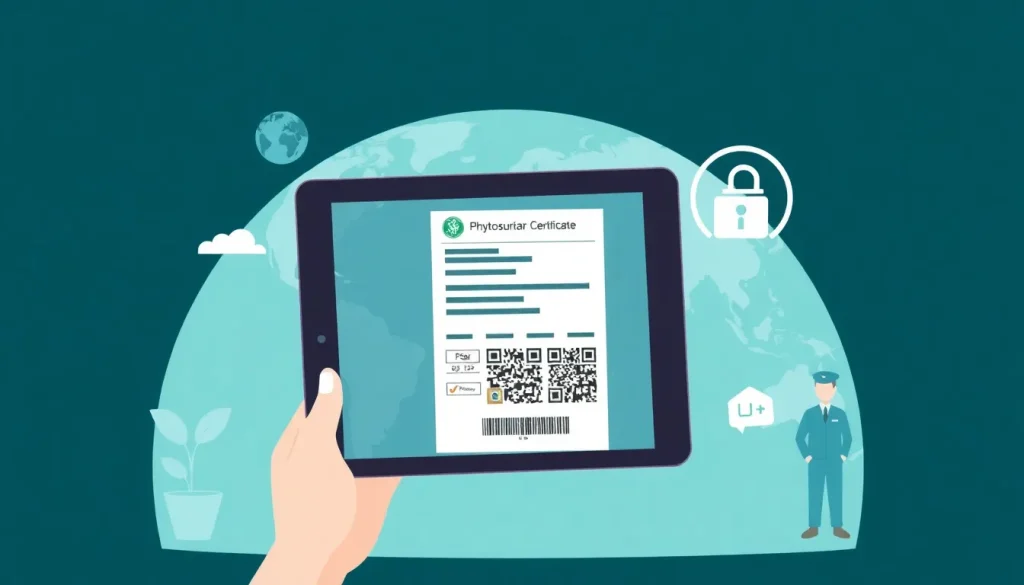
International trade in plants, seeds, and plant products relies on trusted documentation that proves a shipment meets the phytosanitary standards of the importing country. The traditional paper phytosanitary certificate has served this purpose for decades, but it is prone to loss, forgery, and slow processing. Digital Phytosanitary Certificates (often called e‑Phytos) use secure electronic formats, standardized data exchange, and real‑time validation to modernise the system. This pillar article explains the core concepts, why they matter to trade professionals, how the technology works, and what steps you need to take to adopt e‑Phytos safely.
Overview
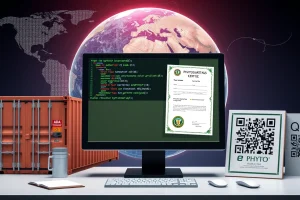
A Digital Phytosanitary Certificate is an electronic version of the paper document issued by a National Plant Protection Organization (NPPO) that confirms a consignment complies with the International Plant Protection Convention (IPPC) standards. The certificate is generated, signed, and transmitted through an interoperable platform such as the e‑Phytosanitary system (e‑Phytos) adopted by many NPPOs.
- Format: XML or JSON data wrapped in a digital signature (PKI).
- Transmission: Secure web services (REST/SOAP) between exporting and importing NPPOs, customs, and freight forwarders.
- Legal status: Recognised under the IPPC’s ISPM 22 and WTO SPS Agreement.
In practice, the e‑Phytos replaces the paper certificate, but the underlying phytosanitary requirements remain unchanged.
Why it matters (real stakes for exporters/importers)
For businesses that move plant material across borders, the speed and reliability of certification directly affect market access and profitability.
- Faster clearance: Electronic validation can cut customs processing time from days to hours.
- Reduced costs: Eliminates printing, courier, and storage expenses for paper certificates.
- Lower fraud risk: Digital signatures are tamper‑evident, making counterfeit certificates far harder to produce.
- Improved traceability: Real‑time data sharing enables rapid response to pest outbreaks.
- Compliance confidence: Automated checks against the latest NPPO regulations reduce the chance of accidental non‑compliance.
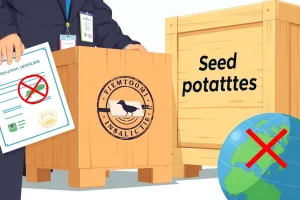
Failure to adopt e‑Phytos where mandatory can lead to shipment delays, additional inspection fees, or outright rejection at the border.
How it works
The e‑Phytos workflow consists of five key stages:
| Stage | Action | Stakeholder |
|---|---|---|
| 1. Data capture | Exporter enters commodity details, origin, and treatment information into an accredited e‑Phytos portal. | Exporter / Freight forwarder |
| 2. NPPO validation | Exporting NPPO reviews the data, may request additional evidence, and digitally signs the certificate. | NPPO (issuing country) |
| 3. Secure transmission | Certificate is sent via encrypted API to the importing NPPO and, optionally, to customs authorities. | e‑Phytos platform |
| 4. Import validation | Importing NPPO checks the certificate against its current phytosanitary requirements and issues an electronic acceptance or request for amendment. | NPPO (receiving country) |
| 5. Customs release | Customs agents view the validated certificate in their system and release the cargo. | Customs authority |
All steps are logged, providing an audit trail that can be accessed by regulators if a dispute arises.
Regulatory authority & contact
The primary international authority is the International Plant Protection Convention (IPPC), which issues the ISPM standards that govern e‑Phytos. Each country’s NPPO implements these standards and maintains a national contact point.
- IPPC Secretariat – www.ippc.int
- World Trade Organization (WTO) – SPS Agreement – www.wto.org
- National Plant Protection Organization (example) – Contact your country’s NPPO via the national agriculture ministry website; most provide a dedicated e‑Phytos helpdesk email.
When in doubt, reach out to the NPPO’s “e‑Phytos Support” desk for guidance on system access, digital signatures, and data formats.
Requirements & standards
The electronic certificate must meet three core standards:
- Data model: Conform to the IPPC‑approved ISPM 22 XML schema.
- Authentication: Use Public Key Infrastructure (PKI) certificates issued by the NPPO’s Certificate Authority (CA).
- Transmission security: TLS 1.2+ encryption for all web‑service calls.
“Electronic phytosanitary certificates shall be accepted as equivalent to paper certificates provided they comply with ISPM 22 and are digitally signed by the issuing NPPO.” – ISPM 22, Annex B, 2023 revision
National regulations may add local fields (e.g., import permit number) but they must still fit the global schema.
Step‑by‑step checklist (How‑to trigger)
Use this checklist before you ship any regulated plant material:
- Confirm eligibility: Verify that both the exporting and importing countries recognise e‑Phytos for your commodity.
- Register on the portal: Create an account with your NPPO’s e‑Phytos system and obtain a digital signature certificate.
- Gather documentation: Treatment certificates, lab test reports, and any required permits.
- Ensure scientific names are up‑to‑date (use Plants of the World Online as reference).
- Enter shipment data: Commodity code (HS), quantity, origin, destination, and phytosanitary measures.
- Use the drop‑down lists provided to avoid spelling errors.
- Submit for NPPO review: The system will flag missing fields automatically.
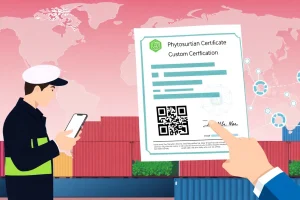
- Receive digital signature: Once approved, download the QR‑code version for the carrier.
- Transmit to importer: Share the certificate ID and QR code; the importing NPPO can pull the record directly.
- Provide to customs: Present the QR code or electronic file at the point of entry.
- Archive: Store the signed XML for at least five years as required by most NPPOs.
Skipping any step can trigger a rejection or a request for a paper backup.
Common mistakes & rejection reasons
Even experienced exporters encounter avoidable errors. The most frequent causes of border rejection are:
- Incorrect scientific name or synonym: Customs checks the name against the NPPO’s pest database.
- Missing treatment details: Heat‑treatment, fumigation, or irradiation must be recorded with exact temperature, duration, and chemical concentration.
- Invalid digital signature: Expired PKI certificate or mismatch between the issuer and the NPPO.
- Non‑conformant data format: Deviations from the ISPM 22 XML schema cause automatic rejection by the receiving system.
- Late submission: Many NPPOs require the e‑Phytos 48 hours before loading; late uploads are rejected outright.
To minimise risk, run a pre‑validation test using the NPPO’s sandbox environment whenever possible.
Real‑world example/scenario
Scenario: A U.S. almond exporter ships 10 tonnes of raw almonds to the United Arab Emirates (UAE). The UAE NPPO requires an e‑Phytos confirming that the consignment is free of Monilinia fructicola (brown rot) and has undergone a mandatory cold‑treatment.
- The exporter logs into the USDA’s e‑Phytos portal, uploads the laboratory test report, and selects the “Cold‑treatment – 4 °C for 30 days” option.
- The USDA NPPO reviews the data, digitally signs the certificate, and the system automatically sends a notification to the UAE NPPO.
- The UAE NPPO validates the certificate within 2 hours, assigns an acceptance code, and shares it with Dubai Customs.
- At Dubai port, the customs officer scans the QR code on the shipping manifest; the system pulls the certified data and releases the cargo without physical inspection.
The entire process took less than 24 hours from data entry to customs release, saving the exporter an estimated US$5,000 in demurrage and inspection fees.
Conclusion
Digital Phytosanitary Certificates are fast becoming the global standard for plant‑health trade. By embracing the e‑Phytos framework, exporters and importers gain speed, security, and regulatory confidence, while customs agencies benefit from streamlined inspections. The technology does introduce new risks—particularly around data integrity and system interoperability—but these can be mitigated with proper training, robust PKI management, and adherence to IPPC standards. Implement the checklist above, stay current with NPPO updates, and you’ll be positioned to move plant products across borders with the efficiency demanded by modern supply chains.
FAQ
Can a digital phytosanitary certificate be used in place of a paper one?
Yes, when both the exporting and importing NPPOs have accepted e‑Phytos under ISPM 22, the electronic version is legally equivalent to paper.
What happens if the digital signature expires after shipment?
The signature must be valid at the time of issuance. If it expires before customs review, the certificate may be rejected, so exporters should ensure the PKI certificate remains active for the required retention period.
Do I need special software to view an e‑Phytos?
No specialized software is required; most NPPO portals provide a web‑based viewer, and the QR code can be scanned with a standard mobile device to retrieve the certificate data.




Leave a Reply