Short Answer
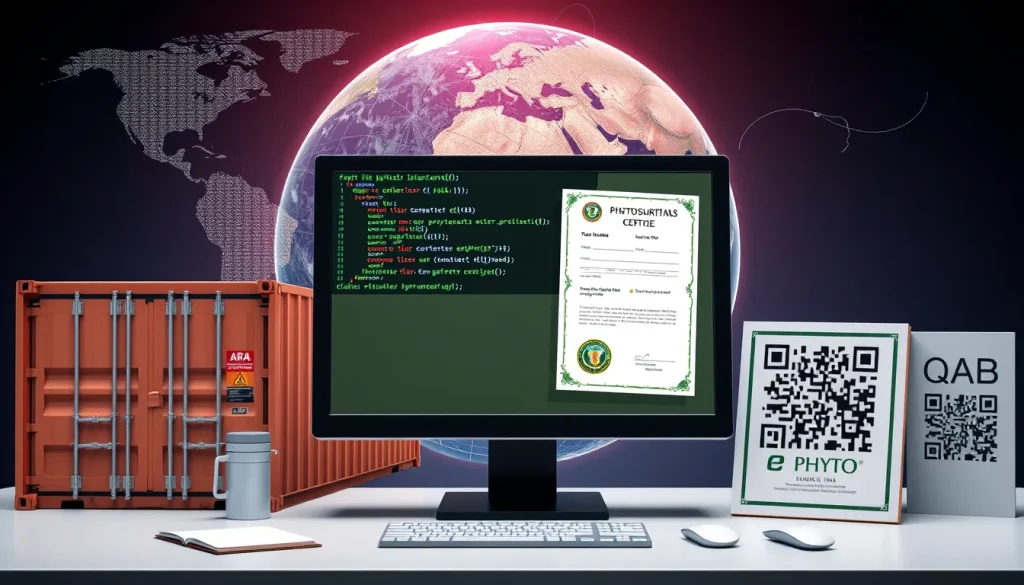
Digital trade is reshaping the way agricultural products cross borders. The ePhyto platform, administered by national plant protection organizations (NPPOs) under the International Plant Protection Convention (IPPC), enables electronic issuance of phytosanitary certificates. By integrating the ePhyto Application Programming Interface (API) directly into your export management system, you can automate data exchange, reduce manual entry errors, and accelerate clearance at the border. This pillar article walks exporters, importers, customs brokers, freight forwarders, and agriculture students through every facet of integration—what it is, why it matters, how it works, and how to avoid the most common rejection reasons.
Overview
The ePhyto API is a set of web‑services that allow external software to create, amend, and retrieve phytosanitary certificates in real time. When linked to an export management system (EMS), the API replaces paper forms and manual uploads with a secure, JSON‑based exchange that complies with IPPC Standard ISPM 11 and national ePhyto regulations.
| Component | Typical Function | Key Standard |
|---|---|---|
| EMS Front‑end | Collects commodity data, origin, destination, and treatment details. | ISPM 11 Annex B |
| ePhyto API | Validates data, issues digital certificate, returns QR‑code. | IPPC ePhyto Technical Manual (2023) |
| NPPO Backend | Approves, signs, and archives the certificate. | National ePhyto SOPs |
Why it Matters (Real Stakes for Exporters and Importers)
Failure to provide a valid phytosanitary certificate can lead to:
- Shipment rejection at the port of entry, causing delays and additional storage fees.
- Destruction or re‑treatment of the consignment, often at the exporter’s expense.
- Loss of market credibility and future trade bans.
- Potential penalties under the WTO SPS Agreement for non‑compliance.
By automating certificate generation, the ePhyto API reduces these risks, shortens lead times from days to minutes, and provides an audit trail that satisfies both customs authorities and private buyers.
How it Works
The integration follows a three‑stage flow:
- Data Capture: Your EMS gathers required fields (commodity code, scientific name, origin NPPO, treatment records, etc.).
- API Call: The EMS sends a POST request to the ePhyto endpoint
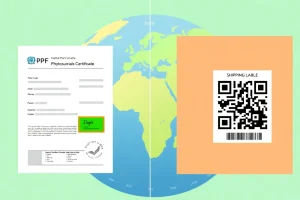
https://api.ephyto.org/v1/certificateswith a JSON payload. Authentication uses a token issued by the NPPO after a secure registration. - Certificate Return: The NPPO validates the request, digitally signs the certificate, and returns a PDF and QR‑code. The EMS stores the PDF and attaches the QR‑code to the shipment manifest.
Both synchronous (real‑time) and asynchronous (batch) modes are supported. Synchronous mode is ideal for high‑value consignments that need immediate clearance; asynchronous mode suits bulk exporters who submit hundreds of requests nightly.
“All electronic phytosanitary certificates issued via ePhyto shall be recognized as equivalent to paper certificates under the SPS Agreement, provided they comply with ISPM 11 and the issuing NPPO’s national legislation.” – WTO SPS Annex, 2022.
Regulatory Authority & Contact
The ePhyto system is overseen by the NPPO of the exporting country and coordinated globally by the International Plant Protection Convention (IPPC). For technical support, exporters should contact:
- National ePhyto Helpdesk: email ephyto.support@npop.gov or toll‑free 1‑800‑E‑PHYTO.
- IPPC ePhyto Coordination Unit: https://www.ippc.int/ephyto.
Most NPPOs require a formal registration of the EMS vendor, including a security audit and a signed data‑processing agreement.
Requirements & Standards
Integration must satisfy both international and national criteria:
- ISPM 11 (2022): Defines the data model for electronic phytosanitary certificates.
- IPPC ePhyto Technical Manual (2023): Provides API endpoint specifications, JSON schema, and error‑code definitions.
- National SOPs (e.g., USDA APHIS ePhyto Guide, EU Plant Health Regulation 2020/2081): Outline authentication token life‑cycle, required digital signatures, and record‑keeping periods (minimum 5 years).
Compliance is demonstrated by:
- Implementing TLS 1.2+ encryption for all API traffic.
- Storing the NPPO‑issued digital signature hash in a tamper‑evident log.
- Maintaining a mapping between internal shipment IDs and ePhyto certificate numbers.
Step‑by‑Step Checklist (How‑to Trigger the API)
Use the following checklist before you press “Submit Certificate” in your EMS:
- Confirm that the commodity is listed in the NPPO’s Allowed Export List.
- Verify the scientific name matches the IPPC‑accepted taxonomy (e.g., Solanum lycopersicum for tomatoes).
- Ensure all required treatments (e.g., fumigation, heat) are documented with certificate numbers.
- Generate a valid authentication token via the NPPO’s OAuth 2.0 endpoint.
- Populate the JSON payload according to the ePhyto schema (see IPPC manual, Section 4.2).
- Run a schema validation test in a sandbox environment.
- Submit the POST request and capture the response code.
- 201 Created – certificate issued.
- 400 Bad Request – missing mandatory fields.
- 403 Forbidden – token invalid or expired.
- Store the returned PDF and QR‑code in your document repository; attach the QR‑code to the Bill of Lading.
- Notify the freight forwarder and the importing NPPO of the certificate number.
After successful issuance, update the shipment status to “Phytosanitary Certified” in your ERP.
Common Mistakes & Rejection Reasons
Even seasoned exporters stumble on a few recurring errors:
- Incorrect scientific name spelling – leads to mismatched pest risk assessments.
- Missing treatment reference numbers – NPPOs cannot verify compliance.
- Expired authentication token – API returns 403 and forces a manual re‑login.
- Failure to include the destination NPPO code – the certificate is not routed to the correct authority.
- Using outdated ISPM version – some fields are deprecated, causing validation failures.
To mitigate these issues, implement automated validation rules in your EMS and schedule token refreshes every 24 hours.
Real‑World Example/Scenario
Scenario: A medium‑size apple exporter in Chile wants to ship 12 000 kg to the United Kingdom. The UK’s NPPO (DEFRA) requires a phytosanitary certificate issued via ePhyto.
- The exporter’s EMS pulls the commodity code (0808 30) and scientific name (Malus domestica).
- All cold‑treatment records (−1 °C for 14 days) are attached with laboratory test numbers.
- The system authenticates with the Chilean NPPO’s OAuth endpoint, receives token
abc123token. - A JSON payload is built and sent to
https://api.ephyto.cl/v1/certificates. The API returns a 201 response with certificate number EP‑CHL‑2026‑00123 and a QR‑code. - The PDF is automatically emailed to the freight forwarder, and the QR‑code is printed on the export manifest.
“The certificate shall be presented to the UK Border Force upon arrival; the QR‑code enables instant verification through the DEFRA ePhyto portal.”
- The shipment clears customs within 2 hours, avoiding the typical 24‑hour delay experienced with paper certificates.
This example illustrates the time and cost savings achievable when the ePhyto API is fully integrated.
Conclusion
Integrating the ePhyto API with your export management system is no longer a futuristic option—it is a practical necessity for anyone serious about competitive, compliant plant‑health trade. By following the standards set out by the IPPC, adhering to national NPPO procedures, and using the checklist provided, exporters can automate phytosanitary certification, reduce rejection risk, and accelerate market access.
| Quick Facts | Details |
|---|---|
| Primary Standard | IPPC ISPM 11 (2022) |
| Typical API Response Time | 2–5 seconds (synchronous mode) |
| Token Validity | 24 hours (renewable) |
| Document Retention | Minimum 5 years (per NPPO) |
| Common Rejection Cause | Missing treatment reference numbers |
| Benefit | Average clearance time reduced by 70 % |
FAQ
Do I need a separate license to use the ePhyto API?
No separate software license is required, but you must register your company and the EMS vendor with the NPPO that issues the certificates. The NPPO will provide an API client ID and secret for OAuth authentication.
Can the ePhyto API handle bulk shipments of hundreds of certificates?
Yes. The API offers an asynchronous batch endpoint that accepts arrays of up to 500 certificate requests per call. Responses are delivered via a webhook or a polling URL.
What happens if the importing country does not yet recognize ePhyto certificates?
Under the WTO SPS Agreement, a country that has adopted ISPM 11 must accept electronic certificates that meet the standard. If the importer’s NPPO has not yet implemented ePhyto, you can still generate a paper certificate through the same EMS and submit it manually.




Leave a Reply