Short Answer
International trade in agricultural commodities requires strict adherence to phytosanitary regulations to prevent the spread of pests and diseases across borders. For exporters targeting the Chinese market, understanding the distinction between China’s Plant Quarantine A-List and B-List is fundamental to compliance. These lists dictate which organisms are prohibited or controlled, directly influencing inspection protocols, documentation requirements, and market access. Failure to comply can result in shipment rejection, destruction of goods, or significant financial penalties. This guide provides a comprehensive overview of the regulatory framework, procedural steps, and practical considerations for stakeholders involved in plant health trade with China.
Overview
The People’s Republic of China maintains a rigorous system for managing plant health risks through its quarantine lists. The Plant Quarantine List A comprises pests that are not present in China or are present only in limited areas and are of major economic importance. These are considered quarantine pests of the highest priority. Conversely, the Plant Quarantine List B includes pests that are already widely distributed within China but are still subject to control measures to prevent further spread or economic damage. Distinguishing between these two categories is the first step in determining the level of scrutiny your shipment will face upon arrival at a Chinese port of entry.
Why it matters
The stakes for exporters and importers are exceptionally high when dealing with regulated pests. If a pest from List A is detected during inspection, the consequences are severe. Shipments may be ordered for immediate destruction, re-exportation at the exporter’s expense, or mandatory treatment under customs supervision. For List B pests, while the risk of total destruction is lower, non-compliance can still lead to delays, additional treatment costs, and potential blacklisting of the exporting facility. Understanding these lists protects your supply chain integrity and ensures financial viability in one of the world’s largest agricultural markets.
Regulatory authority & contact
The primary regulatory body responsible for enforcing these regulations is the General Administration of Customs of China (GACC). Previously, this function was managed by the AQSIQ, but following governmental restructuring, GACC now oversees all entry-exit inspection and quarantine activities. Exporters should maintain contact with the GACC office relevant to their port of entry. Additionally, coordination with the National Plant Protection Organization (NPPO) in the exporting country is essential, as they issue the necessary phytosanitary certificates that GACC inspectors validate.
Import/export procedure
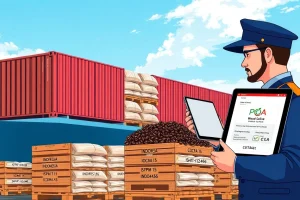
The procedure for exporting plants or plant products to China involves several critical stages. First, the exporting facility must often be registered with GACC. Second, a pre-shipment inspection is conducted by the exporting country’s NPPO to ensure freedom from List A and B pests. Third, the goods are sealed and documented. Upon arrival in China, customs officers perform a document review followed by a physical inspection. If the shipment passes, a release notice is issued. If pests are found, a non-compliance notice is generated, triggering the rejection protocols outlined in the quarantine laws.
Required documents
Accurate documentation is the backbone of successful clearance. The primary document required is the Phytosanitary Certificate, which must align with IPPC standards. This certificate must explicitly state that the consignment is free from specific quarantine pests listed in China’s regulations. Additional documents may include a Certificate of Origin, packing lists, and specific treatment certificates if fumigation or cold treatment was applied. All documents must be in Chinese or accompanied by a certified Chinese translation to avoid processing delays at the border.
Common rejection reasons at that border
Shipments are frequently rejected for specific, preventable reasons. The most common cause is the detection of live pests belonging to List A or B during inspection. Another frequent issue is discrepancies between the declared commodity and the actual goods found in the container. Missing or incorrectly filled Phytosanitary Certificates are also a major cause of rejection. Furthermore, the presence of soil or prohibited planting media attached to the roots of plants is strictly forbidden and will lead to immediate detention of the cargo.
Scientific classification
The pests on these lists are classified scientifically by genus and species to ensure precise identification. For example, specific fruit flies like Ceratitis capitata or fungi like Fusarium oxysporum may appear on these lists depending on the host commodity. Exporters must verify the scientific names against the latest GACC announcements, as common names can vary regionally and lead to confusion. The regulatory status is tied to the scientific identity of the organism, not its common trade name.
Requirements & standards
Compliance is anchored in international standards set by the International Plant Protection Convention (IPPC). Specifically, ISPM No. 12 outlines the guidelines for Phytosanitary Certificates, which China adheres to. However, China’s domestic laws, such as the Law of the People’s Republic of China on Entry and Exit Animal and Plant Quarantine, impose additional strictures. Exporters must ensure their NPPO certifies according to both IPPC standards and specific bilateral protocols agreed upon between China and the exporting country.
“All imported plants and plant products must be declared truthfully and accept quarantine inspection. No person may bring in prohibited articles without special approval.”
Common mistakes & rejection reasons
Human error is a significant risk factor. A common mistake is failing to update knowledge regarding changes to the A-List or B-List, which are periodically revised. Another error is using wood packaging material that does not comply with ISPM 15 standards, which can trigger quarantine holds even if the commodity itself is clean. Additionally, exporters sometimes overlook additional declaration requirements specified in bilateral protocols, leading to certificate rejection by Chinese customs officers.
Real-world example/scenario
Consider a scenario where a company exports apples to China. The apples are inspected in the country of origin and deemed clean. However, upon arrival in Shanghai, inspectors find larvae of a moth species listed on China’s Plant Quarantine List A. The entire container is held. Because the pest is on List A, the GACC orders the destruction of the shipment. The exporter loses the value of the goods, pays for destruction fees, and faces a temporary suspension of their export license. This could have been avoided with more rigorous pre-shipment monitoring and trapping programs.
Conclusion
Navigating China’s Plant Quarantine A-List and B-List requires diligence, accurate documentation, and a deep understanding of phytosanitary standards. By adhering to GACC regulations, coordinating closely with NPPOs, and maintaining high standards of pest management, exporters can mitigate risks and ensure smooth market access. Compliance is not merely a regulatory hurdle but a critical component of sustainable international agricultural trade.
| Quick Fact | Detail |
|---|---|
| Regulatory Body | General Administration of Customs of China (GACC) |
| List A Definition | Pests not present or limited in China; high economic risk |
| List B Definition | Pests widely distributed but controlled |
| Key Document | IPPC-compliant Phytosanitary Certificate |
| Wood Packaging | Must comply with ISPM 15 standards |
| Language | Documents must be in Chinese or translated |
| Inspection | Document review followed by physical inspection |
| Non-Compliance | Can lead to destruction or re-export |
FAQ
What happens if a List A pest is found in my shipment?
If a List A pest is detected, the shipment will likely be ordered for destruction, re-exportation, or mandatory treatment under customs supervision, often at the exporter's expense.
Do Phytosanitary Certificates need to be in Chinese?
Yes, documents must be in Chinese or accompanied by a certified Chinese translation to ensure customs officers can process them without delay.
How often are the A-List and B-List updated?
The lists are periodically revised by GACC based on pest risk analysis and international reports, so exporters must check for updates before every shipment.




Leave a Reply