Short Answer
Exporting tropical fruits such as mango, papaya, pineapple and banana can be lucrative, but the presence of Fusarium spp. – especially Fusarium oxysporum f. sp. cubense (Foc) – threatens market access. Many importing countries require a validated hot‑water treatment (HWT) to eradicate the pathogen before shipment. This article provides a concise, step‑by‑step reference for exporters, importers, customs brokers, freight forwarders and agriculture students who need fast, accurate answers.
Overview
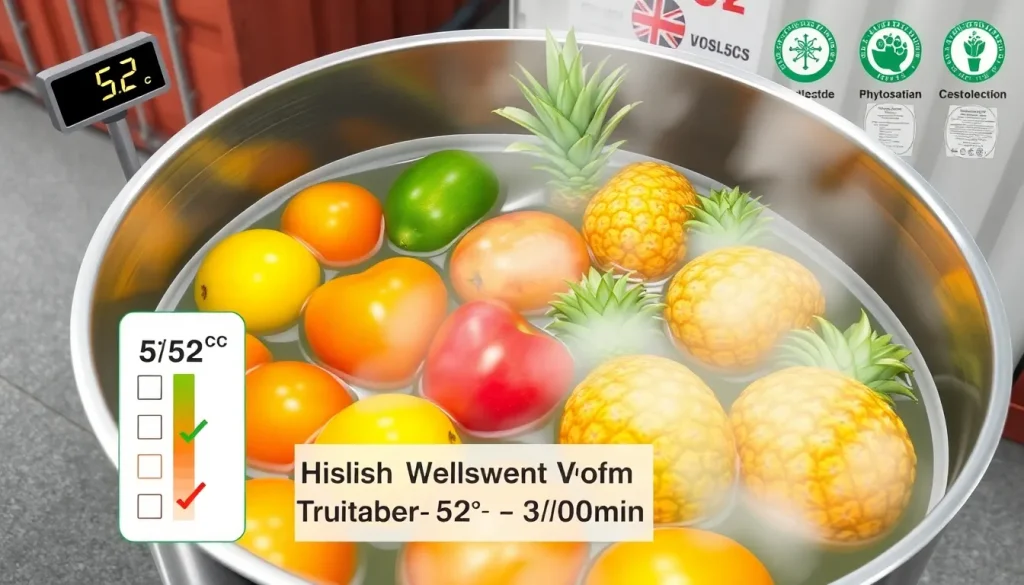
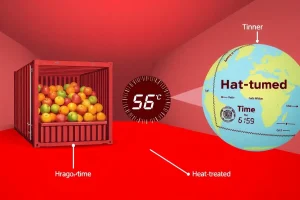
Hot‑water treatment (HWT) is a non‑chemical phytosanitary measure that immerses harvested fruit in water at a prescribed temperature for a defined duration. The heat denatures fungal hyphae and spores without compromising fruit quality when applied correctly. For Fusarium pests, the most widely accepted protocol is 52 °C for 30 minutes, followed by rapid cooling.
Why it matters (real stakes for exporters/importers)
Failure to meet the HWT requirement can result in:
- Shipment rejection at the port of entry, leading to loss of cargo and demurrage fees.
- Quarantine or destruction of the consignment by the NPPO of the importing country.
- Loss of market reputation and future access restrictions.
- Financial penalties imposed under WTO SPS Agreement clauses.
Conversely, compliance opens premium markets in the United States, European Union, Japan and Saudi Arabia, where consumers demand high‑quality, pest‑free fruit.
How it works
HWT exploits the thermal sensitivity of Fusarium spores:
- Fruit are harvested at optimum maturity and pre‑cooled to 10‑12 °C.
- They are loaded into a stainless‑steel bath with continuous agitation to ensure uniform temperature.
- Water temperature is raised to the target (usually 52 °C ± 2 °C) and held for the required time (30 ± 2 min).
- Immediately after the soak, fruit are transferred to a cooling tunnel (≤15 °C) to stop heat damage.
- Fruit are then dried, inspected, packed, and accompanied by a Phytosanitary Certificate stating “Treated by Hot Water – 52 °C/30 min”.
Scientific studies confirm >99.9 % mortality of Fusarium oxysporum spores under these conditions (Kumar et al., 2021).
Requirements & standards (cite primary source: IPPC/NPPO)
The International Plant Protection Convention (IPPC) and the National Plant Protection Organization (NPPO) of the importing country define the HWT protocol. The most common reference is:
IPPC Standard ISPM 15 (2022) – Annex B: “Hot‑Water Treatment for Fusarium spp. in Tropical Fruits – 52 °C for 30 minutes, followed by rapid cooling to ≤15 °C within 5 minutes.”
Key elements required by most NPPOs (e.g., USDA‑APHIS, EU Plant Health Directive) include:
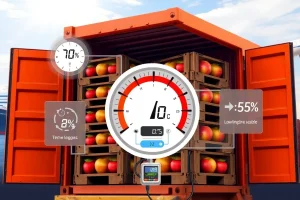
- Calibration of temperature sensors before each run.
- Documented log of temperature, time, and batch number.
- Independent verification by a certified phytosanitary inspector.
- Label on the commercial invoice: “HWT‑52‑30”.
Step‑by‑step checklist (How‑to trigger)
- Pre‑treatment preparation
- Verify that the fruit batch is harvested from Fusarium‑free orchards (certified by local NPPO).
- Ensure all equipment (tanks, thermometers, agitators) is clean and calibrated.
- Load fruit
- Place fruit in the treatment tank, avoiding over‑packing (max 80 % volume).
- Heat up
- Raise water temperature to 52 °C ± 2 °C; hold for 5 minutes to stabilize.
- Maintain soak
- Start timer; keep temperature constant for 30 ± 2 minutes with continuous agitation.
- Cooling phase
- Transfer fruit to cooling tunnel; reduce temperature to ≤15 °C within 5 minutes.
- Post‑treatment inspection
- Visually inspect for external damage; sample 0.1 % of fruit for laboratory Fusarium assay.
- Documentation
- Complete HWT log sheet (batch ID, start/end times, temperature records, inspector signature).
- Attach the log to the Phytosanitary Certificate.
- Packing & shipment
- Pack fruit in vented cartons, label “Treated – Hot Water 52 °C/30 min”.
- Notify the freight forwarder of treatment details for customs declaration.
Common mistakes & rejection reasons
Even experienced exporters can slip up. The most frequent causes of border rejections are:
- Temperature deviation – water below 50 °C or above 54 °C invalidates the treatment.
- Insufficient soak time – any reduction below 28 minutes is non‑compliant.
- Poor documentation – missing log sheet, absent inspector signature, or inconsistent batch numbers.
- Fruit damage – excessive heat leading to pulp breakdown, which can be interpreted as poor quality.
- Incorrect labeling – failing to display the HWT code on the commercial invoice.
Remedial actions include re‑treating the affected batch (if still viable) or arranging a controlled destruction under NPPO supervision.
Real‑world example / scenario
Case study: Export of Philippine mangoes to the United Arab Emirates (2023)
| Step | Action | Outcome |
|---|---|---|
| Pre‑export audit | NPPO‑certified orchard, no Fusarium symptoms observed. | Export license granted. |
| HWT execution | 52 °C/30 min with calibrated sensors; log sheet completed. | All temperature points within 51‑53 °C. |
| Documentation | Phytosanitary Certificate listed “Hot‑water treated – 52 °C/30 min”. | Accepted by UAE Ministry of Climate Change & Environment. |
| Post‑arrival inspection | Random sampling (0.2 %) – laboratory test negative for Fusarium. | Shipment released without delay. |
This example illustrates that strict adherence to the IPPC protocol and meticulous record‑keeping prevent costly hold‑ups.
Regulatory authority & contact
The primary bodies governing hot‑water treatment for Fusarium are:
- International Plant Protection Convention (IPPC) – sets global standards (ISPM 15, ISPM 36).
- National Plant Protection Organization (NPPO) of the importing country – e.g., USDA‑APHIS (USA), European Commission Directorate‑General for Health and Food Safety (EU), Saudi Arabian Ministry of Environment, Water and Agriculture.
Contact points (as of 2026):
| Authority | Region | Phone | |
|---|---|---|---|
| USDA‑APHIS Plant Protection | United States | +1‑202‑720‑2791 | aphis.plantprotection@usda.gov |
| EU Plant Health | European Union | +32‑2‑299 62 90 | planthealth@ec.europa.eu |
| Saudi Arabia MoEWA | Saudi Arabia | +966‑11‑203 7744 | planthealth@moewa.gov.sa |
Conclusion
Hot‑water treatment is a proven, internationally recognized method to neutralize Fusarium pests in tropical fruits. By following the IPPC‑approved 52 °C/30‑minute protocol, maintaining rigorous documentation, and liaising with the appropriate NPPO, exporters can safeguard market access, avoid costly rejections, and meet the growing demand for safe, high‑quality produce.
FAQ
What equipment is required to perform an IPPC‑compliant hot‑water treatment?
A stainless‑steel immersion tank with temperature control (±1 °C), a calibrated digital thermometer, agitator or circulation pump, a rapid‑cooling tunnel (≤15 °C), and a log‑book or electronic system for recording temperature, time, batch ID and inspector signature.
Can the hot‑water treatment be combined with other post‑harvest processes such as waxing or coating?
Yes, provided the coating is applied after the cooling phase and does not interfere with the temperature record. The coating must be approved by the importing NPPO, and the treatment log must note the sequence of operations.
If a shipment is rejected for temperature deviation, is re‑treatment possible?
Re‑treatment is allowed only if the fruit are still in good commercial condition and the importer’s NPPO gives written permission. The new HWT must be fully documented and a revised Phytosanitary Certificate issued.







Leave a Reply