Short Answer
Controlled‑atmosphere (CA) treatment is a non‑chemical, temperature‑modulated method increasingly used to eradicate quarantine pests in fresh produce, cut flowers, and certain commodities. As global trade intensifies, exporters and importers need a clear, authoritative roadmap that shows how CA fits into phytosanitary certification, which agencies approve it, and what documentation is required to avoid costly rejections at the border.
Overview
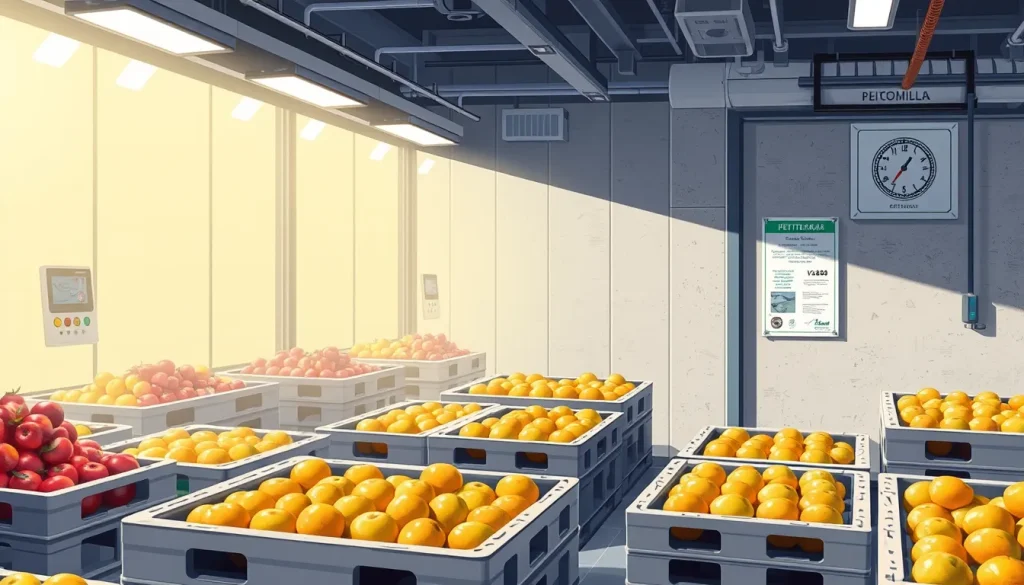
CA treatment manipulates the composition of gases—primarily oxygen, carbon dioxide, and nitrogen—inside a sealed chamber to create lethal conditions for insects, mites, and nematodes without damaging the commodity. The International Plant Protection Convention (IPPC) formally recognizes CA under ISPM 18 (Guidelines for the Use of Controlled‑Atmosphere Treatments) and many National Plant Protection Organizations (NPPOs) have incorporated the method into their national quarantine regulations.
Why it matters (real stakes for exporters/importers)
Failure to meet the importing country’s phytosanitary requirements can result in:
- Shipment detention or outright rejection, causing financial loss and delayed market entry.
- Additional treatment costs if a secondary method (e.g., fumigation) is imposed.
- Potential loss of market access if the exporter’s compliance record is deemed unreliable.
Conversely, a correctly documented CA treatment can:
- Provide a residue‑free alternative to methyl bromide or phosphine, aligning with sustainability goals.
- Speed up clearance at customs when the treatment is pre‑approved.
- Enhance the exporter’s reputation for high‑quality, phytosanitary‑safe produce.
How it works
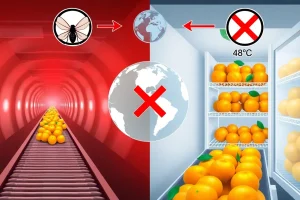
CA treatment follows a simple scientific principle: insects require oxygen to survive. By reducing O₂ to 20 % (or using nitrogen to displace oxygen), metabolic processes are halted, leading to mortality within a defined exposure time. The exact parameters depend on the target pest, commodity tolerance, and temperature.
- Loading: Produce is placed in a hermetically sealed chamber.
- Atmosphere adjustment: Gas mixers or nitrogen generators lower O₂ and raise CO₂ to the target levels.
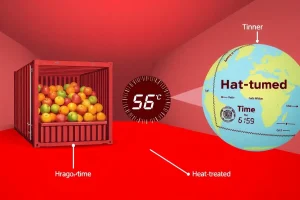
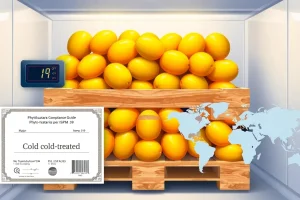
- Temperature control: Typically 2 °C – 10 °C for fruits; higher temperatures (15 °C – 20 °C) are used for hardy commodities.
- Exposure time: Ranges from 24 h (for highly sensitive pests) to 14 days (for tolerant stages).
- Ventilation: After the exposure, the chamber is aerated to restore normal atmosphere before unloading.
All parameters must be recorded and validated against the pest‑specific efficacy data accepted by the importing NPPO.
Regulatory authority & contact
The primary international authority is the International Plant Protection Convention (IPPC). Nationally, each country’s NPPO governs acceptance. Below is a quick reference for the most common jurisdictions:
| Country/Region | NPPO / Authority | Contact (email/phone) |
|---|---|---|
| United States | USDA‑APHIS Plant Protection and Quarantine (PPQ) | ppq@aphis.usda.gov / +1‑202‑720‑2791 |
| European Union | EU Commission Directorate‑General for Health and Food Safety (DG SANTE) | phytosanitary@ec.europa.eu |
| Australia | DAFF – Biosecurity | biosecurity@agriculture.gov.au / +61‑2‑6273‑2222 |
| Canada | CFIA – Plant Health | phytosanitary@inspection.gc.ca / +1‑613‑773‑8220 |
| Japan | Ministry of Agriculture, Forestry and Fisheries (MAFF) | phytosanitary@maff.go.jp |
Exporters should verify the most recent contact details on the official NPPO website before submission.
Requirements & standards
All CA treatments must comply with the following core standards:
- IPPC ISPM 18 – Provides the scientific basis and validation protocol for CA efficacy.
“A controlled‑atmosphere treatment shall be considered phytosanitary when it achieves ≥ 99 % mortality of the target quarantine pest under the prescribed conditions.” – IPPC, 2022.
- National NPPO guidelines – Each country may publish a supplemental manual (e.g., USDA‑APHIS “Controlled‑Atmosphere Treatment Handbook, 2023”).
- WTO SPS Agreement – Ensures that the treatment is not an unjustified barrier to trade; documentation must be transparent and based on scientific evidence.
Key parameters that must be recorded and presented with the phytosanitary certificate include:
- Target pest species (scientific name).
- O₂, CO₂ (or N₂) concentrations achieved (%).
- Temperature (°C) and relative humidity (%).
- Exposure duration (hours or days).
- Equipment validation certificate (calibration of gas meters).
- Post‑treatment inspection results.
Import/export procedure
The typical workflow for a shipment that will rely on CA treatment is:
- Pre‑export inquiry: Contact the destination NPPO to confirm that CA is an accepted treatment for the commodity‑pest combination.
- Treatment plan approval: Submit a short technical dossier (treatment parameters, scientific justification) for formal acceptance.
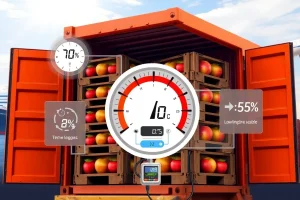
- Perform CA treatment: Conduct the treatment in a certified chamber; keep a real‑time log of gas composition and temperature.
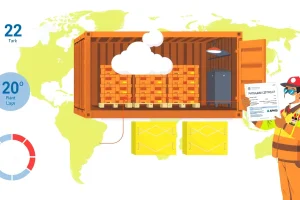
- Generate phytosanitary certificate: The authorized NPPO inspector reviews the log, may conduct a random sample, and issues a certificate stating “Treated by Controlled Atmosphere – see attached treatment record.”
- Documentation pack: Include the certificate, treatment record, commercial invoice, packing list, and any required import permits.
- Customs clearance: Upon arrival, the importing country’s quarantine officer verifies the CA record. If everything matches, the consignment is released.
Required documents
Missing or incomplete paperwork is the leading cause of rejections. Exporters should assemble the following packet:
- Phytosanitary certificate (issued by the exporting NPPO).
- Detailed CA treatment record (gas concentrations, temperature, exposure time, equipment ID).
- Laboratory validation report for the target pest (often a published efficacy study).
- Import permit or pre‑clearance letter from the destination NPPO (when required).
- Bill of lading, commercial invoice, and packing list.
- Certificate of origin (if requested under trade agreements).
All documents should be in the language required by the importing country or accompanied by a certified translation.
Common mistakes & rejection reasons
Even experienced exporters stumble over small details. The most frequent issues are:
- Incorrect gas concentrations: Deviations of > 0.5 % O₂ from the approved level often trigger a rejection.
- Insufficient exposure time: Failure to meet the minimum validated duration for the target pest.
- Missing calibration certificates: Gas analyzers must be calibrated within the previous 30 days.
- Inadequate documentation: Absence of a signed treatment log or lack of a reference to the specific NPPO approval.
- Using non‑approved equipment: Chambers not listed on the NPPO’s approved‑facility register.
When any of these occur, the shipment is typically detained for “non‑conformity with phytosanitary requirements” and may be subject to re‑treatment or destruction.
Real‑world example / scenario
In 2023, a New Zealand avocado exporter sought to ship to the United Kingdom. The UK’s NPPO required treatment for Thaumatotibia leucotreta (false codling moth). After confirming that CA was accepted under ISPM 18, the exporter submitted a dossier specifying 0.3 % O₂, 22 % CO₂, 5 °C for 7 days. The UK’s quarantine authority approved the plan, the treatment was performed, and the phytosanitary certificate explicitly referenced “CA‑THL‑2023‑07”. The shipment cleared customs without delay, saving an estimated US$150,000 in potential fumigation costs.
Step‑by‑step checklist (How‑to trigger acceptance)
- Identify the quarantine pest(s) of concern for the destination.
- Verify that CA is listed as an approved treatment in the destination’s NPPO manual.
- Prepare a technical dossier (pest biology, CA parameters, supporting efficacy study).
- Submit the dossier to the destination NPPO for pre‑approval; obtain written confirmation.
- Schedule treatment in an IPPC‑certified CA chamber; ensure gas meters are calibrated.
- Record all treatment data in a standardized log (electronic or paper).
- Invite an authorized NPPO inspector for post‑treatment verification.
- Obtain the phytosanitary certificate that cites the CA treatment and attach the full log.
- Compile the full documentation pack and attach any required import permits.
- Provide the complete packet to the freight forwarder; retain copies for internal audit.
Following this checklist reduces the risk of non‑conformity and streamlines customs clearance.
Conclusion
Controlled‑atmosphere treatment offers a scientifically robust, residue‑free solution for managing quarantine pests, but its regulatory acceptance hinges on strict adherence to IPPC standards, clear communication with NPPOs, and meticulous documentation. By understanding the authority landscape, meeting the precise treatment parameters, and avoiding common pitfalls, exporters can confidently use CA to maintain market access and meet sustainability goals.
| Quick Fact | Detail |
|---|---|
| IPPC Standard | ISPM 18 – Controlled‑Atmosphere Treatments (2022) |
| Typical O₂ target | ≤ 0.5 % (often 0.3 %) |
| Common exposure time | 24 h – 14 days depending on pest |
| Key NPPOs accepting CA | USDA‑APHIS, EU DG SANTE, DAFF (Australia), CFIA, MAFF (Japan) |
| Benefit | Zero chemical residues, aligns with sustainability commitments |
FAQ
Can I use a commercial cold‑storage unit for CA treatment, or does it have to be a certified chamber?
Only chambers that are listed on the destination NPPO’s approved‑facility register may be used. Commercial cold‑storage units must be retrofitted, calibrated, and formally approved before they can generate a valid CA treatment record.
What if my gas analyzer loses calibration during a shipment?
The treatment is considered non‑conforming. You must repeat the CA exposure using a calibrated device and generate a new treatment log; otherwise the shipment will be rejected or re‑treated.
Is a post‑treatment visual inspection still required after CA?
Yes. Most NPPOs require a final visual inspection to confirm commodity quality and to verify that no live pests remain. The inspection results are recorded on the phytosanitary certificate.




Leave a Reply