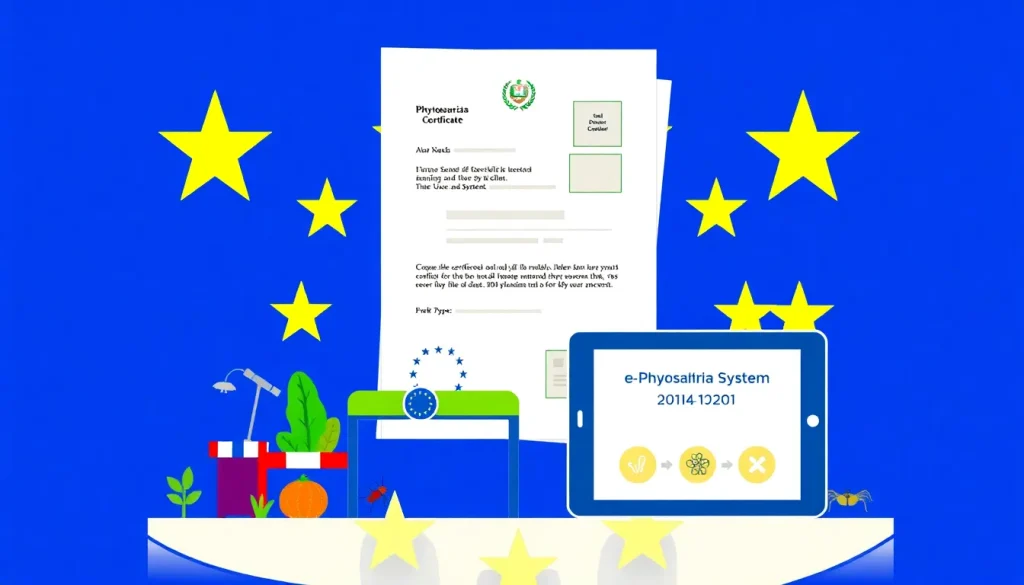
Short Answer
The European Union’s Plant Health Regulation (EU) 2016/2031 replaces the older Council Directive 2000/29/EC and creates a single, science‑based framework for protecting the EU’s agriculture and natural environment from plant pests and diseases. For exporters, importers, customs brokers, freight forwarders and students of agriculture, understanding this regulation is essential to avoid costly delays, rejected consignments, and potential market bans.
Overview
Regulation (EU) 2016/2031 establishes the EU’s plant‑health regime, defining:
- the list of regulated pests (Annex II) and the pathways they may travel;
- the obligations of Member States, third‑country exporters and importers;
- the procedures for issuing phytosanitary certificates (PCs) and for emergency measures.
The regulation entered into force on 14 December 2019 and became fully applicable on 14 December 2020. It aligns EU law with the International Plant Protection Convention (IPPC) standards (ISPM) and the WTO SPS Agreement.
Why it Matters (Real Stakes for Exporters/Importers)
Non‑compliance can lead to:
- Shipment rejection at the EU border – resulting in storage fees, re‑routing costs, or total loss of the cargo.
- Fines and administrative penalties – up to €5,000 per infraction for false declarations.
- Supply‑chain disruptions – delayed market entry can breach contracts and damage reputation.
- Trade bans – a single pest outbreak can trigger a temporary ban on an entire commodity from a country.
Conversely, proper compliance opens access to the €450 billion EU horticultural market and builds trust with EU customs and plant‑health authorities.
How it Works
The regulation follows a risk‑based, three‑step workflow:
| Step | Action | Responsible Party |
|---|---|---|
| 1 | Pre‑export risk assessment and treatment (if required) | Exporter / NPPO of origin |
| 2 | Phytosanitary inspection and issuance of a PC | Official NPPO inspector |
| 3 | Border check, validation of PC and release | EU Member State plant‑health authority |
All steps are documented electronically via the EU’s e‑Phytosanitary System (e‑PHS) where possible.
Regulatory Authority & Contact
The primary bodies are:
- European Commission – DG SANTE: sets EU‑wide policy and publishes the Official Journal.
- EU Plant Health Portal (e‑PHS): technical support for electronic certificates (website: https://phytosanitary.euph.org).
- National Plant Protection Organisations (NPPOs) in each Member State: enforce the regulation at the national level.
For direct assistance, contact the European Commission’s Plant Health Unit at planthealth@ec.europa.eu or call +32 2 299 25 00.
Import/Export Procedure
Both exporters and importers must follow the same core sequence, adapted to their side of the trade:
- Pre‑export notification: The exporter notifies the NPPO of the origin country at least 48 hours before shipment.
- Inspection & treatment: A certified inspector checks the consignment against the pest list; any required phytosanitary treatment (e.g., cold treatment, fumigation) is applied.
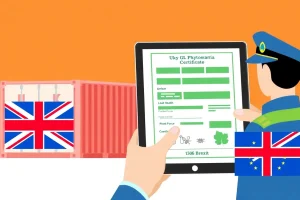
- Phytosanitary certificate issuance: The NPPO issues a PC (paper or electronic) confirming compliance.
- Transport documentation: Attach the PC to the commercial invoice and the EUR1 movement certificate where required.
- EU border control: The Member State’s plant‑health authority validates the PC, may conduct a spot inspection, and releases the cargo.
- Post‑entry monitoring: Certain high‑risk imports require a post‑entry quarantine period or surveillance reporting.
Failure at any step triggers a rejection or a request for remedial action.
Required Documents
The minimum dossier for a plant‑product import into the EU includes:
- Phytosanitary certificate (PC) issued by the NPPO of the exporting country, compliant with ISPM 34.
- Commercial invoice and packing list.
- EUR1 or other customs declaration form (if preferential tariff applies).
- Proof of any mandatory treatment (e.g., fumigation certificate, heat‑treatment report).
- Import licence or pre‑entry authorization for regulated commodities (e.g., plant seeds, cut flowers).
All documents must be in English, French, or the official language of the destination Member State.
Common Rejection Reasons at the EU Border
Customs and plant‑health officials most frequently refuse entry for:
- Missing or incorrectly filled PC (wrong commodity code, missing NPPO stamp).
- Evidence of pest presence not declared on the PC (e.g., visible larvae, fungal lesions).
- Non‑conformity with treatment requirements (e.g., insufficient fumigation dosage).
- Incorrect commodity classification – the PC references a different HS code.
- Expired PC – the certificate is only valid for 30 days after issuance for most commodities.
Each rejection is recorded in the EU’s TRACES‑NT system, and the consignor receives a formal notice with corrective actions.
Requirements & Standards (Primary Sources)
Regulation (EU) 2016/2031 explicitly incorporates the following international standards:
“The requirements for phytosanitary certificates shall be in accordance with ISPM 34 (International Standard for Phytosanitary Certification).” – Article 55, EU Regulation 2016/2031.
Key standards to reference:
- ISPM 15 – Wood packaging material (WPM) must be heat‑treated or fumigated.
- ISPM 36 – Guidelines for the inspection of fruits, vegetables and other plant commodities.
- ISPM 31 – Pest risk analysis methodology used by NPPOs to decide on import restrictions.
National Plant Protection Organisations (NPPOs) of the exporting country must certify that the consignment meets these standards before the PC is issued.
Step‑by‑Step Checklist (How‑to Trigger a Valid PC)
- Identify the commodity’s HS code and verify that it is not listed in Annex II as prohibited.
- Contact the NPPO of the exporting country to confirm any specific treatment or surveillance requirements.
- Arrange for an authorized pre‑export inspection at least 48 hours before shipment.
- Apply any mandatory treatments and retain certificates of treatment.
- Submit the inspection report to the NPPO; request issuance of a PC (electronic preferred).
- Check that the PC includes:
- Correct commodity name and HS code
- Origin NPPO name and seal
- Signature of the inspector
- Statement of compliance with all relevant ISPM standards
- Attach the PC to the commercial invoice, packing list and any required EUR1 form.
- Notify the EU destination’s NPPO via e‑PHS prior to arrival.
- Keep a digital copy of all documents in case of post‑entry verification.
Real‑World Example/Scenario
Scenario: A Dutch importer wishes to bring 10 tons of fresh mangoes from Brazil into the EU.
Steps taken:
- The importer checks the EU’s Annex II and finds that Thrips palmi is listed as a quarantine pest for mangoes.
- Brazil’s NPPO requires a pre‑export treatment of hot water immersion (48 °C for 30 minutes) and a post‑harvest inspection for the pest.
- After treatment, a certified Brazilian inspector issues a PC stating: “No signs of Thrips palmi detected; treatment applied in accordance with ISPM 36.”
- The PC, together with the commercial invoice and EUR1, is uploaded to the EU’s e‑PHS system.
- Upon arrival at Rotterdam, the Dutch NPPO validates the PC, performs a spot check, and releases the cargo.
- Six months later, a surveillance report confirms that no Thrips palmi were found in retail, confirming compliance.
Had the PC omitted the treatment statement, the shipment would have been detained, and the importer would have faced a €2,000 penalty.
Conclusion
EU Regulation 2016/2031 creates a unified, science‑based approach to plant‑health protection across the European Union. By understanding the regulation’s structure, following the prescribed procedures, and preparing the exact documentation required, exporters and importers can minimise delays, avoid costly rejections and maintain uninterrupted market access. The key to success is early engagement with the relevant NPPO, strict adherence to ISPM standards, and diligent record‑keeping throughout the supply chain.
| Quick Fact | Detail |
|---|---|
| Effective date | 14 December 2020 (full application) |
| Governing body | European Commission – DG SANTE |
| Key annexes | Annex II (regulated pests), Annex III (pest‑free areas) |
| Electronic system | e‑Phytosanitary System (e‑PHS) |
| PC validity | Usually 30 days from issuance |
| Penalty ceiling | €5,000 per violation |
| Reference standards | ISPM 15, 34, 36, 31 |
FAQ
Do I need a phytosanitary certificate for all plant products entering the EU?
Yes, any plant commodity, live plant, or plant product that is not explicitly exempt in Annex III requires a PC issued by the exporting country’s NPPO, in line with ISPM 34.
Can I use a paper phytosanitary certificate, or is an electronic version mandatory?
Both are accepted, but the EU strongly encourages the electronic PC through the e‑PHS system. Electronic certificates reduce processing time and are less prone to forgery.
What happens if my shipment is rejected at the EU border?
The consignment will be detained, and the importer will receive a formal notice outlining the cause (e.g., missing PC, pest detection). The goods may be returned, re‑treated, or destroyed, and a penalty up to €5,000 may be imposed.




Leave a Reply