Short Answer
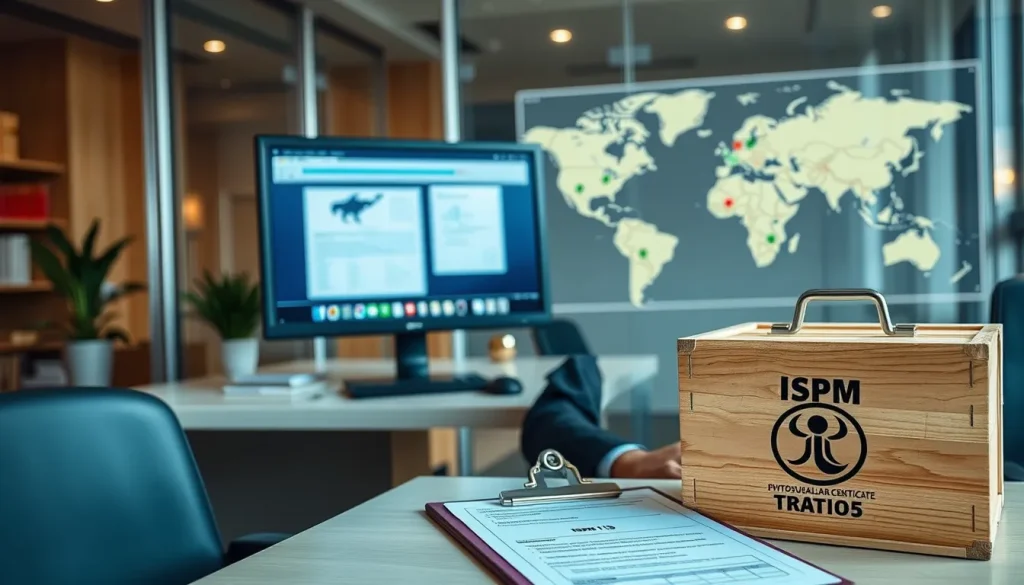
In the global trade of plants, seeds, and agricultural commodities, a customs broker does far more than clear tariffs. They interpret phytosanitary regulations, coordinate with National Plant Protection Organizations (NPPOs), and ensure that every shipment meets International Plant Protection Convention (IPPC) standards. For exporters, importers, freight forwarders, and students of agriculture, understanding the broker’s role is essential to avoid delays, fines, or the outright seizure of goods.
Overview
A customs broker is a licensed professional who acts as an intermediary between the trader (exporter or importer) and the customs authority of the destination country. In the context of plant‑health trade, the broker also liaises with the NPPO, the International Plant Protection Convention (IPPC), and any relevant quarantine agencies. Their core responsibilities include:
- Classifying the commodity under the correct HS code and ISPM standard.
- Preparing and submitting the phytosanitary certificate (PC) and accompanying documents.
- Advising on treatment requirements, inspection timing, and packaging standards.
- Communicating inspection outcomes and handling corrective actions.
By consolidating these tasks, the broker reduces the risk of non‑compliance and accelerates market access.
Why it matters (real stakes for exporters/importers)
Non‑compliance can have severe financial and reputational consequences:
- Delays: A missing or inaccurate phytosanitary certificate can hold cargo at the border for days or weeks.
- Fines & penalties: Many jurisdictions impose per‑day penalties for non‑conforming shipments.
- Product loss: Perishable plant material may become unsellable after prolonged detention.
- Trade bans: Repeated violations can trigger country‑wide suspensions for the exporter.
Customs brokers mitigate these risks by ensuring that every regulatory box is checked before the cargo moves.
How it works
The broker’s workflow follows a logical sequence that aligns with both customs law and plant‑health regulations:
- Pre‑export consultation: Review the commodity, destination, and any quarantine restrictions.
- Document preparation: Gather commercial invoice, packing list, origin certificate, and request a phytosanitary certificate from the exporting NPPO.
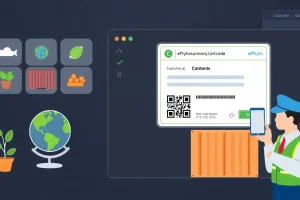
- Entry filing: Submit the electronic customs entry (e‑entry) and attach all supporting documents.
- Customs and NPPO inspection: Coordinate inspection dates and provide the inspector with the required samples.
- Release or corrective action: If cleared, the broker arranges final release; if rejected, they manage re‑treatment or amendment of documents.
Throughout, the broker maintains a digital audit trail to satisfy both customs and plant‑health auditors.
Regulatory authority & contact
The primary authorities governing plant‑health trade are:
| Authority | Role | Contact (example) |
|---|---|---|
| International Plant Protection Convention (IPPC) | Sets global standards (ISPMs) and accredits NPPOs. | secretariat@ippc.int |
| National Plant Protection Organization (NPPO) | Issues phytosanitary certificates, enforces national quarantine. | Phone: +1‑555‑123‑4567 (US USDA‑APHIS) |
| Customs Authority (e.g., U.S. Customs and Border Protection) | Clears goods for import/export, enforces tariff and trade law. | CBP Info Line: 1‑877‑227‑5511 |
Customs brokers must stay current with each authority’s updates; most NPPOs provide email alerts and a web portal for certificate requests.
Import/export procedure
Below is a high‑level flowchart that integrates customs and phytosanitary steps:
- Export‑side NPPO issues a Phytosanitary Certificate (PC) based on inspection.
- Broker files the electronic customs entry, attaching the PC, commercial invoice, and packing list.
- Import‑side customs reviews the entry; if a plant‑health check is required, the broker coordinates with the destination NPPO.
- Inspection occurs; the commodity is either cleared, placed under quarantine, or returned for treatment.
- Upon clearance, the broker arranges final delivery to the importer.
Any deviation from this sequence can trigger a “hold” status, leading to additional fees and possible re‑export.
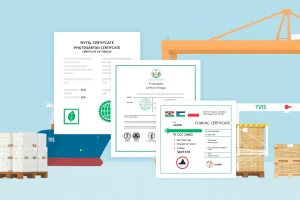
Required documents
Missing or incorrectly completed paperwork is the most common cause of rejection. The broker must ensure the following are present and accurate:
- Phytosanitary Certificate (PC): Issued by the exporting NPPO, referencing the correct ISPM standard.
- Commercial Invoice: Includes HS code, value, and description of the plant material.
- Packing List: Details container numbers, weight, and any treatment marks.
- Certificate of Origin (if required): Demonstrates the source country for preferential tariffs.
- Import Permit (destination‑specific): Some countries require a pre‑issued permit before entry.
- Treatment Certificate: Evidence of fumigation, heat treatment, or other phytosanitary measures.
All documents should be submitted in the format demanded by the destination customs system (e‑APIS, CHIEF, etc.).
Step‑by‑step checklist (How‑to trigger)
Use this checklist as a pre‑flight plan before the cargo leaves the export warehouse:
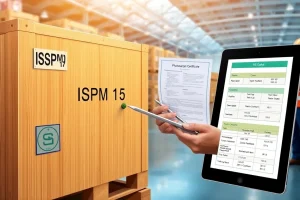
- Confirm the commodity’s ISPM classification (e.g., ISPM 15 for wood packaging).
- Verify the destination country’s import restrictions via the NPPO portal.
- Request a Phytosanitary Certificate at least 5 business days before shipment.
- Prepare commercial invoice and packing list with exact HS codes.
- Enter the shipment into the electronic customs system and attach PDFs of all documents.
- Schedule the customs/NPPO inspection window and notify the carrier.
- Obtain inspection results; if “non‑conforming,” arrange corrective treatment.
- Confirm release in the customs portal and issue the final delivery order.
Completing each step reduces the probability of a border hold to less than 2 % for seasoned brokers.
Common mistakes & rejection reasons
Even experienced brokers occasionally slip. The most frequent errors include:
- Incorrect HS code: Leads to the wrong regulatory pathway.
- Missing signature or seal on the PC: Causes immediate rejection.
- Failure to declare treatment type: Triggers quarantine until proof is supplied.
- Out‑of‑date certificates: Most PCs are valid for 30 days; older documents are invalid.
- Improper packaging marks (e.g., ISPM 15 heat‑treatment stamp omitted): Results in cargo being sent back for re‑packaging.
Addressing these pitfalls early saves time and money.
Requirements & standards (cite primary source: IPPC/NPPO)
The International Plant Protection Convention (IPPC) publishes International Standards for Phytosanitary Measures (ISPMs) that form the legal backbone for customs brokers. Key references include:
International Standard for Phytosanitary Measures No. 15 (ISPM 15) – Regulates wood packaging material to prevent the spread of wood‑boring pests. Source: IPPC, 2023 Revision.
International Standard for Phytosanitary Measures No. 12 (ISPM 12) – Provides guidelines for the issuance of Phytosanitary Certificates. Source: IPPC, 2022.
Nationally, each NPPO may add supplemental requirements. For example, the United States Department of Agriculture’s Animal and Plant Health Inspection Service (USDA‑APHIS) mandates an additional Declaration of Treatment for certain high‑risk fruits (24 CFR 319). Brokers must reference both the IPPC ISPMs and the destination NPPO’s “Import Requirements Manual.”
Real‑world example/scenario
Scenario: An Australian exporter ships fresh mangoes to the United Arab Emirates (UAE). The UAE NPPO requires a phytosanitary certificate confirming a pre‑export hot‑water treatment (HWT) at 55 °C for 30 minutes.
The customs broker performed the following actions:
- Contacted the Australian NPPO to schedule the HWT and request a PC that cites ISPM 12.
- Ensured the commercial invoice listed HS code 080450 (Mangoes, fresh).
- Uploaded the PC, treatment certificate, and invoice into the UAE’s e‑customs portal 48 hours before departure.
- Coordinated with the carrier to present the documents to the UAE quarantine officer on arrival.
- When the officer flagged a missing “treatment seal” on the crate, the broker provided a scanned copy of the seal verification within 2 hours, preventing a 3‑day detention.
The cargo cleared without penalty, demonstrating how proactive broker engagement can turn a potential rejection into a smooth release.
Conclusion
A customs broker sits at the nexus of trade law and plant‑health science. By mastering the ISPM standards, maintaining close contact with NPPOs, and rigorously managing documentation, brokers protect exporters and importers from costly delays and regulatory sanctions. Whether you are a seasoned freight forwarder or a student studying phytosanitary compliance, understanding the broker’s responsibilities equips you to navigate the complex world of international plant‑health trade with confidence.
| Quick Facts |
|---|
| Average clearance time with a broker: 12‑24 hours |
| Typical PC validity period: 30 days |
| Key ISPM standards for brokers: ISPM 12, ISPM 15, ISPM 31 |
| Common penalty for missing PC: US$200 per day (varies by country) |
| Number of NPPOs worldwide: 180+ |
FAQ
Do I need a customs broker for every plant‑health shipment?
While not legally required in all jurisdictions, a broker greatly reduces the risk of non‑compliance, especially for high‑value or perishable commodities.
How long before shipment should I request a phytosanitary certificate?
At least 5 business days, allowing time for inspection, issuance, and any required treatment verification.
Can a broker amend a rejected phytosanitary certificate?
The broker can coordinate corrective actions (e.g., re‑treatment) and submit a revised certificate, but the original PC must be voided by the issuing NPPO.





Leave a Reply