Short Answer
In an era of ever‑growing global supply chains, the International Standards for Phytosanitary Measures No. 15 (ISPM 15) is the single most important rule governing the safe movement of wood packaging material (WPM). Whether you ship pallets, crates, or dunnage from China to the United States, from Brazil to the EU, you must prove that the wood has been treated to kill pests that could hitchhike across borders. This article provides a plain‑English, encyclopedia‑style overview of ISPM 15, covering why it matters, how it works, the exact steps you need to follow, and the most common reasons shipments are rejected.
Overview
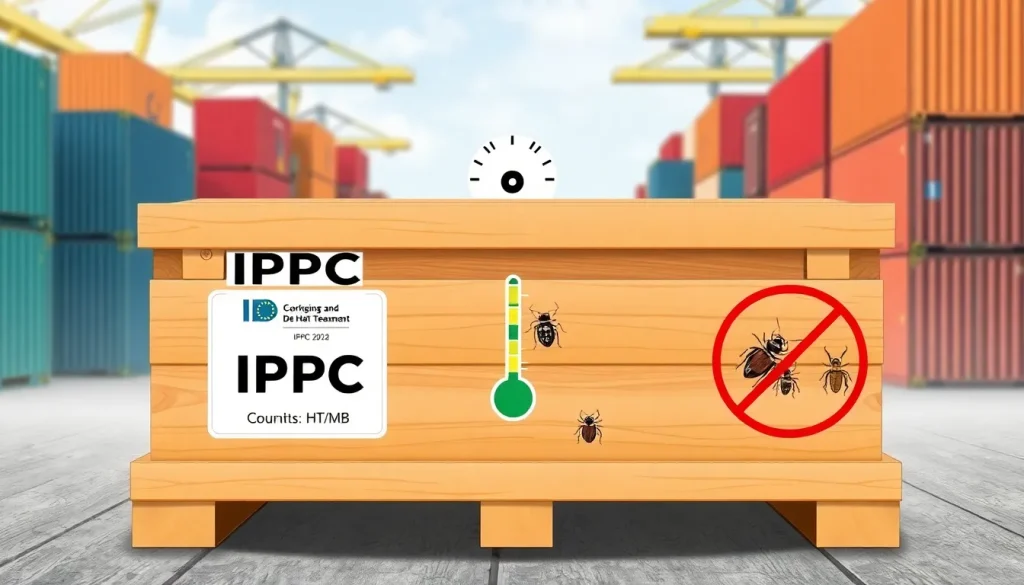
ISPM 15 is an international phytosanitary standard developed by the International Plant Protection Convention (IPPC). It mandates that all wood packaging material used in international trade be either heat‑treated (HT) or fumigated with methyl bromide (MB) and marked with the internationally recognised IPPC Mark. The goal is to prevent the accidental introduction of invasive wood‑boring insects such as the Asian long‑horned beetle (Anoplophora glabripennis) and the pine wood nematode (Bursaphelenchus xylophilus).
Key points:
- Applies to all solid wood, wood chips, and bark used as packaging, but not to pallets made of plastic, metal, or engineered wood (e.g., plywood) that meet other criteria.
- Treatment must be performed by an approved provider and documented on a Phytosanitary Certificate or a Wood Packaging Material (WPM) Certificate.
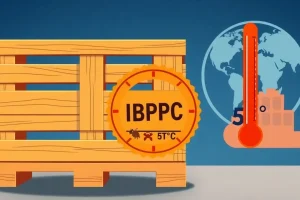
- Each treated piece must display the IPPC Mark:
IPPC+ country code + treatment code (HT or MB) + unique identifier.
Why It Matters (Real Stakes for Exporters/Importers)
Non‑compliance can halt shipments, trigger costly re‑inspection, and expose companies to severe penalties.
- Economic impact: A single rejected container can cost $5,000–$15,000 in demurrage, storage, and re‑treatment fees.
- Regulatory sanctions: Many countries impose fines up to US$50,000 per violation and may ban future imports from the offending exporter.
- Environmental risk: Introduction of invasive pests can devastate forests, agriculture, and native ecosystems, leading to billions in control costs.
- Reputational damage: Repeated refusals erode buyer confidence and can lead to loss of market share.
For freight forwarders and customs brokers, understanding ISPM 15 is a core competency that reduces delays and protects clients from unexpected expenses.
How It Works
ISPM 15 compliance follows a four‑step cycle:
- Inspection of raw wood: Verify that the wood is solid, untreated, and free of visible pests.
- Treatment: Apply either heat treatment (minimum core temperature 56 °C for at least 30 minutes) or methyl bromide fumigation (minimum dosage 30 g m⁻³ for 24 hours).
- Marking: Affix the IPPC Mark on each piece of WPM. The mark includes:
- IPPC logo
- Two‑letter ISO country code (e.g.,
CNfor China) - Treatment code (HT or MB)
- Unique serial number of the treatment facility
- Documentation: Issue a Phytosanitary Certificate (or WPM Certificate) that records the treatment details, date, and certifying authority.
Customs officers at the port of entry verify the mark and the certificate before allowing the cargo to proceed.
Regulatory Authority & Contact
The IPPC sets the global standard, but each National Plant Protection Organization (NPPO) enforces it within its jurisdiction. Below is a non‑exhaustive list of key contacts:
| Country / Region | NPPO / Agency | Website | Contact Email |
|---|---|---|---|
| United States | USDA APHIS Plant Protection and Quarantine | aphis.usda.gov | ppq.help@aphis.usda.gov |
| European Union | European Commission – Plant Health | ec.europa.eu/food/plant | planthealth@ec.europa.eu |
| Canada | CFIA – Plant Health | inspection.gc.ca | planthealth@inspection.gc.ca |
| Australia | DAFF – Biosecurity | agriculture.gov.au/biosecurity | biosecurity@agriculture.gov.au |
Exporters should keep the contact details of the destination NPPO handy for pre‑clearance queries.
Import/Export Procedure
Below is a high‑level flowchart that applies to most trade routes:
- Pre‑shipment planning: Confirm that the supplier uses an IPPC‑approved treatment provider.
- Treatment & marking: Provider applies HT or MB and affixes the IPPC Mark.
- Certificate issuance: The NPPO of the exporting country issues a Phytosanitary Certificate (or WPM Certificate) within 7 days of treatment.
- Booking & documentation upload: Freight forwarder uploads the certificate to the carrier’s electronic system.
- Customs entry: Importing country’s customs officer scans the IPPC Mark and matches it to the certificate.
- If matched, the cargo is released.
- If mismatched or missing, the shipment is detained for inspection.
- Post‑entry monitoring: Some countries require random sampling of WPM for laboratory verification.
Required Documents
Documents must be presented in English (or accompanied by a certified translation) and must include:
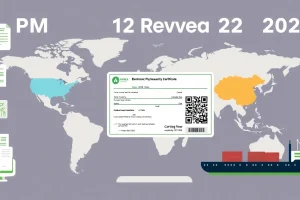
- Phytosanitary Certificate (PC) or WPM Certificate: Official form issued by the exporting NPPO, indicating treatment type, date, and certifier’s signature.
- Commercial Invoice: Shows the description of the goods and the type of WPM used.
- Bill of Lading/Air Waybill: Must reference the presence of treated wood.
- IPPC Mark photographs (optional but recommended): Clear images of the mark on a representative sample of the packaging.
Electronic submission is accepted in most major ports; however, a hard copy may be required for manual inspections.
Common Rejection Reasons at the Border
Even minor oversights can trigger a full inspection. The most frequent causes are:
- Missing or illegible IPPC Mark: Faded ink, torn stickers, or placement on hidden surfaces.
- Incorrect treatment code: Using MB when the destination requires HT, or vice‑versa.
- Certificate mismatch: Date on the certificate does not correspond with the treatment date on the mark.
- Use of prohibited wood species: Certain high‑risk species (e.g., Pinus spp. from specific regions) are banned regardless of treatment.
- Incomplete paperwork: Missing signature, inaccurate exporter name, or absent transport document reference.
Customs may also detain shipments for random sampling if the importer has a history of non‑compliance.
Requirements & Standards (Cited Sources)
The core regulatory language is found in:
International Plant Protection Convention (IPPC). ISPM 15 – Regulation of Wood Packaging Material in International Trade. Revised 2022. https://www.ippc.int
U.S. Department of Agriculture, Animal and Plant Health Inspection Service. Regulation of Wood Packaging Material (ISPM 15). 2023.
European Commission. EU Plant Health Regulation – Annex IX (ISPM 15). 2021.
Key standards extracted from the above documents:
- Heat treatment: Minimum core temperature of 56 °C (132.8 °F) for a minimum of 30 minutes, measured with calibrated thermocouples.
- Methyl bromide fumigation: Minimum dosage of 30 g m⁻³ for at least 24 hours at 15 °C–30 °C, with a post‑treatment aeration period of 48 hours.
- Marking specifications: 100 mm × 35 mm rectangular stamp, legible from 30 cm distance, placed on a visible surface of each WPM unit.
- Certification validity: Certificate must be issued within 30 days before the date of shipment.
Step‑by‑Step Checklist (How to Trigger Compliance)
- Identify the wood packaging material – Confirm it is solid wood, not engineered alternatives.
- Select an approved treatment provider – Verify provider’s certification number against the IPPC list.
- Schedule treatment – Provide the provider with shipment date, wood species, and destination country.
- Obtain treatment records – Receive a treatment report showing temperature logs (HT) or fumigation dosage (MB).
- Apply the IPPC Mark – Ensure the mark includes correct country code, treatment code, and unique identifier.
- Request the Phytosanitary Certificate – Submit treatment report to the exporting NPPO; obtain the official certificate.
- Attach documentation to the shipment – Load the certificate, invoice, and bill of lading; upload electronic copies to the carrier.
- Verify mark visibility before loading – Take photos of the mark on a sample piece for the carrier’s records.
- Prepare for possible inspection – Keep original certificates and treatment logs accessible at the destination port.
- Record keeping – Store all documents for a minimum of 5 years for audit purposes.
Following this checklist reduces the likelihood of detention by >90 % according to USDA data (2022).
Common Mistakes & Rejection Reasons (Expanded)
Even seasoned exporters slip up. Below are the top five pitfalls and corrective actions:
| Mistake | Impact | Corrective Action |
|---|---|---|
| Using recycled pallets without re‑treatment | Immediate detention, possible fines | Retreat or replace with certified new pallets |
| Mark placed on the underside of a pallet | Mark not visible to customs scanner | Move mark to an exposed surface; photograph for evidence |
| Certificate date older than 30 days | Certificate considered invalid | Schedule treatment closer to shipment date |
Incorrect country code (e.g., using CN for a Chinese‑origin pallet shipped from Hong Kong) |
Mismatch triggers manual review | Use the code of the actual exporting NPPO |
| Failure to declare WPM on the commercial invoice | Mis‑declaration leads to penalties | Include a line item: “Treated wood packaging – ISPM 15 compliant” |
Real‑World Example/Scenario
Scenario: A Brazilian coffee exporter ships a 40‑ft container to the United Kingdom. The pallet supplier in Brazil treats the pallets with heat (HT) but forgets to affix the IPPC Mark on two of the pallets. Upon arrival at Felixstowe, a UK Border Force officer scans the container and notices the missing marks.
Outcome: The container is detained. The importer must provide photographic proof of treatment for the two unmarked pallets, arrange a re‑treatment at a UK‑approved facility, and pay a £1,200 detention fee. The shipment is released after 48 hours.
Lesson Learned: Every single unit of wood packaging must carry the mark; a single oversight can delay an entire shipment and generate avoidable costs.
Conclusion
ISPM 15 is a cornerstone of global plant‑health security and a practical requirement for anyone moving goods across borders. By understanding the rationale, adhering to the treatment and marking standards, and keeping meticulous documentation, exporters, importers, customs brokers, and freight forwarders can avoid costly delays and contribute to the protection of worldwide ecosystems. Use the checklist and avoid the listed common mistakes, and you’ll keep your supply chain moving smoothly.
FAQ
Can engineered wood such as plywood be used without ISPM 15 treatment?
Plywood, OSB, and other engineered wood products are exempt from ISPM 15 only if they meet specific criteria (e.g., no bark, no solid wood cores). Otherwise, they must be treated and marked like solid wood.
What should I do if my shipment is detained for a missing IPPC mark?
Provide proof of treatment (temperature logs or fumigation records) and either re‑mark the pallets on site or arrange re‑treatment at an approved facility. Pay any detention fees and submit a corrective action report to the importing NPPO.
Is methyl bromide still allowed for ISPM 15 compliance?
Yes, but only in countries that have retained an exemption under the Montreal Protocol. Many jurisdictions now prefer heat treatment due to environmental restrictions on methyl bromide.






Leave a Reply