Short Answer
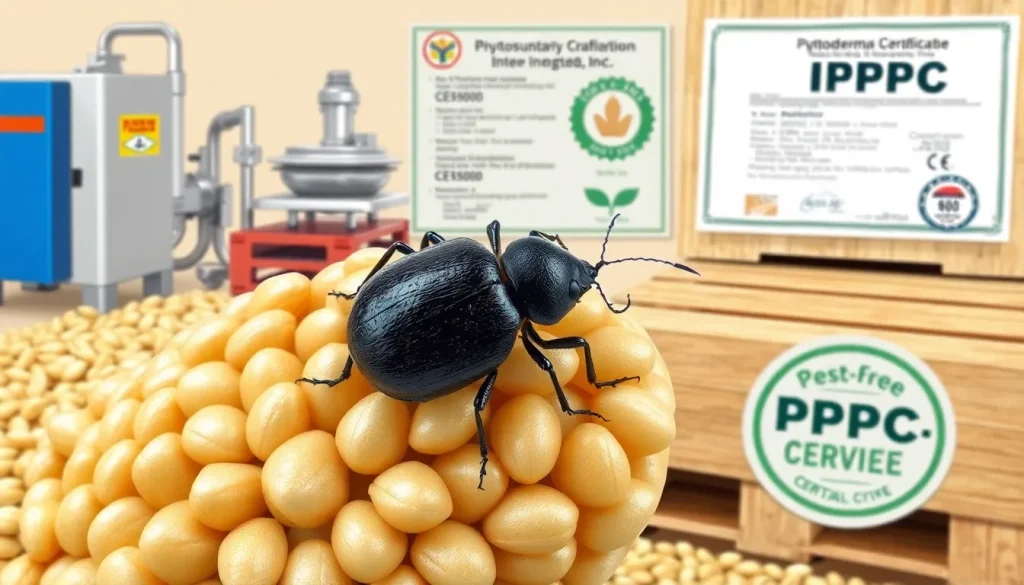
The Khapra beetle (Trogoderma granarium) is notorious for its ability to survive for years without food, making it a high‑risk pest for international trade in grains, dried fruits, and other stored commodities. Because many countries list it as a quarantine pest, shipments that are not properly inspected, treated, or documented can be delayed, destroyed, or subject to heavy fines. This pillar article provides a fast‑reference, encyclopedia‑style profile for exporters, importers, customs brokers, freight forwarders, and agriculture students who need reliable, plain‑English answers.
Overview
The Khapra beetle is a small, dark‑brown to black beetle measuring 1.5–3 mm in length. It belongs to the family Dermestidae and feeds primarily on dried plant material, including wheat, rice, maize, nuts, and spices. The larvae are the damaging stage; they can chew through stored grain, reducing both quantity and quality. The beetle’s ability to remain dormant for up to 5 years in low‑humidity environments makes it exceptionally hard to eradicate once established.
Why It Matters
For exporters and importers, the stakes are concrete:
- Economic loss: Infestations can destroy up to 30 % of a consignment, leading to direct product loss.
- Regulatory penalties: Many nations impose fines ranging from USD 5,000 to USD 250,000 per shipment found infested.
- Market access: A single rejection can trigger a temporary ban on a supplier’s entire product line.
- Reputation: Repeated non‑compliance erodes trust with buyers and may lead to loss of long‑term contracts.
Understanding the Khapra beetle’s regulatory framework is therefore essential to maintaining uninterrupted trade flows.
Scientific Classification
| Rank | Name |
|---|---|
| Kingdom | Animalia |
| Phylum | Arthropoda |
| Class | Insecta |
| Order | Coleoptera |
| Family | Dermestidae |
| Genus | Trogoderma |
| Species | Trogoderma granarium (Eichhoff, 1886) |
It is listed under ISPM 15 as a “Regulated Pest” and under most NPPOs as a Category A quarantine organism.
Host Range
The Khapra beetle attacks a broad spectrum of commodities. The most common hosts include:
- Wheat, rye, barley, and other cereals
- Rice (both brown and polished)
- Maize and sorghum
- Dried pulses (lentils, peas, chickpeas)
- Spices (cumin, coriander, pepper)
- Nuts and dried fruits (almonds, raisins, dates)
- Animal feeds and pet foods containing plant material
Because the pest can survive on very low‑nutrient substrates, even “non‑food” items such as packaging material, pallets, and cardboard are potential vectors.
Distribution & Regulatory Status
The Khapra beetle is native to the Indian sub‑continent but has spread to parts of the Middle East, Africa, and Southeast Asia. Its status by region (according to the IPPC and individual NPPOs) is summarized below:
| Region | Regulatory Status | Notes |
|---|---|---|
| South Asia (India, Pakistan, Bangladesh) | Endemic – A1 (Presence confirmed) | Strict domestic control programs |
| Middle East (UAE, Saudi Arabia) | A2 (Reported, not established) | Import bans on high‑risk commodities |
| Africa (Kenya, Tanzania) | A2 | Surveillance zones established |
| Europe (EU) | A2 | Phytosanitary certificate required; inspections mandatory |
| North America (USA, Canada) | A2 | USDA‑APHIS requires treatment and certification |
| Australia & New Zealand | A2 | Import permits and pre‑export treatment mandated |
Because the pest is listed as a Category A quarantine pest under the International Plant Protection Convention (IPPC), any country can invoke emergency measures if an infestation is detected.
Symptoms & Identification
Early detection relies on recognizing characteristic signs:
- Larval galleries: Fine, silk‑like tunnels in stored grain, often accompanied by frass (fine powdery waste).
- Live larvae: Cream‑white, C‑shaped, up to 5 mm long, with brown head capsules.
- Adult beetles: Small, oval, dark brown, with a distinctive ridge on the pronotum.
- Odor: Heavily infested batches may emit a faint, musty smell.
Professional identification is usually confirmed by a certified entomologist using a stereomicroscope. Photographic guides are available from the USDA‑APHIS and the EPPO (European and Mediterranean Plant Protection Organization).
Control and Treatment Options
Effective control combines preventive measures with approved treatments:
- Fumigation: Methyl bromide (if permitted) or phosphine gas applied according to IPPC Annex II guidelines.
- Heat treatment: Raising commodity temperature to 55 °C for at least 30 minutes kills all life stages.
- Cold treatment: Exposure to –20 °C for a minimum of 48 hours is effective for certain grain types.
- Integrated pest management (IPM): Regular cleaning of storage facilities, monitoring with pheromone traps, and maintaining low humidity (< 60 %).
All treatments must be documented on a phytosanitary certificate and, where required, validated by an accredited laboratory.
Requirements & Standards
“Export shipments of commodities listed as high‑risk for Khapra beetle must be accompanied by a Phytosanitary Certificate stating that the consignment has been treated in accordance with ISPM 15, Annex II, and that post‑treatment inspection found no live specimens. Failure to comply will result in rejection under the importing country’s quarantine regulations.” – IPPC, International Standards for Phytosanitary Measures (2023)
The core standards that exporters must meet are:
- ISPM 15 (Regulation of wood packaging material): All wooden pallets, crates, and dunnage must be heat‑treated (HT) or fumigated with methyl bromide (MB) and stamped with the IPPC mark.
- ISPM 2 (Pest risk analysis): Conduct a pest risk analysis for the specific commodity and destination.
- NPPO‑specific import requirements: For example, the United States Department of Agriculture (USDA‑APHIS) requires a Pre‑Export Phytosanitary Inspection and a Certificate of Treatment for grain destined for the Gulf Coast.
Key documents include:
- Phytosanitary Certificate (issued by the exporting country’s NPPO)
- Treatment certification (heat, fumigation, or phosphine)
- Wood packaging material (WPM) certification (IPPC mark)
- Import permit (if required by the destination country)
Step‑by‑Step Checklist for Exporters
- Determine destination requirements: Review the importing NPPO’s website for Khapra‑related restrictions.
- Conduct a pre‑export inspection: Have a certified inspector examine the commodity for any signs of infestation.
- Select an approved treatment: Choose heat, phosphine, or methyl bromide based on commodity tolerance.
- Record temperature, duration, and gas concentration.
- Obtain treatment certification: The treatment provider issues a certificate signed by an authorized officer.
- Secure IPPC‑marked wood packaging: Ensure pallets are HT or MB‑treated and display the IPPC stamp.
- Apply for a phytosanitary certificate: Submit inspection and treatment records to the NPPO.
- Include the commodity description, HS code, and shipment details.
- Attach all documents to the commercial invoice: Include the certificate, treatment record, and WPM mark copy.
- Electronic submission is accepted in most jurisdictions.
- Notify the freight forwarder: Provide copies of all certificates for customs filing.
- Monitor arrival: Arrange for a post‑arrival inspection if the destination requires it.
- Record‑keep: Retain all paperwork for at least five years for audit purposes.
Common Mistakes & Rejection Reasons
Even experienced exporters can slip up. The most frequent causes of shipment denial are:
- Missing or expired phytosanitary certificate: Certificates must be dated within 30 days of shipment (or as specified by the importing NPPO).
- Improper wood packaging: Using untreated pallets will trigger immediate rejection under ISPM 15.
- Inadequate treatment documentation: Failure to record temperature, exposure time, or gas concentration.
- Undeclared commodity composition: Mixing low‑risk and high‑risk items without separate certification.
- Post‑treatment re‑infestation: Storing treated grain in a contaminated warehouse before export.
Addressing these points in advance can reduce the risk of costly delays.
Conclusion
The Khapra beetle remains a high‑impact quarantine pest that can jeopardize international trade if not properly managed. By following the regulatory standards set out by the IPPC, adhering to NPPO‑specific requirements, and using the checklist above, exporters and importers can protect their supply chains, maintain market access, and avoid expensive rejections.
FAQ
Do all grain shipments need a Khapra beetle treatment?
Only shipments destined for countries that list the Khapra beetle as a quarantine pest require an approved treatment and a phytosanitary certificate. Always verify the importing NPPO’s specific list.
Can methyl bromide be used for treatment if my destination bans it?
No. If the importing country prohibits methyl bromide, you must use an alternative approved method such as heat treatment or phosphine, as stipulated in the destination’s import regulations.
How long should a phytosanitary certificate remain valid?
Most importing NPPOs require the certificate to be issued within 30 days of shipment, though some allow up to 90 days. Check the exact timeframe in the destination’s import guidelines.






Leave a Reply