Short Answer
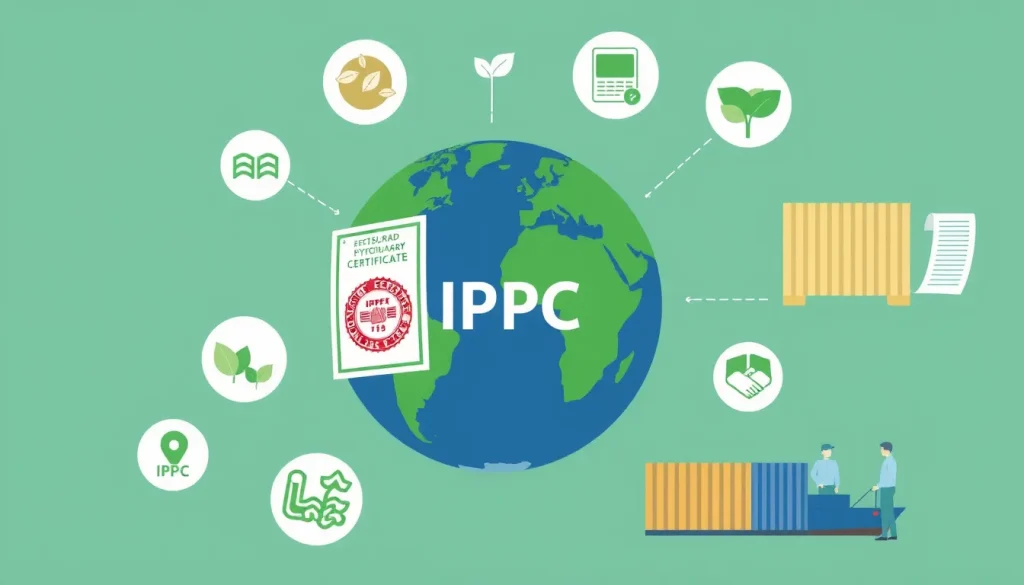
The International Plant Protection Convention (IPPC) is the world’s only treaty dedicated exclusively to safeguarding plants from pests and diseases that travel with international trade. By establishing a uniform set of standards—known as International Standards for Phytosanitary Measures (ISPMs)—the IPPC enables exporters, importers, customs brokers, freight forwarders, and students of agricultural science to move goods safely while protecting ecosystems and economies worldwide.
Overview
The IPPC, adopted in 1951 under the auspices of the Food and Agriculture Organization (FAO) of the United Nations, now binds more than 190 contracting parties. Its core mission is to prevent the introduction and spread of quarantine pests through a globally coordinated system of standards, scientific cooperation, and capacity‑building.
- IPPC = International Plant Protection Convention
- Governing body: Commission on Phytosanitary Measures (CPM)
- Key output: International Standards for Phytosanitary Measures (ISPMs)
- Primary instrument for issuing Phytosanitary Certificates (PCs)
Each member country designates a National Plant Protection Organization (NPPO) that implements IPPC standards domestically and issues the necessary phytosanitary documentation.
Why It Matters (Real Stakes for Exporters & Importers)
Non‑compliance with IPPC standards can shut down supply chains in minutes. The financial and reputational costs are significant:
- Shipment delays or outright rejection at the border.
- Fines ranging from US$5,000 to over US$100,000, depending on the pest and country.
- Destruction of consignments—often at the exporter’s expense.
- Loss of market access for years if a pest is found to have entered a new region.
For example, the 2014 detection of the citrus greening bacterium Candidatus Liberibacter asiaticus in a shipment to the EU led to a 12‑month ban on all citrus imports from the originating country, costing producers over US$200 million.
How It Works
The IPPC operates through a three‑layer framework:
- International Standards (ISPMs) – technical rules that all parties agree to follow.
- National Implementation – each NPPO adopts the ISPMs into national law, issues permits, and conducts inspections.
- Verification & Enforcement – customs authorities check the accompanying phytosanitary certificate and may request additional evidence or samples.
When a consignment is prepared for export, the exporter contacts the NPPO of the origin country. After inspection, the NPPO issues a Phytosanitary Certificate that references the specific ISPM(s) satisfied (e.g., ISPM 15 for wood packaging, ISPM 36 for seed health). The certificate travels with the goods, and the importing NPPO validates its authenticity before allowing entry.
Regulatory Authority & Contact
The IPPC Secretariat is located in Rome, Italy, and provides the following key contacts:
| Entity | Role | Contact |
|---|---|---|
| IPPC Secretariat | Global coordination, ISPM development | email: ippc@fao.org | phone: +39 06 57051 |
| FAO – Plant Protection Division | Technical assistance, capacity building | email: plantprotection@fao.org |
| National Plant Protection Organization (NPPO) | Issuance of Phytosanitary Certificates | Varies by country – see IPPC NPPO list |
Exporters should keep the NPPO contact details for the origin country handy, as rapid clarification can prevent costly re‑inspections.
Import/Export Procedure
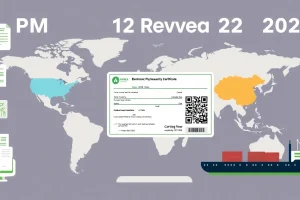
The typical flow for a plant‑based commodity is illustrated below:
- Pre‑export assessment: Verify that the commodity is not prohibited and that any required treatments (e.g., heat, fumigation) are approved under the relevant ISPM.
- Request inspection: Submit a formal request to the origin NPPO, providing product description, HS code, and intended destination.
- NPPO inspection & sampling: An authorized plant health inspector examines the shipment, collects samples if needed, and records findings.
- Phytosanitary Certificate issuance: If the shipment meets all standards, the NPPO issues a PC that cites the applicable ISPM numbers.
- Freight forwarding: Attach the PC to the commercial invoice and the Bill of Lading. Ensure the certificate is legible and stored in a waterproof pouch.
- Border entry: Importing customs or the NPPO scans the PC, may request an on‑site inspection, and then releases the cargo.
Any deviation—missing signature, wrong ISPM reference, or expired certificate—triggers a rejection.
Required Documents
While the Phytosanitary Certificate is the centerpiece, other paperwork often accompanies it:
- Commercial Invoice (HS code, value, origin)
- Bill of Lading or Air Waybill
- Import Permit (required by many countries for regulated pests)
- Treatment certificates (e.g., fumigation, heat treatment) when ISPM 15 or ISPM 36 applies
- Laboratory test results for seed health or soil‑borne pathogens (ISPM 36, ISPM 31)
All documents must be in the language required by the importing country—often English, French, or the local language—unless a certified translation is provided.
Common Rejection Reasons at the Border
Importing authorities most frequently cite the following issues:
| Reason | Typical Remedy |
|---|---|
| Missing or outdated Phytosanitary Certificate | Obtain a fresh PC from the NPPO before shipment. |
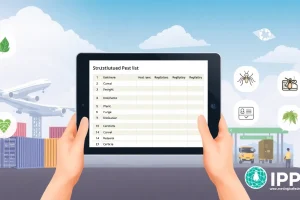
| Incorrect ISPM reference | Check the latest ISPM list; amend the PC to cite the correct standard. |
| Evidence of pest presence during inspection | Conduct treatment, re‑inspect, and re‑issue a corrected PC. |
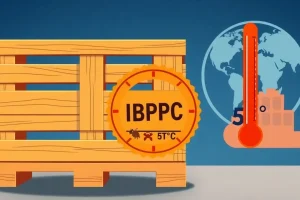
| Improper packaging (e.g., untreated wood) | Apply ISPM 15‑approved heat‑treatment or mark packaging with the IPPC symbol. |
| Undeclared commodity or inaccurate HS code | Submit a revised commercial invoice with correct classification. |
Timely communication with the importing NPPO can sometimes resolve minor discrepancies without destroying the cargo.
Requirements & Standards (Primary Sources)
The IPPC’s authority rests on three cornerstone documents:
- IPPC Convention (1951) – legal treaty establishing the partnership.
- International Standards for Phytosanitary Measures (ISPMs) – current version accessed at ippc.int/standards. Key ISPMs for trade include:
- ISPM 15 – Regulation of wood packaging material.
- ISPM 36 – Pest risk analysis for regulated pests.
- ISPM 31 – Guidelines for seed health testing.
- FAO/WHO International Plant Health (IPH) Guidelines – supplement ISPMs with practical testing protocols.
“All phytosanitary certificates issued under the IPPC must reference the specific ISPM(s) met and be signed by an authorized NPPO official” (IPPC, 2023, Article 5).
Exporters should always verify the latest edition of each ISPM, as updates are published approximately every two years.
Step‑by‑Step Checklist (How to Trigger a Valid PC)
- Identify the commodity’s HS code and confirm that the destination country permits its entry.
- Review the relevant ISPM(s) on the IPPC website.
- Arrange any required pre‑export treatments (e.g., heat‑treat wood, fumigate soil).
- Contact the origin NPPO with a complete application package (invoice, treatment records, sample analysis).
- Schedule the on‑site inspection; ensure the shipment is accessible and free of visible pests.
- Receive the Phytosanitary Certificate; verify:
- Correct NPPO seal and signature.
- Accurate ISPM references.
- Valid date (usually within 30 days of shipment).
- Attach the PC to the Bill of Lading and retain a digital copy for customs brokers.
- Notify the importing NPPO of the shipment’s ETA and provide electronic copies of the PC.
- Monitor the cargo at the port of entry for any additional inspections.
Completing this checklist reduces the likelihood of costly delays.
Real‑World Example: Exporting Fresh Mangoes from Mexico to the EU
Mexico’s NPPO follows ISPM 15 for wooden pallets, ISPM 31 for seed‑borne pathogens, and the EU’s specific requirement for the fruit fly Anastrepha ludens (A1). The exporter:
- Secured a pre‑clearance treatment (cold‑treatment at 1 °C for 14 days).
- Submitted a sample batch to an accredited laboratory for fruit‑fly detection.
- Received a negative test report and requested a phytosanitary inspection.
- Obtained a PC citing ISPM 15, ISPM 31, and the EU’s A1 status for A. ludens.
- Freighted the mangoes in IPPC‑marked pallets; the EU’s NPPO verified the PC on arrival and released the cargo without incident.
This scenario illustrates how strict adherence to IPPC standards enables high‑value perishable trade.
Conclusion
The International Plant Protection Convention is the backbone of safe global plant trade. By understanding its structure, following the step‑by‑step checklist, and keeping documentation flawless, exporters and importers can avoid costly rejections and contribute to worldwide plant‑health security. For students and professionals alike, mastering IPPC compliance is essential to navigating today’s complex agricultural supply chains.
FAQ
Do I need a phytosanitary certificate for every plant product?
Yes. Any commodity that could harbor a regulated pest—live plants, seeds, fruits, wood, or even soil—requires a phytosanitary certificate issued by the exporting country’s NPPO.
Can I use an electronic phytosanitary certificate?
Many countries now accept e‑PCs that meet the IPPC’s electronic‑certificate guidelines (e‑PC). However, you must confirm acceptance with the importing NPPO before shipping.
What happens if my shipment is rejected at the border?
The cargo may be re‑inspected, treated, or destroyed at the exporter’s expense. The NPPO will issue a written rejection notice indicating the specific deficiency, allowing you to correct the issue for future shipments.






Leave a Reply