Short Answer
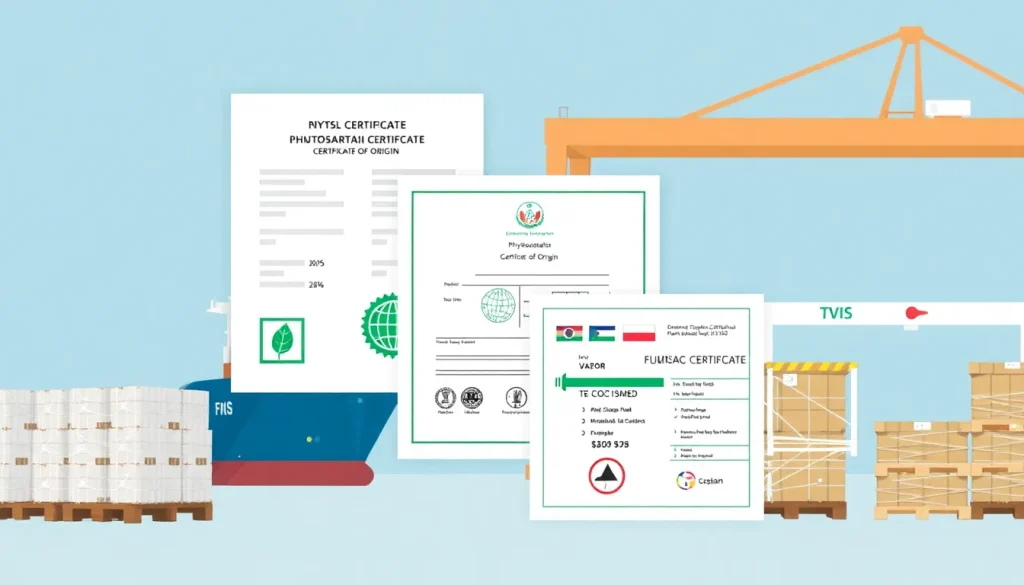
International trade in plants, seeds, fruits, and wood products is tightly regulated to prevent the spread of invasive pests and diseases. Three documents sit at the heart of compliance: the Phytosanitary Certificate (PC), the Certificate of Origin (CO), and the Fumigation Certificate (FC). While they may appear similar, each serves a distinct regulatory purpose, involves different authorities, and carries its own set of requirements. This pillar article breaks down the three certificates, explains why they matter, and provides actionable checklists for exporters, importers, customs brokers, and freight forwarders.
Overview
A quick snapshot of the three certificates:
| Certificate | Primary Purpose | Issuing Authority | Typical Use‑Case |
|---|---|---|---|
| Phytosanitary Certificate (PC) | Confirms that the consignment is free from regulated pests or that required treatments have been applied. | National Plant Protection Organization (NPPO) or delegated agency. | Live plants, seeds, fruits, cut‑flowers, wood packaging material. |
| Certificate of Origin (CO) | States the country where the goods were produced or manufactured. | Chamber of Commerce, Export Promotion Agency, or designated government body. | All goods subject to preferential tariffs, quota rules, or origin‑based trade agreements. |
| Fumigation Certificate (FC) | Documents that a mandatory fumigation (e.g., methyl bromide, phosphine) was performed according to the importing country’s standards. | Authorized fumigation service provider, often inspected by NPPO. | Wood pallets, bulk commodities, soil‑containing shipments. |
Why it matters (real stakes for exporters/importers)
Missing or inaccurate documentation can halt a shipment, trigger costly re‑inspection, or result in outright rejection. The financial impact includes demurrage, storage fees, and potential loss of market credibility.
- Phytosanitary Certificate: Without a valid PC, most importing countries will quarantine or destroy the consignment, violating the SPS (Sanitary and Phytosanitary) Agreement of the WTO.
- Certificate of Origin: Errors can prevent the application of preferential duties under free‑trade agreements, leading to higher customs duties.
- Fumigation Certificate: Failure to provide an FC when required can result in pest infestation, plant health emergencies, and severe penalties.
How it works
Each certificate follows a defined workflow:
- Exporter prepares the commodity and ensures it meets the importing country’s phytosanitary requirements.
- Authorized inspection (NPPO for PC, chamber of commerce for CO, licensed fumigator for FC) verifies compliance.
- Certificate is generated, signed, and attached to the commercial invoice or shipping documents.
- Customs officials at the port of entry review the certificates before release.
Electronic issuance (e‑Phytosanitary) is increasingly common under the IPPC’s ePhyto framework, allowing faster data exchange.
Regulatory authority & contact
The key agencies responsible for each document are listed below. Contact details are illustrative; exporters should verify current information on the respective agency’s website.
| Certificate | Authority | Typical Contact Point | Website |
|---|---|---|---|
| Phytosanitary Certificate | National Plant Protection Organization (NPPO) | Plant Health Officer / Export Certification Unit | https://www.ippc.int |
| Certificate of Origin | National Chamber of Commerce or Export Promotion Agency | Certificate of Origin Desk | https://www.wto.org/english/tratop_e/sps_e/ |
| Fumigation Certificate | Authorized Fumigation Service Provider (often accredited by NPPO) | Licensed Fumigator / QA Manager | https://www.fao.org/phytosanitary |
Required documents
Alongside the primary certificate, the following supporting paperwork is usually required:
- Commercial invoice and packing list.
- Bill of Lading or Air Waybill.
- Import permit or phytosanitary import request (if the destination country requires pre‑approval).
- Treatment records (e.g., heat‑treatment, irradiation) when applicable.
- Laboratory test reports for regulated pathogens (e.g., Xylella fastidiosa).
Common rejection reasons at the border
Customs and plant‑health officers frequently cite the following issues:
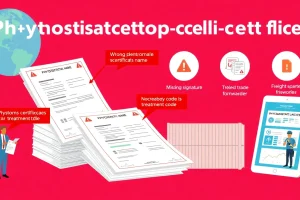
- Missing signature or stamp on the PC/FC.
- Incorrect commodity description that does not match the certificate.
- Expired certificate – most PCs are valid for 30 days from issuance.
- Failure to meet treatment parameters (e.g., temperature, exposure time) documented on the FC.
- Mismatch between CO and declared origin on the commercial invoice.
Requirements & standards (IPPC/NPPO citations)
The international framework is set by the International Plant Protection Convention (IPPC) and implemented by each country’s NPPO.
“All phytosanitary certificates shall be issued in accordance with ISPM 01 (International Standards for Phytosanitary Certification) and shall contain the information listed in Annex A of the standard.”
— IPPC, ISPM 01, 2022 Edition
Fumigation standards are defined in ISPM 15 for wood packaging material and in national phytosanitary regulations for bulk commodities. The WTO SPS Agreement obliges members to accept certificates that meet these internationally recognized standards.
Step‑by‑step checklist (How‑to trigger each certificate)
Use this checklist to ensure nothing is overlooked before shipment.
- Identify the importing country’s plant‑health entry requirements (NPPO website or ePhyto portal).
- Confirm whether a PC, CO, and/or FC is required for the commodity.
- Schedule inspection with the NPPO (or authorized agency) at least 5‑7 working days before export.
- Arrange any mandatory pre‑export treatment (e.g., heat, fumigation) and retain treatment records.
- Obtain the Certificate of Origin from the designated chamber; verify spelling of consignee and HS code.
- Receive the Phytosanitary Certificate; check that the certificate number, date, and signatures are present.
- If fumigation is required, engage a licensed fumigator, conduct the treatment, and receive the Fumigation Certificate with temperature/time data.
- Attach all certificates to the commercial invoice and provide copies to the freight forwarder.
- Enter certificate numbers into the electronic customs filing system (e.g., ACE, CHIEF).
- Retain original certificates for the statutory period (usually 2‑3 years) for audit purposes.
Common mistakes & rejection reasons
Even experienced exporters slip up. Avoid these pitfalls:
- Late application: Submitting a PC after the 30‑day validity window.
- Using an outdated form: Many NPPOs have migrated to e‑Phytosanitary PDFs; old paper forms are rejected.
- Incorrect HS code on CO: Leads to duty mis‑calculation and possible fraud allegations.
- Fumigation performed by non‑licensed personnel: Certificate deemed invalid.
- Failure to translate certificates when required: Some countries (e.g., China, Brazil) demand a certified translation.
Real‑world example/scenario
Scenario: An exporter in Kenya ships 20 tons of fresh mangoes to the European Union.
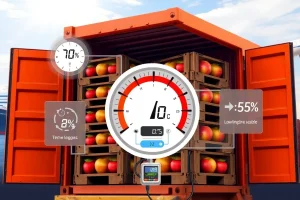
- The EU requires a Phytosanitary Certificate confirming the mangoes are free from Fruit Fly (Ceratitis capitata) and that a pre‑export cold treatment (2 °C for 14 days) was applied.
- The Kenyan NPPO issues the PC after inspecting the cargo and reviewing the treatment log.
- Because the mangoes qualify for the EU‑Kenya preferential trade agreement, a Certificate of Origin is also required to claim reduced duty.
- The pallets used are made of untreated wood; the EU mandates ISPM 15 compliance, so a separate Fumigation Certificate (heat treatment) is obtained for the pallets.
- All three certificates are attached to the Bill of Lading. Upon arrival at Rotterdam, customs cross‑checks the PC, CO, and FC against the import permit. No discrepancies are found; the cargo is released within 24 hours.
This example illustrates how the three certificates work together to satisfy both plant‑health and trade‑policy requirements.
Conclusion
Understanding the distinct roles of the Phytosanitary Certificate, Certificate of Origin, and Fumigation Certificate is essential for seamless international plant‑health trade. By aligning your documentation practices with IPPC standards, NPPO guidelines, and WTO obligations, you reduce the risk of costly delays and protect global agriculture from invasive pests.
FAQ
Can a Phytosanitary Certificate be issued electronically?
Yes. Under the IPPC’s ePhyto framework, many NPPOs issue digital PCs that can be transmitted securely to the importing country's authority.
Do I need a Certificate of Origin for every export shipment?
Only when the destination country applies preferential tariffs, quotas, or origin‑based rules. Check the trade agreement applicable to your commodity.
What happens if my Fumigation Certificate is missing at the port of entry?
Customs may hold the cargo for inspection, order re‑fumigation, or reject the shipment, leading to demurrage charges and possible fines.




Leave a Reply