Short Answer
Exporting plant material—whether fresh produce, seeds, or wood—requires more than a shipping label. Each commodity is subject to a unique set of phytosanitary rules designed to keep invasive pests and diseases out of the destination country. This article provides a practical, step‑by‑step checklist that exporters, importers, customs brokers, freight forwarders, and agriculture students can use to verify commodity‑specific phytosanitary requirements before a shipment leaves the origin country.
Overview
Phytosanitary requirements are the collection of treatments, inspections, certifications, and documentation that a commodity must satisfy to obtain clearance for international trade. They are defined by the International Plant Protection Convention (IPPC) standards (ISPM) and implemented by each National Plant Protection Organization (NPPO). Failure to meet these requirements can result in shipment rejection, costly re‑routing, or fines.
Why it matters
Understanding and applying the correct requirements protects three critical interests:
- Market access: Compliance keeps trade channels open and avoids sudden bans.
- Financial risk: Rejected consignments can cost thousands in re‑inspection, treatment, or disposal.
- Biosecurity: Proper checks prevent the introduction of regulated pests that could devastate local agriculture.
Regulatory authority & contact
The primary bodies responsible for phytosanitary regulation are:
- IPPC – Sets international standards (ISPM) and provides guidance to all parties.
- NPPO of the exporting country – Issues phytosanitary certificates and approves treatments.
- NPPO of the importing country – Defines import requirements, host‑range restrictions, and quarantine measures.
Exporters should keep a contact list for each NPPO involved. Below is a template for a quick‑reference entry:
| Country | NPPO Agency | Phone | Website | |
|---|---|---|---|---|
| United States | USDA‑APHIS | +1‑202‑720‑2791 | aphis.help@usda.gov | https://www.aphis.usda.gov |
| Canada | CFIA | +1‑613‑993‑2011 | plant-health@inspection.gc.ca | https://www.inspection.gc.ca |
Required documents
Most import regimes demand a core set of paperwork. Missing or incomplete documents are the leading cause of border rejection.
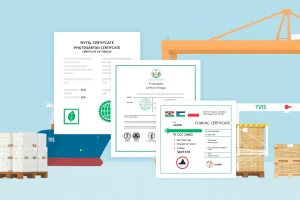
- Phytosanitary Certificate (PC) – Issued by the exporting NPPO, signed by an authorized official.
- Commercial Invoice – Includes commodity description, HS code, quantity, and value.
- Packing List – Details container numbers, weight, and any treatments applied.
- Import Permit (if required) – Granted by the importing NPPO before shipment.
- Treatment Certificate – Evidence of fumigation, heat treatment, or other phytosanitary measures.
Requirements & standards
Each commodity is matched to a specific ISPM standard. The following table shows three common categories and their reference documents:
| Commodity type | Relevant ISPM | Key NPPO guideline |
|---|---|---|
| Fresh fruit (e.g., mangoes) | ISPM 15 (Wood Packaging) | USDA‑APHIS Fruit & Vegetable Import Manual |
| Seeds (e.g., soybean) | ISPM 31 (Seed Health) | FAO Seed Health Guidelines 2022 |
| Wood products (e.g., pallets) | ISPM 15 (Heat‑treated or Methyl bromide) | Canadian CPPC Wood Packaging Standard |
“All consignments of regulated commodities must be accompanied by a phytosanitary certificate that complies with the latest edition of the relevant ISPM and the importing NPPO’s national regulations.” – IPPC, International Standards for Phytosanitary Measures (ISPM) 1, 2023.
Step‑by‑step checklist (How to trigger compliance)
Use this checklist early in the export planning cycle to avoid last‑minute surprises.
- Identify HS code – Use the World Customs Organization (WCO) database to confirm the correct 6‑digit code.
- Consult the importing NPPO – Review the latest import requirements on the official website or via a pre‑export enquiry.
- Determine treatment needs – Match the commodity to the relevant ISPM (e.g., ISPM 15 for wood, ISPM 31 for seeds).
- Arrange inspection – Schedule a pre‑shipment inspection with the exporting NPPO at least 7 days before departure.
- Obtain phytosanitary certificate – Ensure the PC includes the correct commodity description, treatment details, and NPPO stamp.
- Prepare supporting documents – Compile invoice, packing list, import permit, and treatment certificates.
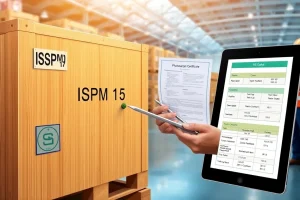
- Verify packaging compliance – Use only ISPM‑15‑certified pallets or heat‑treated containers.
- Notify the freight forwarder – Provide copies of all documents for electronic transmission to the destination customs portal.
- Conduct a final pre‑load check – Confirm that no visible pest symptoms are present and that the seal numbers match the PC.
- Record keeping – Store all documents for a minimum of five years as required by most NPPOs.
Common mistakes & rejection reasons
Even experienced exporters fall into predictable traps. The table below summarizes the most frequent errors and the typical corrective action.
| Issue | Typical rejection | Corrective action |
|---|---|---|
| Incorrect HS code | Mis‑classification leads to wrong requirement set. | Cross‑check with WCO database and update PC. |
| Missing treatment certificate | Importing NPPO cannot verify compliance. | Obtain and attach a signed treatment record. |
| Unapproved packaging | ISPM‑15 non‑compliant pallets. | Replace with heat‑treated or fumigated pallets. |
| Pest symptoms on commodity | Visual inspection fails. | Re‑inspect, treat, or reject shipment before loading. |
| Late document submission | Customs holds shipment for verification. | Submit documents at least 48 h before arrival. |
Real‑world example: Exporting mangoes from Mexico to the EU
Mexico’s mango growers must satisfy the European Union’s Plant Health Regulation (EU) 2016/2031. The steps below illustrate how the checklist is applied in practice.
- HS code 080450 (Mangoes, fresh).
- EU NPPO (DG SANTÉ) requires a phytosanitary certificate stating that the fruit is free of Carposina sasakii and Thaumatotibia leucotreta.
- Treatment: Hot water dip at 53 °C for 30 minutes (EU‑approved).
- Inspection performed by SENASICA (Mexico’s NPPO) 5 days before loading.
- Certificate issued, uploaded to the EU’s TRACES system, and shared with the freight forwarder.
- Shipment cleared at Rotterdam port without incident.
This example demonstrates how a systematic checklist reduces delays and protects market access.
Conclusion
Verifying commodity‑specific phytosanitary requirements before export is not optional—it is a cornerstone of safe, lawful, and profitable international trade. By following the practical checklist outlined above, exporters can anticipate regulatory demands, avoid common pitfalls, and keep their supply chains moving smoothly.
FAQ
How early should I request a phytosanitary certificate?
Request the PC at least 7‑10 business days before the planned shipment date to allow time for inspection, any required treatment, and issuance of the certificate.
What if my commodity has multiple host‑range restrictions?
Identify the most restrictive requirement among all importing NPPOs and comply with it. Clearly list all host‑range statements on the certificate to avoid ambiguity.
Can electronic phytosanitary certificates replace paper copies?
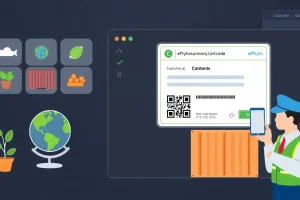
Many regions accept e‑PCs through platforms such as TRACES (EU) or APHIS e‑PC (US), but you must verify acceptance with the importing NPPO and retain a printable backup for customs audits.





Leave a Reply