Short Answer
Wood packaging material (WPM) – pallets, crates, dunnage, and blocks – is the silent carrier of invasive pests that can devastate forests, farms, and economies. While the International Standards for Phytosanitary Measures (ISPM 15) focus on pre‑export treatment, many importing countries now require an additional post‑entry step to verify compliance before the cargo moves inland. This pillar article breaks down the three most widely accepted post‑entry treatments – heat, fumigation, and irradiation – and equips exporters, importers, customs brokers, freight forwarders, and students with the exact steps, documents, and pitfalls to avoid.
Overview
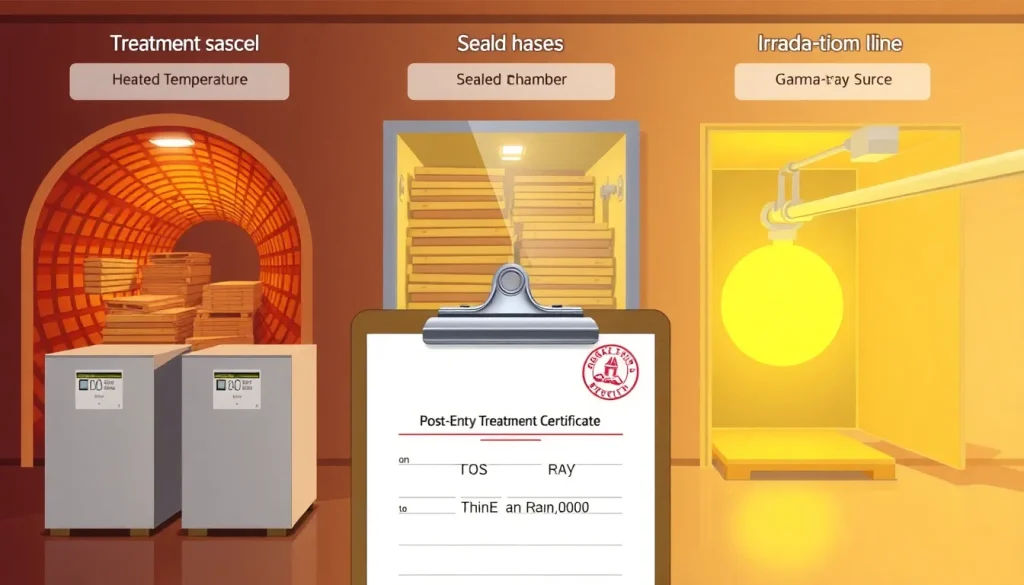
Post‑entry treatment is a phytosanitary action performed after a shipment arrives at the port of entry but before it is released into the domestic market. The goal is to neutralize any viable organisms that survived pre‑export treatment or that were introduced during handling. The three primary methods are:
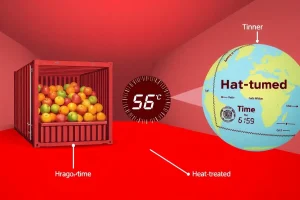
- Heat treatment – raising the core temperature of WPM to at least 56 °C (132.8 °F) for a minimum of 30 minutes.
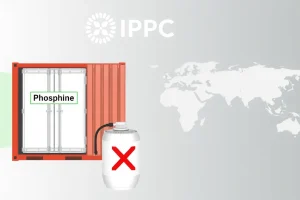
- Fumigation – exposing WPM to a certified gas (commonly methyl bromide or phosphine) at a regulated concentration and exposure time.
- Irradiation – applying ionizing radiation (gamma rays, X‑rays, or electron beams) at a dose of 1 kGy or higher.
Each method meets the ISPM 15 requirement that WPM be “free from viable plant pests” and is recognized by most NPPOs (National Plant Protection Organizations) as an acceptable post‑entry measure.
Why It Matters (Real Stakes for Exporters/Importers)
Failure to complete an accepted post‑entry treatment can lead to costly delays, cargo re‑routing, or outright rejection. The economic stakes include:
- Loss of market access – a single rejected container can close a trade line for months.
- Additional quarantine fees – re‑treatment, storage, and inspection fees can add $2,000–$10,000 per shipment.
- Reputational damage – repeated non‑compliance may trigger stricter inspections or bans.
- Environmental risk – un‑treated pests such as Monochamus spp. (pine sawyer beetles) or Rhyzopertha dominica (lesser grain borer) can establish new infestations.
For importers, a compliant post‑entry treatment ensures “clearance on arrival,” reduces demurrage, and preserves the supply‑chain timeline.
How It Works
All three treatments share a common principle: delivering a lethal dose of energy or chemical to any pest life stage hidden inside the wood.
Heat Treatment
Specialized ovens or tunnel heaters raise the internal temperature of each pallet. Sensors placed in the core of the wood verify that the 56 °C threshold is maintained for at least 30 minutes. The heat penetrates both the sapwood and heartwood, killing eggs, larvae, and adults.
Fumigation
A sealed chamber is filled with a calibrated concentration of gas (e.g., 5 g m⁻³ methyl bromide) for a defined exposure period, typically 24–48 hours at 20–30 °C. The gas diffuses into wood pores, reaching insects that are otherwise protected from surface‑only treatments.
Irradiation
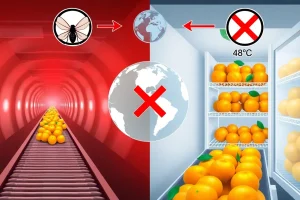
WPM passes on a conveyor through a radiation source. The dose, measured in kilograys (kGy), is calibrated so that 1 kGy is sufficient to sterilize most wood‑boring insects without damaging the wood’s structural integrity.
Regulatory Authority & Contact
The primary international authority is the International Plant Protection Convention (IPPC), which issues ISPM 15 and endorses post‑entry treatment guidelines. Nationally, the relevant NPPO varies by country. Below are the most common contacts:
| Country/Region | NPPO / Authority | Contact Email |
|---|---|---|
| United States (USDA‑APHIS) | Plant Protection and Quarantine (PPQ) | ppq@aphis.usda.gov |
| European Union (EU) | European Commission – DG SANTE | phytosanitary@ec.europa.eu |
| Australia | Department of Agriculture, Fisheries and Forestry (DAFF) | phytosanitary@agriculture.gov.au |
| Canada | Canadian Food Inspection Agency (CFIA) | phytosanitary@inspection.gc.ca |
Most NPPOs provide a “post‑entry treatment verification” portal where exporters upload certificates for electronic review.
Import/Export Procedure
The workflow for a shipment that requires post‑entry treatment can be summarized in five steps:
- Pre‑arrival notice – Importer files a phytosanitary notification (e.g., via the USDA APHIS eAPIS system) indicating the need for post‑entry treatment.
- Arrival & inspection – Customs and the NPPO conduct a visual inspection and collect a sample for laboratory confirmation.
- Treatment selection – Based on commodity risk, the importer selects heat, fumigation, or irradiation. The chosen method must be approved by the NPPO.
- Execution & certification – A licensed treatment provider carries out the process, records temperature/gas dose/radiation dose, and issues a Post‑Entry Treatment Certificate (PETC) that references ISPM 15 and the specific ISPM 23 annex for the method used.
- Final release – The PETC is uploaded to the NPPO portal. Once approved, the cargo is cleared for free movement.
Required Documents
Successful clearance hinges on a complete documentation package:
- Pre‑export Phytosanitary Certificate (PPH) confirming ISPM 15 compliance.
- Bill of Lading or Air Waybill showing WPM details.
- Post‑Entry Treatment Certificate (heat, fumigation, or irradiation) signed by an accredited provider.
- Laboratory test report (if requested) confirming absence of live pests after treatment.
- Import Permit (where applicable) that references the post‑entry requirement.
All certificates must include the treatment method code (e.g., “HT‑56‑30” for heat, “FM‑MB‑5‑24” for methyl bromide, “IR‑1‑kGy”).
Requirements & Standards (Cite Primary Source)
The baseline standards are found in:
International Standard for Phytosanitary Measures No. 15 (ISPM 15), 2019 edition – “Regulation of wood packaging material in international trade.”
Post‑entry treatment specifics are detailed in ISPM 23 (Treatment of Commodities) and the annexes that list allowable methods:
| Method | Reference Standard | Key Parameters |
|---|---|---|
| Heat | ISPM 23 Annex A | ≥ 56 °C core temperature for ≥ 30 min; validated by calibrated thermocouples. |
| Fumigation | ISPM 23 Annex B | Methyl bromide 5 g m⁻³ at 20–30 °C for 24 h; Phosphine 2 g m⁻³ at 15 °C for 48 h. |
| Irradiation | ISPM 23 Annex C | Ionizing radiation dose ≥ 1 kGy; dose uniformity ratio ≤ 1.2. |
National NPPOs may impose stricter limits. For example, the USDA requires a minimum of 60 °C for 30 min for heat, and a minimum dose of 1.5 kGy for irradiation of softwood pallets.
Step‑by‑Step Checklist (How‑to Trigger Treatment)
Use this checklist to ensure nothing is missed before requesting a post‑entry treatment:
- Confirm the destination country’s post‑entry requirement (consult the NPPO website or the WTO SPS portal).
- Verify that the pre‑export ISPM 15 stamp is intact and legible.
- Collect the shipment’s weight, dimensions, and wood species for dosage calculations.
- Select an accredited treatment provider; ask for their license number.
- Schedule the treatment within the allowable time window (usually 48 h after arrival).
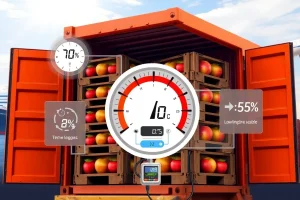
- During treatment, ensure real‑time monitoring devices are calibrated and data logs are saved.
- Obtain the Post‑Entry Treatment Certificate; double‑check that it includes:
- Treatment method code
- Date and location of treatment
- Signature of the licensed operator
- Upload the PETC to the NPPO’s electronic portal before the “release for free circulation” deadline.
- Retain all original documents for at least three years for audit purposes.
Common Mistakes & Rejection Reasons
Even experienced shippers stumble over a few recurring issues:
- Insufficient temperature recording – thermocouples placed only on the surface do not prove core temperature compliance.
- Unapproved fumigant – using methyl iodide where only methyl bromide is authorized.
- Incorrect radiation dose – delivering 0.8 kGy instead of the mandated 1 kGy.
- Missing signatures – PETC without the accredited provider’s seal is rejected outright.
- Late submission – uploading the PETC after the NPPO’s 24‑hour verification window results in detention.
When a rejection occurs, the NPPO typically issues a “Non‑Compliant WPM” notice, requiring either re‑treatment at the importer’s expense or physical destruction of the material.
Real‑World Example/Scenario
Scenario: A U.S. furniture exporter ships 40‑foot containers of solid‑wood pallets to Japan. Japan’s Ministry of Agriculture, Forestry and Fisheries (MAFF) requires post‑entry heat treatment for all soft‑wood pallets.
- The exporter files an e‑APIS notice indicating “heat treatment required.”
- Upon arrival at Yokohama Port, a Japanese quarantine officer samples three pallets for Monochamus alternatus larvae.
- The exporter contracts a local heat‑treatment facility. The facility inserts calibrated data loggers into the core of each pallet, confirming 58 °C for 35 minutes.
- A PETC is issued, referencing ISPM 15 and ISPM 23 Annex A, and uploaded to MAFF’s portal within 12 hours.
- MAFF validates the certificate; the cargo is released, and the importer receives a “clearance letter” that satisfies downstream customs.
The entire post‑entry process took 18 hours, avoiding a potential $7,500 storage fee and preserving the shipment’s market schedule.
Conclusion
Heat, fumigation, and irradiation are the three scientifically validated post‑entry treatment options that keep wood packaging material compliant with ISPM 15 and protect global agriculture from invasive pests. By understanding the regulatory backdrop, preparing the correct paperwork, and following a disciplined checklist, exporters and importers can turn a potential bottleneck into a routine step that safeguards trade and the environment.
FAQ
Do I need a post‑entry treatment if my WPM already has an ISPM 15 stamp?
Yes, if the importing country’s NPPO requires an additional verification step. Many countries, such as Japan, South Korea, and the EU, mandate heat or irradiation after arrival to ensure the original treatment was effective.
Can I use any heat‑treatment provider, or must they be certified?
The provider must be accredited by the importing country’s NPPO or by an internationally recognized body (e.g., ISO 9001 for heat‑treatment facilities). The PETC must display the provider’s license number.
Is methyl bromide still allowed for post‑entry fumigation?
Methyl bromide is permitted in many jurisdictions under strict emission controls, but some countries (e.g., EU members) have phased it out. Always verify the specific fumigant allowed by the destination NPPO before scheduling treatment.





Leave a Reply