Short Answer
International trade of plants, seeds, fruits, and other regulated commodities is only possible when each consignment passes a rigorous plant‑health inspection. This inspection protects ecosystems, safeguards agriculture, and fulfills legal obligations under the International Plant Protection Convention (IPPC). The following guide breaks the inspection process into clear, actionable steps so that exporters, importers, customs brokers, freight forwarders, and agriculture students can move goods confidently through the border.
Overview
The plant‑health inspection process can be visualised as a linear flow with four major phases:
| Phase | Key Activities |
|---|---|
| Pre‑export preparation | Obtain permits, conduct pest‑free production, arrange phytosanitary certification. |
| Export‑country inspection | National Plant Protection Organization (NPPO) verifies compliance, issues Phytosanitary Certificate (PC). |
| Transit & documentation review | Freight forwarder presents PC to carrier; customs broker checks paperwork. |
| Import‑country inspection | Border inspection agency (BIA) or NPPO conducts physical check, may request treatments. |
Each phase must be completed before the next can begin; a failure at any point triggers rejection or re‑inspection.
Why it matters (real stakes for exporters/importers)
Understanding the stakes helps justify the effort and expense of compliance.
- Market access: A clean inspection is the gateway to lucrative markets; a single rejection can cost thousands of dollars in lost sales.
- Legal liability: Non‑compliance can result in fines, product seizure, or criminal prosecution under national Plant Protection Acts.
- Reputation: Repeated rejections damage relationships with buyers and can lead to black‑listing.
- Biosecurity: Preventing the introduction of pests protects local agriculture, forests, and native ecosystems.
How it works
The inspection follows a predictable sequence that can be summarised in ten steps.
- Determine the commodity’s phytosanitary status in the export country.
- Apply for an export permit from the export‑country NPPO.
- Implement any pre‑treatment (e.g., heat, fumigation) required by the destination.
- Schedule an on‑site inspection with the NPPO’s inspection team.
- Inspection team conducts visual and laboratory checks for regulated pests.
- If clear, the NPPO issues a Phytosanitary Certificate (PC).
- Freight forwarder attaches the PC to the shipment and notifies the import‑country BIA.
- Upon arrival, the BIA reviews the PC and may perform a random or risk‑based inspection.
- If the consignment passes, it is released to the importer; if not, corrective action is required.
- All records are archived for the period required by the IPPC (typically five years).
Regulatory authority & contact
Contact information varies by country, but the structure is universally similar.
| Role | Typical Agency | Contact Example (USA) |
|---|---|---|
| Export‑country NPPO | USDA‑APHIS Plant Protection and Quarantine | Phone: +1‑202‑720‑2791, Email: phytosanitary@aphis.usda.gov |
| Import‑country BIA | U.S. Customs and Border Protection – Agriculture Division | Phone: +1‑202‑267‑4000, Email: agriculture@cbp.gov |
| International Standard‑Setting Body | International Plant Protection Convention (IPPC) | Website: https://www.ippc.int |
Required documents
Missing or incomplete paperwork is the most frequent cause of delay.
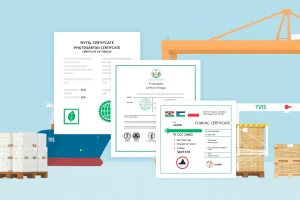
- Phytosanitary Certificate (PC) – issued by the export‑country NPPO.
- Export Permit – authorises the movement of the commodity.
- Commercial Invoice & Packing List – used for customs valuation.
- Certificate of Origin (if required by the destination).
- Treatment Records – evidence of any fumigation, heat treatment, or irradiation.
- Import Permit (when required by the destination country).
Common rejection reasons at that border
Even when paperwork appears correct, inspections can fail for the following reasons.
- Presence of a regulated pest or disease symptom not declared on the PC.
- PC issued for a different commodity, batch number, or destination.
- Improper packaging that allows pest entry (e.g., damaged containers).
- Failure to meet treatment standards (temperature, duration, chemical concentration).
- Discrepancy between the declared commodity weight/volume and the actual shipment.
Requirements & standards
The inspection process is anchored in two core sets of standards:
“ISPM 12 – Guidelines for Phytosanitary Certificates. The International Standards for Phytosanitary Measures (ISPM) are adopted by the IPPC and form the legal basis for all national plant‑health regulations.” – IPPC, 2023.
“National Plant Protection Organization (NPPO) regulations must be at least as stringent as the relevant ISPMs and may impose additional requirements for high‑risk commodities.” – USDA‑APHIS, 2022.
Key points extracted from the standards:
- PCs must be signed by an authorised NPPO official and include the pest list, treatment details, and validity period.
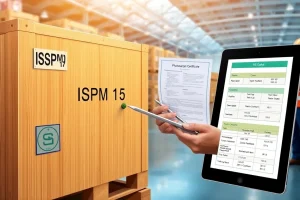
- Inspections shall be risk‑based; commodities from pest‑free areas may qualify for expedited review (ISPM 15).
- All sampling for laboratory analysis must follow ISO 17025‑accredited procedures.
Step‑by‑step checklist (How‑to trigger)
Before the first shipment, use the following checklist to confirm readiness.
- Identify the HS code and verify the commodity’s regulated pest list in the destination country.
- Secure an export permit from the export‑country NPPO.
- Arrange any mandatory pre‑treatments and retain certificates of completion.
- Schedule the NPPO inspection at least 5 business days before loading.
- Review the draft PC for accuracy (commodity name, scientific name, batch number, treatment details).
- Prepare the full document set (PC, permits, invoices, treatment records) in the language required by the import country.
- Inform the freight forwarder and customs broker of the PC number and expected arrival date.
- Upon arrival, provide the BIA with the original PC and supporting documents.
- Monitor the inspection outcome; if rejected, follow the corrective‑action protocol within the stipulated time.
- Archive all records (digital or paper) for at least five years as mandated by the IPPC.
Common mistakes & rejection reasons
Even experienced shippers slip up. Below are the most frequent errors and how to avoid them.
- Incorrect scientific name: Use the accepted Latin name from the latest taxonomic database (e.g., USDA GRIN).
- Late PC submission: Submit the PC no later than 48 hours before loading; many NPPOs refuse last‑minute requests.
- Missing treatment details: Include temperature, duration, and product registration numbers on the PC.
- Packaging damage: Inspect containers for cracks or openings before sealing; re‑package if any breach is found.
- Assuming “pest‑free area” exemption: Verify the destination’s A2 status; some countries require a supplemental inspection even for pest‑free zones.
Real‑world example/scenario
Consider a U.S. exporter shipping fresh mangoes to the European Union (EU). The EU classifies Moniliophthora roreri (frosty pod rot) as a quarantine pest (A2). The exporter follows the checklist:
- Checks the EU’s A2 list (WTO‑SPS Database) and confirms a mandatory heat treatment of 52 °C for 30 minutes.
- Contracts a USDA‑approved heat‑treatment facility and obtains a treatment certificate.
- Requests a phytosanitary certificate from the USDA‑APHIS NPPO, attaching the treatment record.
- Loads the mangoes in sealed, ventilated containers and forwards the PC to the freight forwarder.
- Upon arrival at the Rotterdam port, the EU’s Border Inspection Post (BIP) verifies the PC, re‑samples a pallet, and confirms no M. roreri spores.
- The consignment is released, and the importer receives the goods within 48 hours.
If the heat treatment had been omitted, the EU BIP would have detained the shipment, imposed a re‑treatment fee, and recorded a non‑compliance event that could affect future export eligibility.
Conclusion
The plant‑health inspection process is a structured, standards‑driven sequence that safeguards global agriculture while enabling trade. By mastering each phase—pre‑export preparation, NPPO certification, documentation, and import‑country inspection—exporters and their logistics partners can minimise delays, avoid costly rejections, and maintain market access. Use the step‑by‑step checklist, stay current with IPPC ISPMs, and maintain open communication with NPPOs to ensure a smooth, compliant shipment every time.
FAQ
How long before shipment should I request a Phytosanitary Certificate?
Ideally at least 5 business days before loading; many NPPOs require the PC to be issued no later than 48 hours before the goods are placed on the carrier.
Can I use an electronic Phytosanitary Certificate instead of a paper copy?
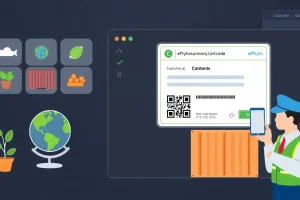
Yes, if the importing country accepts e‑PCs under the IPPC’s e‑Phytosanitary Certificate framework (e‑PC). Verify acceptance with the destination’s BIA before shipment.
What should I do if my consignment is rejected at the border?
Immediately contact the import‑country BIA to obtain the specific non‑compliance reason, arrange corrective treatment or re‑inspection as instructed, and keep detailed records for future audits.





Leave a Reply