Short Answer
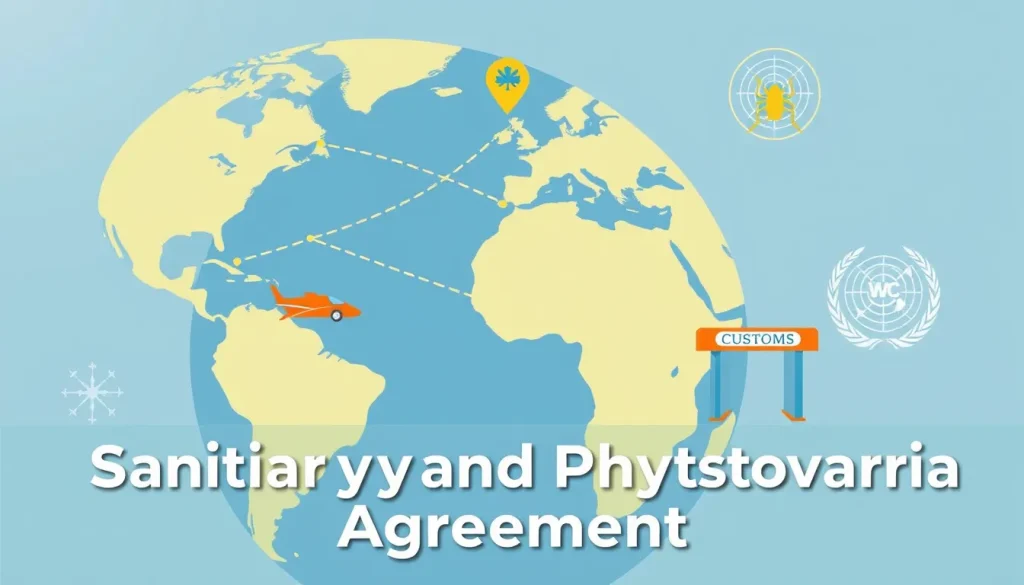
The World Trade Organization (WTO) Sanitary and Phytosanitary (SPS) Agreement sets the worldwide rules for protecting human, animal and plant health while ensuring that trade is not needlessly restricted. For exporters, importers, customs brokers, freight forwarders and agriculture students, mastering the basics of the SPS Agreement is essential to avoid shipment delays, costly re‑exports, or outright bans. This pillar article breaks down the Agreement into plain‑English sections, offering fast, accurate answers and practical checklists that can be applied to any commodity.
Overview
The SPS Agreement, adopted in 1995, is one of the core WTO agreements. It requires each member country to base its sanitary and phytosanitary measures on scientific principles and to base any trade‑restrictive measure on an appropriate risk assessment. The Agreement is organized into three annexes:
- Annex I – Definitions, basic obligations and the principle of non‑discrimination.
- Annex II – Specific requirements for the importation of plants, plant products, animals and animal products.
- Annex III – Procedures for the establishment, application and review of SPS measures.
Member governments enforce the Agreement through their National Plant Protection Organizations (NPPOs) and National Veterinary Services, which in turn align with the International Plant Protection Convention (IPPC) standards (ISPMs).
Why it matters (real stakes for exporters/importers)
Failure to comply with the SPS Agreement can have immediate financial and reputational consequences:
- Shipment delays – Customs may hold cargo for additional inspections or require re‑treatment.
- Re‑export costs – Goods that are rejected must be returned, re‑packaged or destroyed, incurring freight, handling and disposal fees.
- Market access loss – Repeated non‑compliance can trigger a WTO dispute, leading to retaliatory measures or loss of preferential trade status.
- Insurance implications – Many cargo insurers require proof of SPS compliance before issuing coverage.
Conversely, demonstrating robust SPS compliance can speed clearance, lower inspection rates and build trust with trading partners.
How it works
The SPS framework operates as a cycle of risk assessment, measure implementation, and transparent review:
- Risk assessment – The importing NPPO evaluates the likelihood of a pest or disease entering via the commodity, using scientific data and the IPPC’s International Standards for Phytosanitary Measures (ISPMs).
- Measure design – Based on the assessment, the NPPO adopts a measure (e.g., treatment, certification, quarantine) that is necessary and proportionate to the risk.
- Notification – The measure is published, and trading partners are notified through the WTO’s SPS Information Management System (SPS‑IMS).
- Implementation & verification – Exporters obtain the required phytosanitary certificates; customs checks the documents against the published measure.
- Review & dispute settlement – If a measure is considered unjustified, the affected party may request a WTO panel review.
Regulatory authority & contact
Each WTO member designates an official NPPO (for plants) or National Veterinary Service (for animals). These bodies are the primary points of contact for SPS matters.
| Authority | Typical Contact | Key Function |
|---|---|---|
| NPPO (National Plant Protection Organization) | Plant Health Division, Ministry of Agriculture | Issue phytosanitary certificates, approve treatments, publish import requirements. |
| National Veterinary Service | Veterinary Public Health Unit | Oversee animal health certificates, disease surveillance, and zoonotic risk assessments. |
| WTO SPS‑IMS | Online portal (sps.wto.org) | Central repository for all SPS measures and notifications. |
Exporters should keep a current contact list for the NPPOs of their key markets, as response times can vary widely.
Import/export procedure
The generic flow for a phytosanitary‑regulated commodity is:
- Pre‑export check – Verify that the product meets the importing country’s Annex II requirements.
- Treatment (if required) – Apply approved phytosanitary treatment (e.g., heat, fumigation) and retain records.
- Inspection & certification – Have the NPPO inspect the consignment and issue a phytosanitary certificate that references the specific SPS measure.
- Freight forwarding – Include the certificate in the commercial invoice and attach it to the Bill of Lading.
- Customs clearance – The importing customs authority validates the certificate against the SPS‑IMS database.
- Post‑entry monitoring – Some countries require sampling or field inspections after arrival.
Any deviation from this sequence can trigger a “non‑conformity” notice.
Required documents
Typical paperwork for SPS compliance includes:
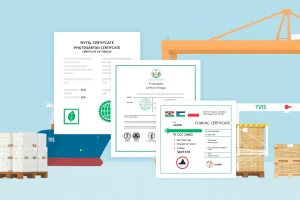
- Phytosanitary or Veterinary Certificate (issued by the NPPO or National Veterinary Service).
- Certificate of Origin (to prove the commodity’s source).
- Treatment Certificate (when a specific heat, fumigation or other treatment is mandated).
- Import Permit (required for high‑risk commodities in many jurisdictions).
- Commercial Invoice & Packing List (must reference the SPS measure ID).
All documents should be prepared in the language required by the importing country (often English, French or Spanish) and be digitally signed where possible.
Requirements & standards (citing primary sources)
The SPS Agreement obliges members to adopt measures that are:
“Based on scientific principles, and not maintained without sufficient scientific evidence, and shall be applied only to the extent necessary to protect human, animal or plant life or health.” – WTO SPS Agreement, Annex I, Article 5.1
Key standards referenced by the Agreement include:
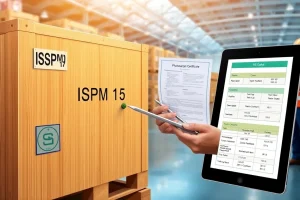
- IPPC ISPM 15 – Standard for wood packaging material (WPM) to prevent the spread of wood‑boring pests.
- ISPM 36 – Guidelines for the phytosanitary certification of plants for planting.
- FAO/WHO Codex Alimentarius – Food safety standards that intersect with SPS provisions for animal products.
Exporters must ensure that the phytosanitary certificate explicitly cites the relevant ISPM number and the specific Annex II measure of the importing country.
Common mistakes & rejection reasons
Even experienced shippers encounter avoidable errors. The most frequent reasons for SPS‑related rejection are:
- Missing or incomplete certificate – Omitting the treatment code, the NPPO stamp, or the date of issuance.
- Non‑conformant treatment – Using a method not approved for the target pest or not meeting the required exposure time.
- Incorrect commodity description – Declaring “fresh fruit” when the shipment contains “processed puree,” which may have a different risk profile.
- Failure to obtain an import permit – Required for high‑risk species such as citrus or certain timber products.
- Late notification – Not informing the importing NPPO within the stipulated timeframe (usually 48‑72 hours before arrival).
Addressing these points during the pre‑export planning stage dramatically reduces the chance of a hold.
Step‑by‑step checklist (How‑to trigger compliance)
- Identify the HS code of the commodity and locate the importing country’s SPS Annex II entry on the WTO SPS‑IMS portal.
- Contact the importing NPPO to confirm any recent updates or temporary measures.
- Arrange any mandatory pre‑export treatment and retain certificates of performance.
- Schedule an inspection with your own (exporting) NPPO; ensure the inspector signs the phytosanitary certificate.
- Prepare the following documents: phytosanitary certificate, treatment certificate, import permit (if required), commercial invoice, packing list.
- Upload the digital copies to the freight forwarder’s system and attach them to the Bill of Lading.
- Notify the importing customs authority (often via the carrier’s electronic data interchange) at least 48 hours before arrival.
- Retain all records for a minimum of five years, as required by WTO dispute‑settlement provisions.
Following this checklist ensures that each shipment is “SPS‑ready” before it leaves the export terminal.
Real‑world example/scenario
Scenario: A U.S. exporter ships fresh mangoes to the European Union (EU). The EU’s Annex II entry (SPS EU 2018/1039) requires:
- Proof of pest‑free area for Fruit Flies (Ceratitis spp.).
- Cold treatment at 2 °C for a minimum of 14 days.
- Phytosanitary certificate referencing ISPM 36.
Steps taken:
- The exporter obtains a pest‑free area certification from the USDA Animal and Plant Health Inspection Service (APHIS).
- Mangoes are stored in a refrigerated container for 15 days; a temperature log is generated.
- The USDA‑APHIS inspector issues a phytosanitary certificate that cites ISPM 36 and includes the cold‑treatment log number.
- The certificate, along with the EU import permit, is uploaded to the carrier’s electronic manifest.
- EU customs validates the documents via SPS‑IMS; the shipment is released without inspection.
If the cold‑treatment log had been missing, EU officials would have detained the cargo, resulting in a potential €50,000 loss.
Conclusion
The WTO SPS Agreement balances two competing goals: safeguarding health and facilitating trade. By understanding the Agreement’s structure, recognizing the real‑world stakes, and applying the step‑by‑step checklist, exporters and importers can minimize delays, avoid costly re‑exports, and maintain market access. Remember that the SPS system is dynamic; regular monitoring of the WTO SPS‑IMS portal and direct communication with NPPOs are the best defenses against unexpected compliance gaps.
| Quick Fact | Detail |
|---|---|
| Effective date | 1 January 1995 |
| Number of WTO members | 164 (as of 2024) |
| Core principle | Science‑based, non‑discriminatory measures |
| Key annexes | Annex I (principles), Annex II (specific measures), Annex III (procedures) |
| Primary reference bodies | IPPC (ISPMs), Codex Alimentarius, National Plant Protection Organizations |
FAQ
Do I need a phytosanitary certificate for processed food items?
Only if the processing does not eliminate the risk of a regulated pest or pathogen. For many highly processed goods the SPS Agreement allows a waiver, but you must verify the importing country’s Annex II entry.
Can I use a digital phytosanitary certificate?
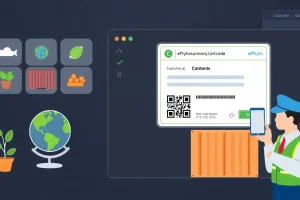
Yes. The WTO encourages electronic certification. The certificate must be digitally signed by the issuing NPPO and accepted by the importing customs system.
What happens if a WTO member imposes a stricter measure than the SPS Agreement allows?
The affected party can request a consultation under the WTO Dispute Settlement Understanding. If the measure is found to be unjustified, the member must bring it into conformity or face possible retaliation.





Leave a Reply